
What a difference a little sunshine and some warmer temperatures make!
This week it feels like spring could really be just around the corner and the mild weather has made it so lovely to be out in the garden.
I have been catching up with pruning in my own garden, tackling the ten identical roses I was given last year, Rosa Desdemona, as well as much older shrub and climbing roses.
This year I have been braver than usual and can’t wait to see if my tough love pays off in the summer.
This is peak pruning season when many shrubs are beginning to grow again after winter dormancy and it is important to keep on top of the pruning if you want the best flowers as well as good structure later in the year.
Snowdrops at Bixley (Image: Norfolk School of Gardening)
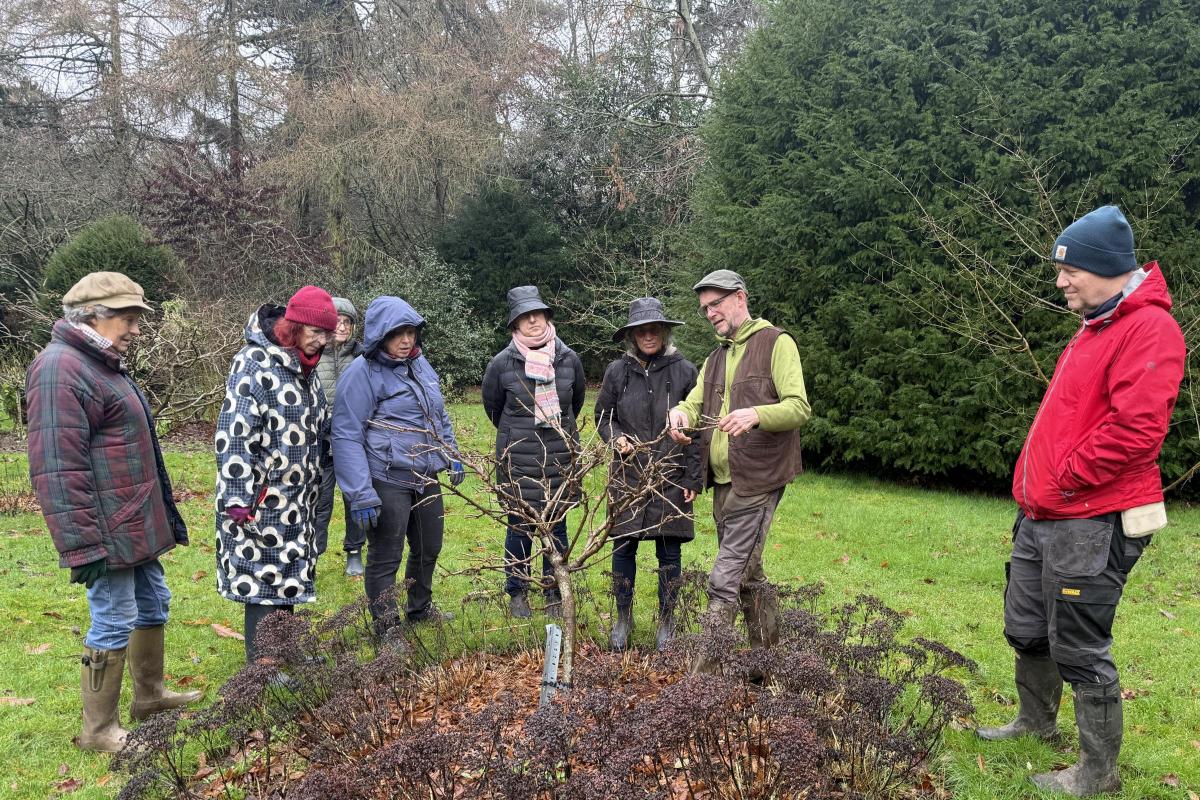
If, like me, you sometimes struggle to know what needs pruning when, as well as how to go about it, we have one of our seasonal pruning courses next week and there are still a couple of places.
Let us know if you want to join us.
The gently shifting season and longer days are encouraging lots of us out into the garden and our calendar is now full of one-day courses which cover everything from making your own plant supports to taking cuttings and making plants for free.
We are hearing from many gardeners who want to know how to create year-round interest in their garden, not just in a few summer months.
One of our Diploma in Garden Design graduates who also trained at RHS Wisley, Katy Noon, teaches the excellent Planting for Year-Round Colour and Interest and shares her huge plant knowledge with the students.
We also have Norfolk flower farmer, Sarah Hammond of English Peonies, back in the classroom to share her own experience of creating a Sustainable Cutting Garden.
There is something for everyone in the next few months!
This week we not only sowed more seeds we also pricked out the first tomatoes into cell trays.
Valentine’s Day is the moment when we get more than ten hours’ daylight, and the speed with which seeds are germinating has noticeably increased.
Nevertheless, don’t be tempted to sow anything earlier than the advice on the seed packet, or you will struggle with leggy plants which will be weak and may not survive until you can plant them outside after the last frost.
Plants for free – taking cuttings (Image: Norfolk School of Gardening)
Leave it a little longer and they will be so much stronger.
There are some great courses coming up which still have spaces.
Let us know if you’d like to join one of these:
· Pruning Shrubs & Roses – 4th March
· Willow & Hazel Plant Supports – 11th March
· Advanced Practical Gardening – 18th March
· Planting for Year-Round Colour – 19th March
· Sustainable Cutting Garden – 24th March
· Plants for Free (propagation workshop) – 25th March
· Border Renovation – 26th March
Helleborus argutifolius (Image: Norfolk School of Gardening)
Plant of the Week
Helleborus argutifolius, often known as Corsican hellebore, is a bold, evergreen perennial native to Corsica and Sardinia.
Like the native Helleborus foetidus or stinking hellebore, it is valued for its architectural presence, it forms sturdy clumps of deeply toothed, grey-green leaves.
In late winter and early spring, tall stems rise above the foliage bearing clusters of lime-green, cup-shaped flowers that last for many weeks.
Thriving in partial shade and well-drained soil, it is tolerant of dry conditions once established.
This hellebore is tough and long-lived, making it ideal for woodland gardens or mixed borders.
Remove spent flower stems after flowering to keep plants tidy and encourage fresh growth.
Contact us via www.norfolkschoolofgardening.co.uk or follow us on Instagram or Facebook.
Comments are closed.