
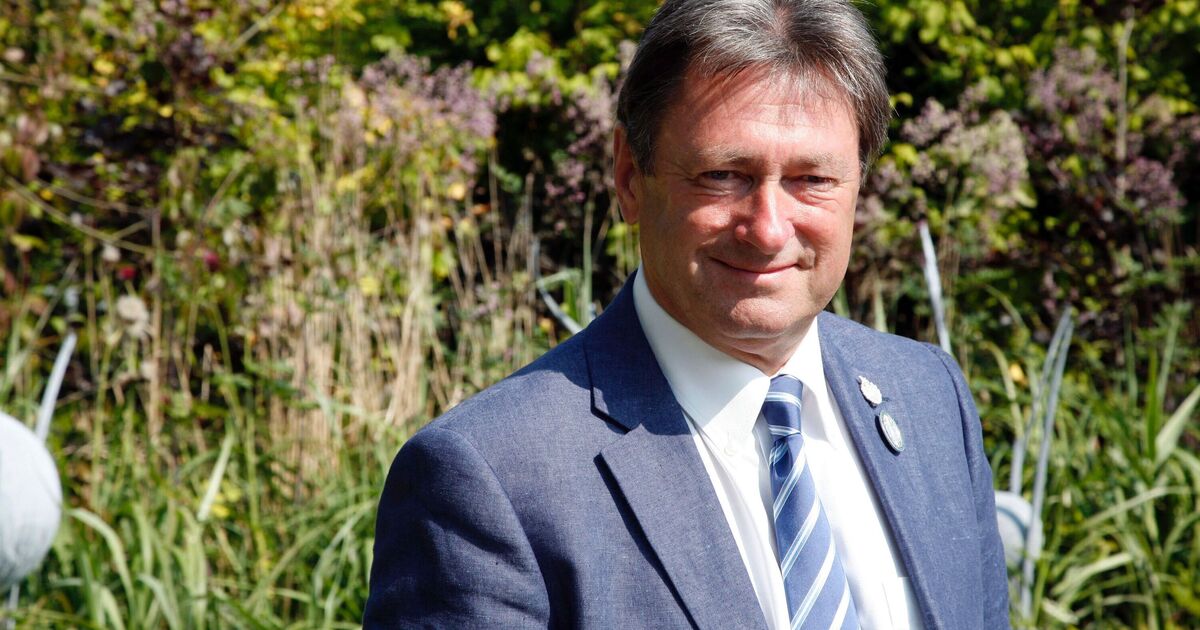
Alan Titchmarsh offered a warning to gardeners (Image: Getty)
The optimal period to cut back your hedges is between September and March 1, so if you haven’t yet tackled your privet, time is running out. However Britain’s best-loved gardener, Alan Titchmarsh, says it’s not a task you should embark upon without some careful preparation.
Alan emphasises that a battery-powered hedge trimmer is a far superior choice compared to the traditional models with a trailing cable: “This one is battery operated,” he explains in his latest gardening YouTube video. So much better than the ones which are operated with electric cable. The danger of cutting through them is just too much to contemplate.”
The gap between your hedge-trimmer’s blades will provide a solid indication of the branch thickness it will effectively manage, with wider gaps being more suitable for substantial tasks and a trimmer with closer-spaced blades being perfect for intricate topiary. “Generally speaking, anything up to 1⁄4 of an inch is fine on most of them,” Alan explains.
However, he cautions, equipment capable of slicing through a substantial branch can slice through numerous other things as well: “They can easily have your finger off in spite of the fact they’re only driven by battery,” he warns.
“So be safety aware,” Alan continues. “It’s not overkill to wear a helmet with a visor. Even tiny leaves that fly up and go into your eye can mean time in A&E.”
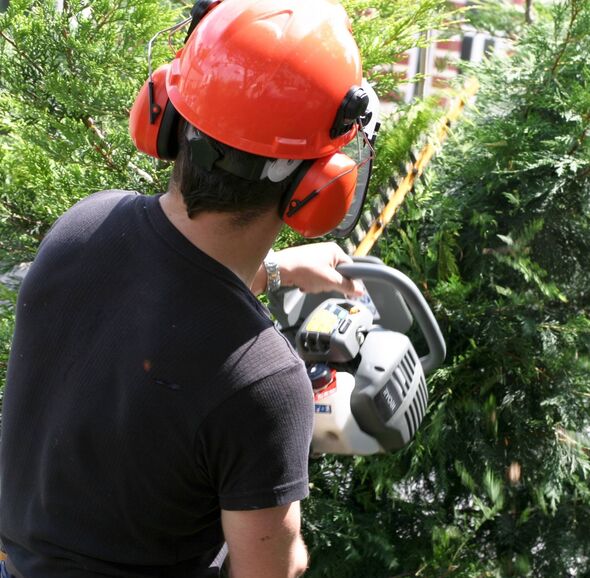
Alan recommends investing in proper protective kit [stock image] (Image: Corixa Communications)
Alan adds: “Ear defenders will protect your ears from the continuous noise. And the gloves which have been specially developed for use with things like this are important too. Get yourself well kitted out and then you can do a good job and be safe.”
A visor is particularly crucial when trimming taller hedges, Alan explains. With all your protective gear on, the expert quips, “you may end up looking like a Stormtrooper from Star Wars, but it’s all in a good cause.
“Now is a great time to prune deciduous hedges, hedges that lose their leaves, particularly because the birds haven’t quite started nesting yet. And that’s vital. Once the birds are starting nesting, stay away. You don’t want to disturb them.
“Evergreen hedges, it depends which hedge you’re clipping. Yew is best clipped around about September or October when its growth spurt has finished.”

Alan Titchmarsh shared the warning on his YouTube channel (Image: undefined)
In contrast, most specialists recommend trimming a laurel hedge in July or August for optimal growth. As a general rule, however, most evergreen shrubs can be pruned shortly after any danger of frost has passed and before new growth begins in earnest.
Alan adds: “When it comes to weather, try to avoid cutting when it’s wet, particularly with things like box. Box blight can be transmitted much more readily when the foliage is wet.
“Also, avoid frosty days because the freshly-cut ends on stems won’t appreciate being frozen solid.”
Alan advises that opting for an extendable hedge trimmer to reach higher branches is far preferable to risking a ladder, which can become unstable on wet ground.
Catch Alan Titchmarsh on Love Your Weekend with Alan Titchmarsh from 9.30am to 11.25am today (Sunday, March 1) on ITV.
Comments are closed.