
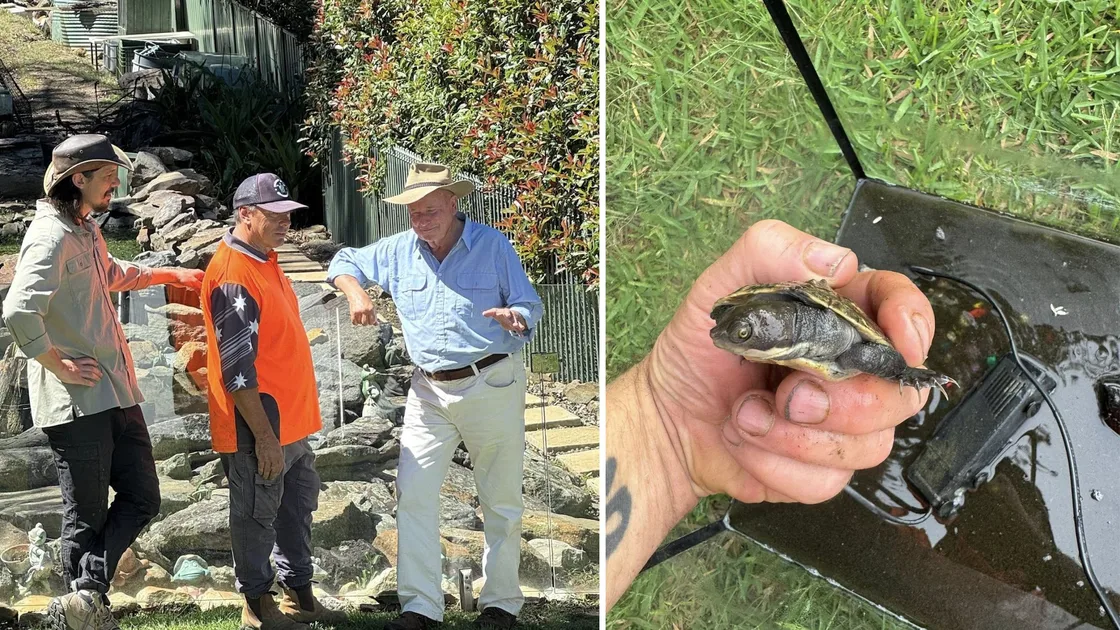
When dams across Western Sydney are drained to make way for housing estates and roads, the turtles that have lived there for decades don’t simply disappear. They’re left stranded in shrinking pools, vulnerable to predators and at risk of being buried under development.
That’s when Shane Davies and Kane Durrant step in.
Turtle Rescues NSW
Over the past ten years, the founder of Turtle Rescues NSW has saved and set free more than 5,000 native freshwater turtles, often spending up to eight tiring hours walking through thick mud to reach them.
“We started about a decade ago,” says Kane. “We saw a requirement and a necessity for these animals to be saved, especially in Sydney growth areas, where they’re doing a lot of new infrastructure, road upgrades, houses and estates.”
What began as a passion project has become a full-time mission.
“It’s a full-time job,” says Shane.
From factory worker to full-time rescuer
Before turtles became his life’s work, Shane spent 30 years working with machines and tools.
But his love of turtles started in childhood, when his parents cared for rescued turtles at their Luddenham home.
In 2015, with Kane Durrant, who studies wildlife, he started Turtle Rescues NSW. By 2018, he decided to work full-time, even though it meant earning less money.
Shane now works with builders, businesses and local Councils to help on-site, especially where dams or waterways are being drained for new building projects and development sites, such as the new airport at Badgerys Creek, the Northern Road and the M12.
Inside ‘Turtle Town’
When he’s not out rescuing turtles, Shane runs “Turtle Town” from his Lower Mountains backyard, a half-acre safe place for more than 200 turtles, as well as frogs and Eastern Water Dragons. It’s not a tourist attraction. It’s a recovery and new home for injured turtles and pets that people can no longer care for.
Some will eventually go back to the wild. Others, especially those kept as pets for too long, will spend the rest of their lives in special outdoor ponds with sandy spots to rest, logs to sunbathe on and places to hide underwater.
Shane holds a National Parks and Wildlife licence that allows him to legally catch and relocate native turtles. He’s also a qualified professional snake catcher — though that’s a story for another time.
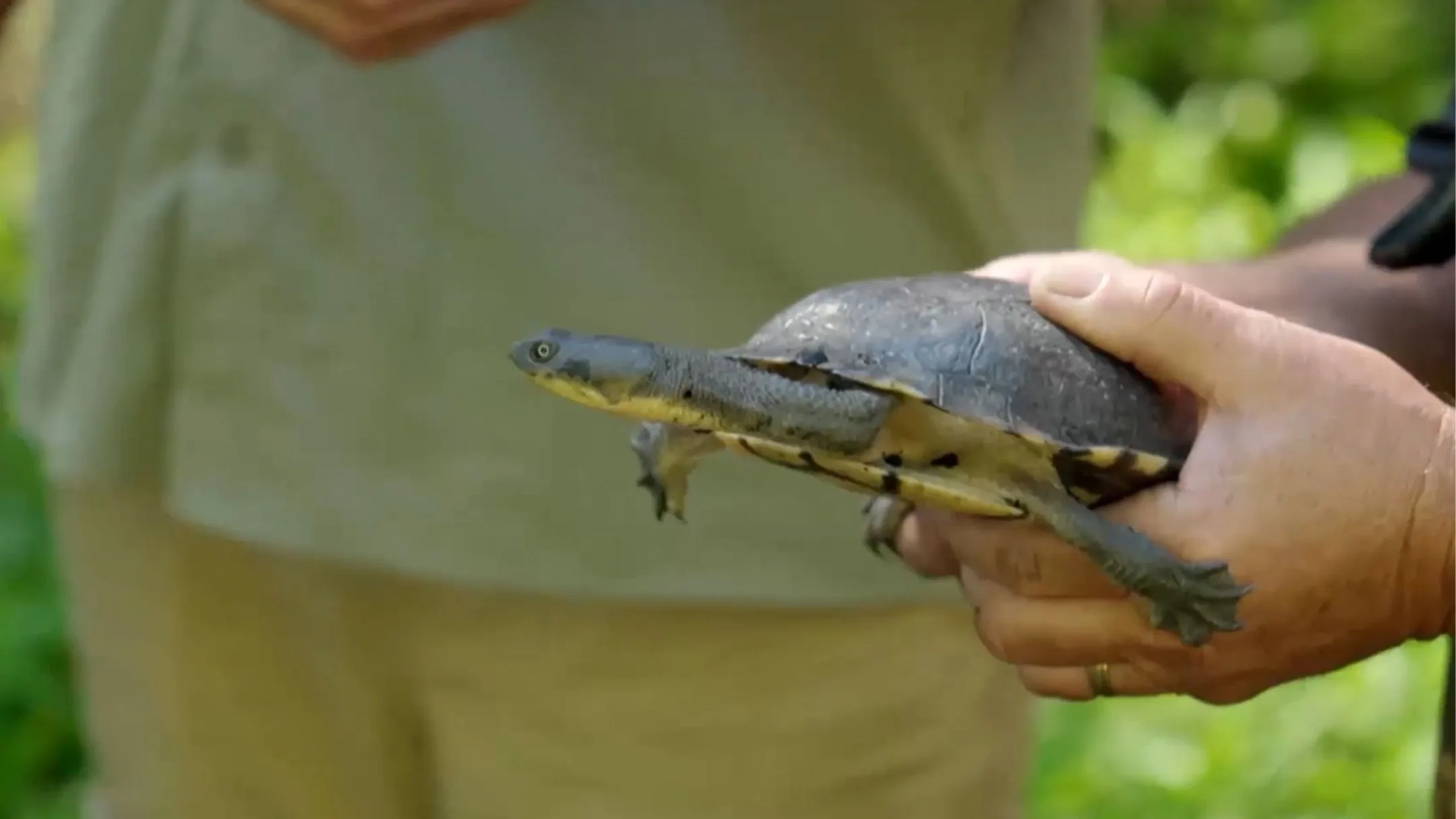 Eastern Long-Necked Turtle
A species under pressure
Shane rescues mostly Eastern Long-Necked Turtles — a species he says is declining and ageing.
Losing their homes is a big danger. Developers are draining and filling in country dams where turtles have lived for years. Foxes dig up their eggs, birds and dogs take the hatchlings, and drivers often hit adult turtles as they cross roads.
But there is hope.
Shane works with students and scientists to track relocated turtles and observe how they adjust to their new homes. Early results show many do well in the right places, which is a good sign that saving and moving turtles is helping.
How you can help turtles
But you don’t need to wade through mud to help. If you see a turtle crossing the road, move it to safety in the direction it was heading, but only if it’s safe to stop.
If it’s injured, Kane says, “We encourage people to stop the car if it’s safe, get the turtle into a box and get it to the nearest vet because the vet will know who to refer it to or be able to care for it truly itself”
Related

Writer
Livia Gamble
Senior Digital Content Producer
Sign up for our newsletter
Sign up for the latest news from Better Homes & Gardens including offers and discounts we choose to share with you.
Disclaimer: By joining, you agree to our Privacy Policy & Terms of Use
About your privacy Are Media Pty Limited collects your personal information through this site to process registrations, send out newsletters, communicate offers, discounts, competitions, or surveys, and to provide you with targeted advertising based on your online activities. Our Privacy Policy contains information on how you can access or correct your personal information, which entities we may disclose your personal information to (including overseas recipients), how to opt out of targeted advertising, and how to lodge a complaint.
Related
Comments are closed.