
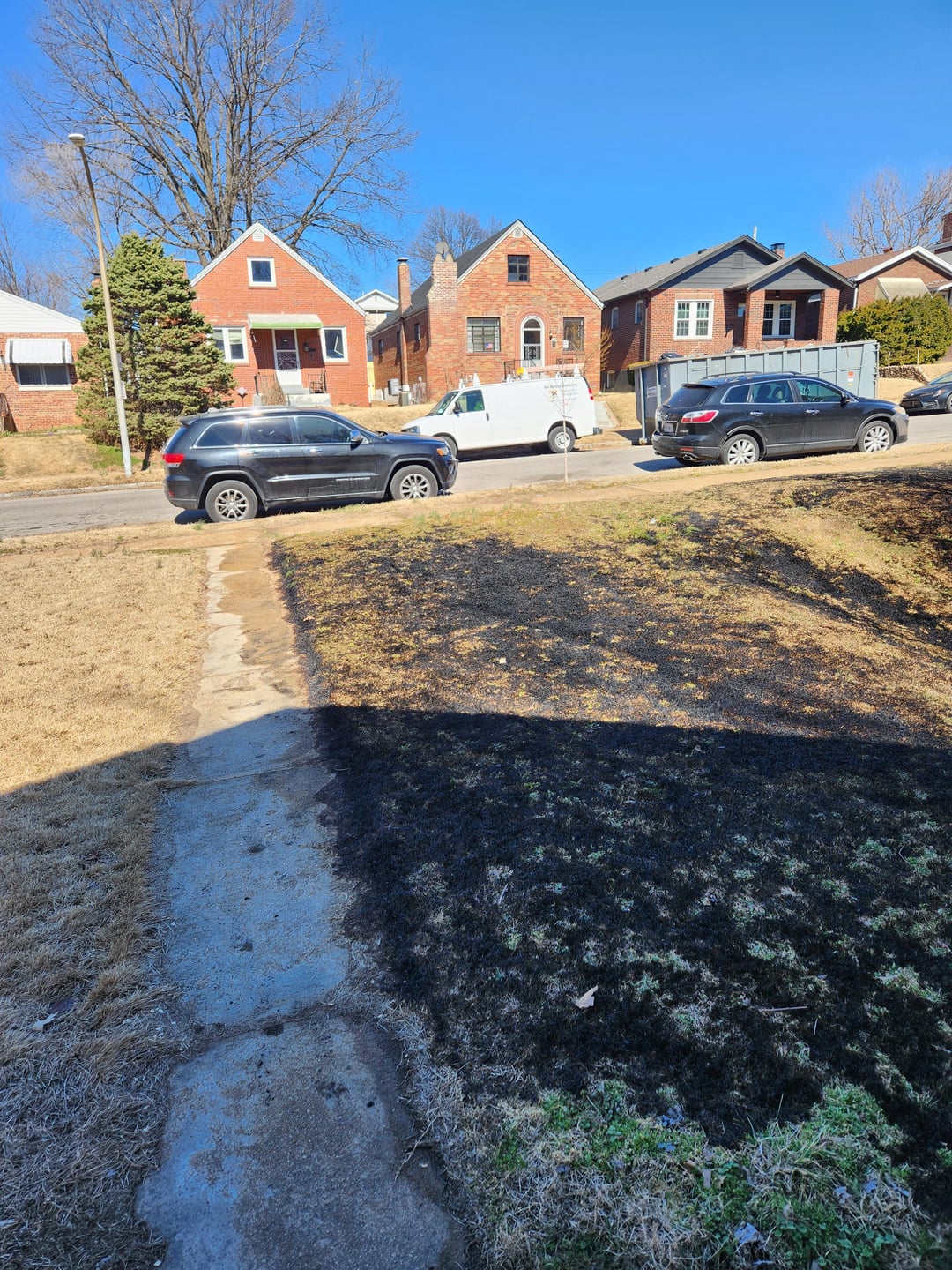
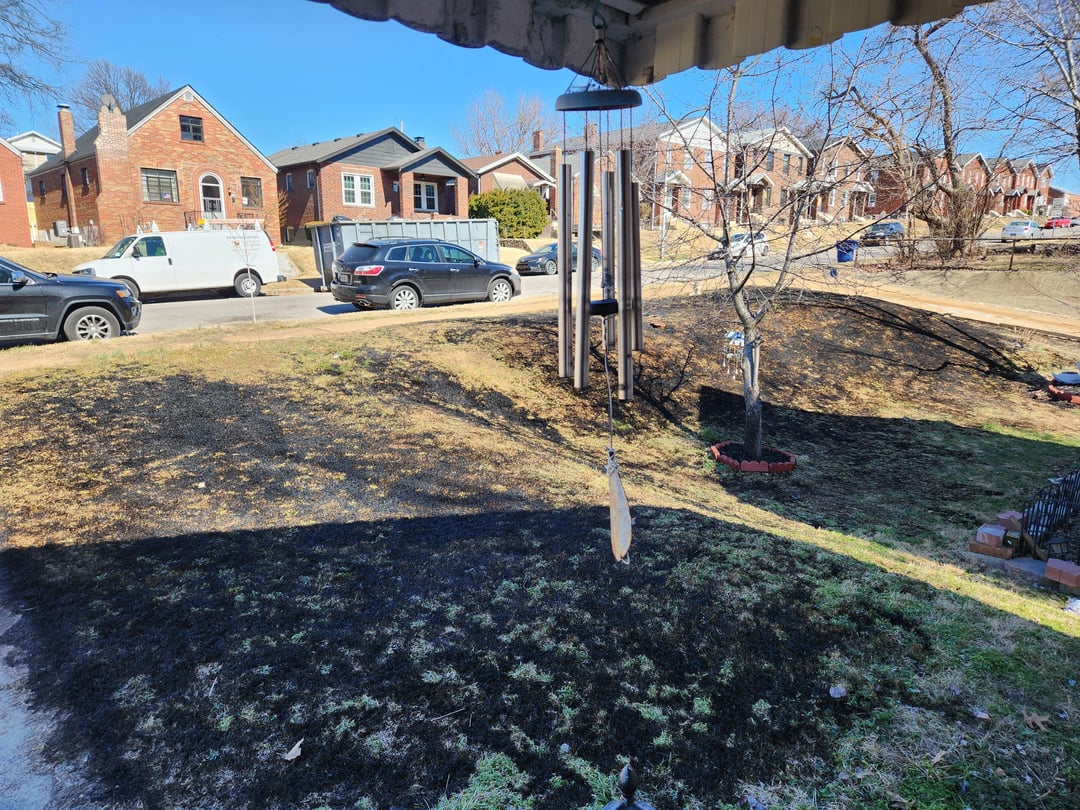
I'm in Saint Louis, MO. I'm allergic to grass and this feels like a sign to start replacing my yard.
Does anyone have any tips/ideas? I like the idea of a butterfly or bird garden but have no idea how to start. This happened yesterday and I'd like to take advantage of it before the grass comes back. There's also a hill that has me worried about erosion. The fire starter's yard turns into a pond when it rains.
by Zebeydra
37 Comments

Please may I have a crumb of context? How does one “accidentally” set fire to a whole lawn?
Accidentally?
How does one “accidentally” set fire to their neighbor’s entire front yard?
This is such a positive response to a potentially terrifying situation! Good on you OP
Some people pay good money for such services. Time to overseed a native meadow.
Welcome to r/nolawn by fate. We will have tips and examples for days.
You need a pollinator garden. Missouri has amazing resources for native plants. There are so many amazing Missouri based native plant vendors online. You can also try to find local vendors that can help or even native plant sales in your area.
grownative.org is great
Fun fact, plants that are pollinated by insects are rarely the cause of allergies. Wind pollinated plants like ragweed and some grasses cause allergies because the pollen is so small and so prevalent it easily gets in your nose.
I think you’ll probably need to go at the dirt to root out some grass. It’s pretty resilient and will come back eventually. Then maybe powerwash your sidewalk there and sky’s the limit! I would research some local plants (avoid invasive and do not plant any bamboo or english ivy or you’ll have a worse problem than grass).
I would start looking into native plants to your area. You can get some really good results for native butterflys!
Also look into your lawn ordinances for city and hoa if you have one, some are very annoying about what you do.
Oh snap, did this happen yesterday? We were under a red flag warning for high winds and low humidity.
Consider native plants! The missouri department of conservation has a bunch of resources and plant lists, for example: https://www.wentzvillemo.gov/wp-content/uploads/2024/07/GrowNative_NativePlantsForYourLandscape.pdf
Reach out to Susie Van de Riet @ [St. Louis Native Plants](https://stlouisnativeplants.com/)
[Grow Native](https://grownative.org/) has plenty of [landscape plans](https://grownative.org/learn/native-landscape-plans/) if you’re more of a DIY-er, and you can also search through a [list of local providers](https://grownative.org/resource-guide/) for seeds and plants if you’re unsure where to shop
[MO Wildflowers Nursery](https://mowildflowers.net/) has regular plant sales throughout the spring at [local events](https://mowildflowers.net/upcoming-events/)
Your grass might come right back, depending on the species and how deep-rooted it is.
Here in New Mexico some people burn their lawn every spring. They use a handheld propane torch and methodically go over the whole yard. The idea is to burn off the thatch and any weeds and “renew” their lawn.
I don’t know where that custom originated (is it a Hispanic thing?) but the lawns green right up as soon as they’re watered in the spring.
It’s frowned upon by the city because of the potential for the fire to spread as yours did. And during fire warning periods of low humidity and high winds, it’s strictly prohibited.
Go to the Missouri DNR website right now before they sell out. Very low cost natives, maybe get fire resistant varieties if possible. You are going to have the best native nolawn landscape for miles, be an inspiration
It will grow back greener and lusher.
Blessing in disguise. Go no lawn or meadow. Lucky you!
I just want to know how they set your yard on fire.
Time to frost seed some natives.
Clover. Great for the soil and doesn’t need to be mowed often
Grass usually survives burning pretty well. The thatch burns off and the grass grows back thicker. (My dad used to burn our lawn every spring, before the green came up, here in Maine.) To get rid of grass, you need to dig it out.
The good thing is this really good for the soil.
Lots of folks with Bermuda do this. And you’re just before spring.
I would suggest looking into native plants as well as checking local ordinances for what you can plant. IMO there’s no point in replacing one invasive lawn type with another just because it’s not “grass”
Turf grasses burn surprisingly well in the right conditions. The new growth will be killed well by glyphosate. Leave a border of turf along the sidewalk and path to keep it looking intentional. Spray regrowith again in summer. Again in fall if needed. Plant native prairie. That’s the gist. Native seed companies like Prairie Moon Nursery and Prairie Nursery have site prep and planting guides
Glad she didnt end up burning your house down wtf….
I highly recommend checking out r/nativeplantgardening. They can give you ideas about local plants that will attract more bees, butterflies, and more!
I also recommend looking for a landscape architect if you have the money. You’ll get tons of feedback, they can give you some good recommendations, and you can find a layout that will be attractive to you for decades to come.
Edit: Here’s a link that might get your ideas pumping and possibly lead to more knowledge. Also American Beauty Berry is native to your area, an amazing bush that feeds tons of wildlife. Also who can turn down bright purple fruit!
https://mdc.mo.gov/trees-plants/native-plants-your-landscape
https://grownative.org/native-plant-database/
Get rid of the grass down to the roots! Anything else will be a waste of time and money because the grass chokes out everything else. Maybe your neighbor’s homeowner’s insurance would pay for a front-end loader to scrape it all away.
And then do contact the natiive plant people in your area. They’ll be delighted to help.
If you mow a lot and don’t water, that makes grass dryer so it’s more likely to set fire, just fyi. I think your next step if you want to replace your lawn is to consider first of all what type of climate you have, but second of all what kind of plant you want to: trees/bushes, flowers, a groundcover, or/and fruits and vegetables.
Go with native pollinators. But for FFS, do it with a plan so it doesn’t end up looking like an overgrown abandoned lot. Make a grid based on bloom time and undulate the height of the plants. Make it look thoughtful and deliberate. Some neighbors may follow your lead and you’ll personally benefit from less grass!
Wow. I would not care if language barrier was an issue or anything, I would 100% be calling the police about this. This woman is going to end up killing someone with insanely idiotic behavior.
This site seems to have a lot of good options for natives in your area, including rain gardens: https://www.brightsidestl.org/what-we-do/demonstration-garden/native-plants/
Depending on what part of the city, MSD has grants for replacing lawn with plants or rain gardens (idt they have to be native, but I think they prefer it and we did all native for the grant). Be aware it’s a time-consuming process and you have to get approval before you can start work, so it may or may not work out if you’re wanting to start asap.
They also have good info on rain gardens, which may be helpful in remedying the pond situation.
The STL Audubon Society has a Bring Conservation Home program where, for a small fee, they’ll do a site visit and recommend particular plants and features. They won’t do a full design for you, but it’s a good starting point.
Sugar Creek Gardens will do a free garden design for you. Grow Native has several landscape plans. Or you can hire a company to create a design and/or install it. I like Pretty City if you’re in their service area, but they’re usually fairly booked. I have some other recommendations if you’d like them.
There’s a free STL native plant swap group on Facebook which can be great for sourcing seeds and starter plants. I give away a lot of volunteer plants there every spring/summer. There are also several plant swaps and sales throughout the season hosted by various groups.
Wild Ones is another good resource for both learning and swapping plants/seeds.
Feel free to DM me if you have any questions!
I’m glad you’re treating this unexpected burn into a blank slate for reimagining your yard.
Found [this great resource](https://mdc.mo.gov/trees-plants/native-plants-your-landscape/add-life-your-landscape) of garden plans using native plants from the Missouri Department of Conservation.
Unscheduled, not-so-controlled burn. Yikes. Glad you got a hold of it.
Nice, I’m in St. Louis too. Your neighbor’s yard is so interesting – usually the incline goes upward toward the house, not down to a valley. I have a front yard native garden, but in my case I used the MSD Small Grants Program to pay for it. You may want to look into that, but if you do it you would be looking at a fall installation and wouldn’t be able to start work right away. The biggest issue I see is it looks like a decent sized area so the cost of individual plants might add up.
Missouri Wildflower Nursery is one of the best resources, for research if nothing else. They have a rating system for how well the plants do for formal gardening (front yard would typically want more of the 4 star formal ones for curb appeal and maintainability) and pre-selected combos for hummingbirds, bees, etc that might be good for you to start. It will be too late to use their seed mixes until next year since they need to be wintered, but they also ship plants in the mail. You can also go to Greenscape Gardens or Sugar Creek nurseries which are closer and have native plants. There will be a lot of native plant sales coming up in late April/May I believe where you can get plugs. MOBOT and Shaw Nature Reserve will have them.
If you don’t want the grass coming back (looks like you have Zoysia like me which will spread back) you could look at doing a groundcover like wild strawberry, wild ginger, etc. and then plant other things through it as you go. I imagine you’ll need to weed in the meantime though. You could always start with a small area of intentional plants, maybe starting closer to the house, and expand. There are design ideas also at Grow Native [https://grownative.org/learn/native-landscape-plans/](https://grownative.org/learn/native-landscape-plans/) and Wild Ones St. Louis has a St. Louis specific one: [https://nativegardendesigns.wildones.org/designs/st-louis/](https://nativegardendesigns.wildones.org/designs/st-louis/)
You could get clover seeds to provide low ground cover and milkweed to get butterflies. There are places online that will send you native milkweed seeds specific to your area.
I hope you’re lucky and get something tasty that grows from the ash like morel mushrooms.
Others have provided links but here’s a link to [grow native](https://grownative.org/resource-guide/) which has a great resource guide for buying native plants in your area.
As far as strategy I would plan out where you want to walk/use the yard and plant using native grasses and clovers with stone cordoning around those areas. If you just want a walking path to a bird feeder you can use pavers.
You can plan as micro as you want or just buy a bunch of native seeds that are suited to your soil type and spread them in the area. There are a lot of good tips to getting started in the nolawns subreddit.
Good luck!