
Welcome Everybody! Nice of you to stop by. We are here every Saturday at 8 AM Central Time. We love to chat, so drop a comment or question. Many experts around these parts.
A new garden season is upon us and with it, a chance to experiment with new ideas and growing concepts.
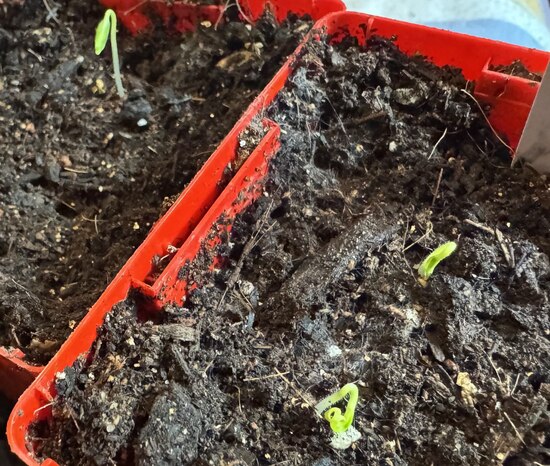
We have Seedlings!! Funky one up front is result of helmet head — Seed coat adhered to leaves — Eggplant
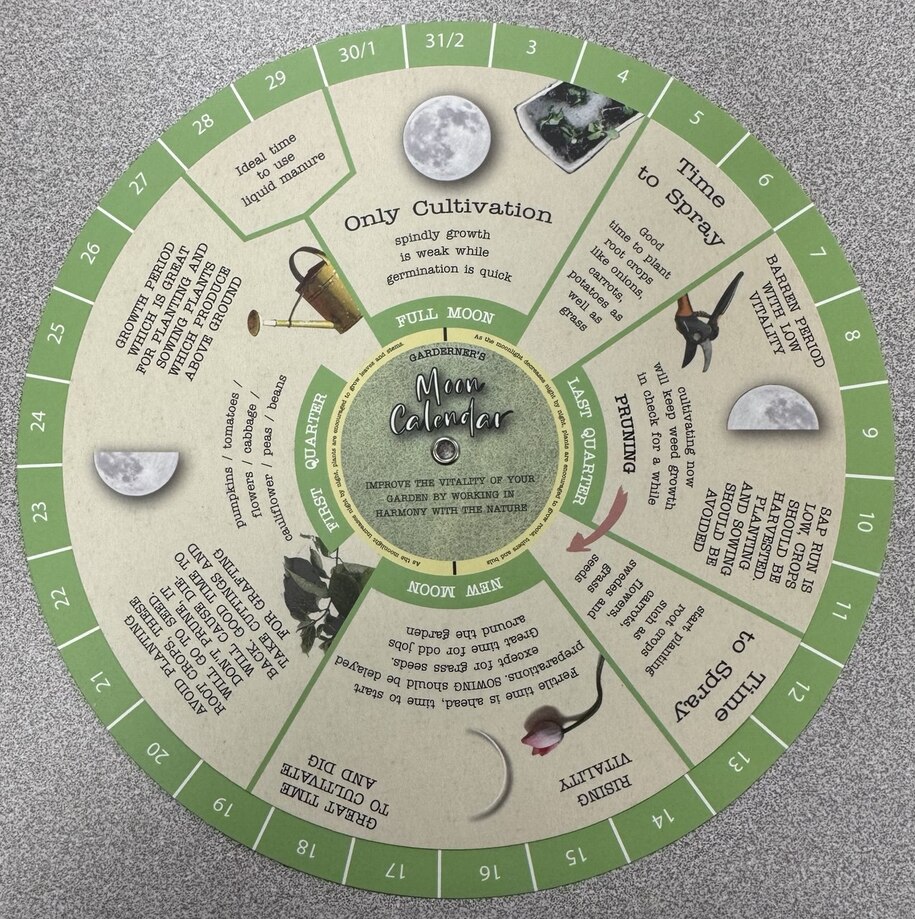
For funsies, I will be planting by the moon cycle. While I wish I could say this is a true experiment, there are too many variables I am unable to control. For instance, the impact of weather, the many soil differences, water flow (even within my backyard) and the fact some seeds must be started indoors to get a crop at all in my zone 5a. So not a true experiment.
As an overview, planting by the moon cycles offers three potential benefits, when conditions allow. Firstly, the moon provides light, illumination. While only a minute fraction of the light provided by the sun (measured in lux units), it may be enough that a plant would respond to it.
Secondly, plants respond to gravitational impact from both the sun and the moon, from germination to plant death. In particular, gravity affects the growth and differentiation of cells in the plants. The gravitational pull is posited to impact how water moves through the plant. This is hotly debated, as so far the few scientific studies done say gravity has a negligible to no effect on very small units of water. That said, lore, such as you would find in the Farmer’s Almanac, says the water pulled in during the planting phase of the moon helps seeds germinate. If one would like to deeper dive, begin by researching “gravitropic plant movement”. As I wish to avoid explaining sine law, I’ll leave the rest of that research to you.
I will say that thus far, my seeds are germinating a bit slower than usual.
Thirdly, patterns and cycles of nature often have purpose. Mother Nature does tend to help us out when she can. Perhaps planting at a certain point of the cycle sets up the plant to take advantage of a later point in the cycle, perhaps when fruiting is critical.
Between you, me and the internet, I am not sold on moon cycle planting. But if it is good enough for ancient and indigenous cultures, I see no harm in trying.
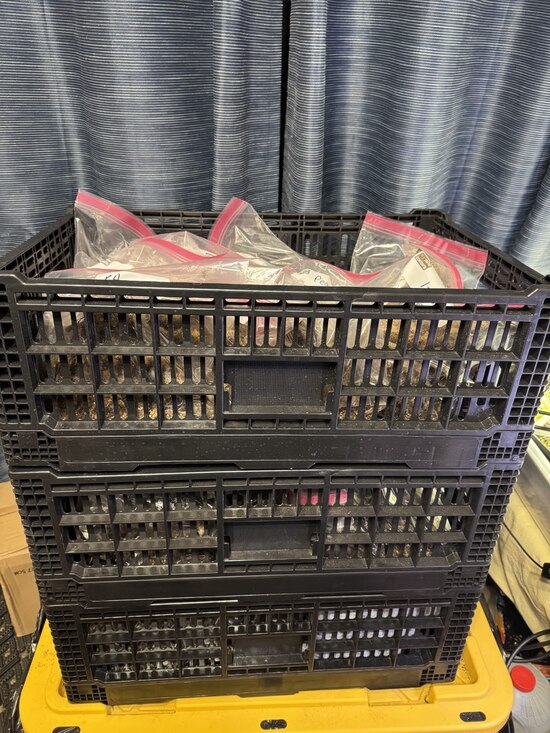
Dahlia Tubers coming in during a night of subzero temps — Garage is about 30 degrees warmer than outside
A reason I am growing by the moon cycles is that it is a change (garden fun) that does not increase plant count. I am reducing the numbers of plants and varieties of food in the garden. Being charmed by a new pretty or delicious plant or project in the garden makes me happy, and if I will have less of the new plants, a project might fill that now emptier 2026 vessel.
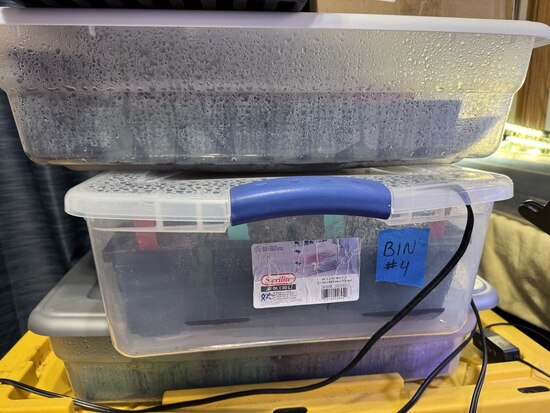
My super tidy germination bins to create tropical conditions
This year I won’t be swooning over many new varieties of plants. My theme for this garden season is restraint. Fewer Plants. Only one new tree. Working more with what I have instead of what I want.
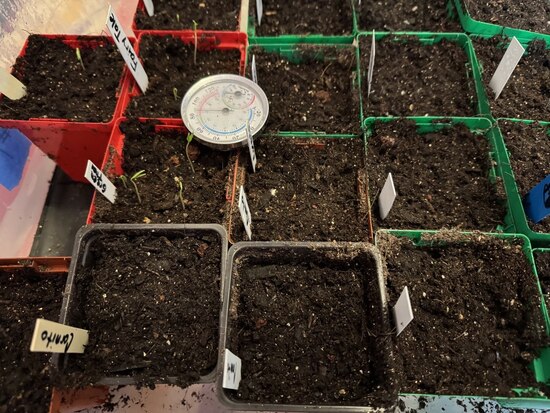
Inside the nightshade germination bin — almost 90 degrees, 80% humidity — Eggplant and peppers here
On the new equipment/project side, I will pick a warmer, low wind day to play hooky from work. A mental health day, during which I will be replacing the pest prevention hardware cloth around my main garden. The previous fencing was properly buried more than 6 inches, yet somehow voles have found their way in as the protection has shifted and degraded over time.
[insert vitriolic bunny/vole tangent]
I have a new subdued attitude towards gardening. I am no longer time-rich. A few garden activities have become more of a chore than a joy. Seeding and transplanting, in particular. Reducing the number of varieties and plants reduces the time and resources needed for the aforementioned seeding and transplanting. It also frees up space in the house and in the garden. Those storage bins I use to transplant all my plants aren’t five bucks anymore. My love for the rarer varieties means I cannot buy many of my plants (the obvious solution) so I do still need to start from seeds to get the varieties I want. I used to have a “pepper guy” at the Farmer’s Market but for the second year, he is not doing plants. SAD. So all peppers will be from seed.
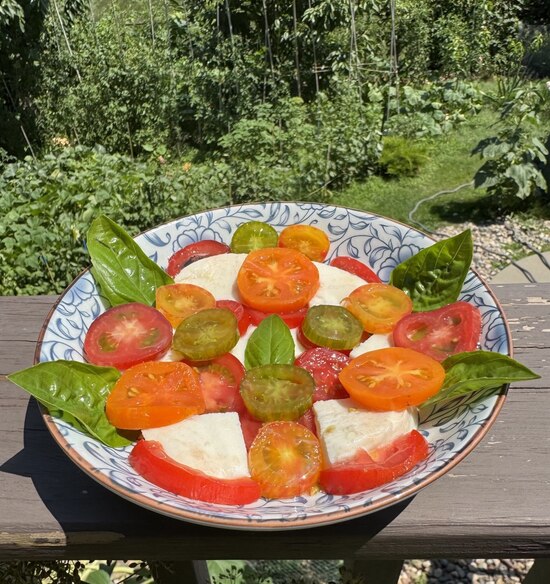
why we do this
Related to this, I am growing for volume, not variety. That is a huge change for me. Last year I grew over 100 tomato plants, around 80 varieties. This year, 50 plants, maybe 30 varieties? I am trying more of the Chef’s Choice series of tomatoes. Should give me many more tomatoes per plant than my typical heirlooms. Hence, I am giving my tomato plants more space, and abandoning high intensity spacing practices, for my tomatoes and vine plants. Yet another change. Want another example of restraint? I guess I’ll see how much spacing really matters!
Although the results could be because I planted by the moon. Who knows.
Oh yeah, and I am getting an almond tree!

A new new!
Thank you for reading!
Join the conversation below.
Comments are closed.