
Mike Hogan
| Special to The Columbus Dispatch

Container gardening tips for beginners
Container gardening is great for decks and patios.
Problem Solved
Many gardeners lack the space for traditional gardens but can grow vegetables and herbs in containers.Choose compact, bush or patio plant varieties specifically bred for growing in smaller pots.Containers require loose, well-drained soil and must have drainage holes to prevent root rot.
The Central Ohio Home & Garden show ended its 70th annual run last weekend, and during conversations with hundreds of gardeners over the eight-day event, several common themes and questions emerged.
While visiting food gardens at the show, many individuals expressed a keen interest in growing vegetables and herbs at home but indicated that they lack the space for an in-ground garden or even a raised bed. Other individuals cited physical mobility challenges which prevent them from maintaining a vegetable garden.
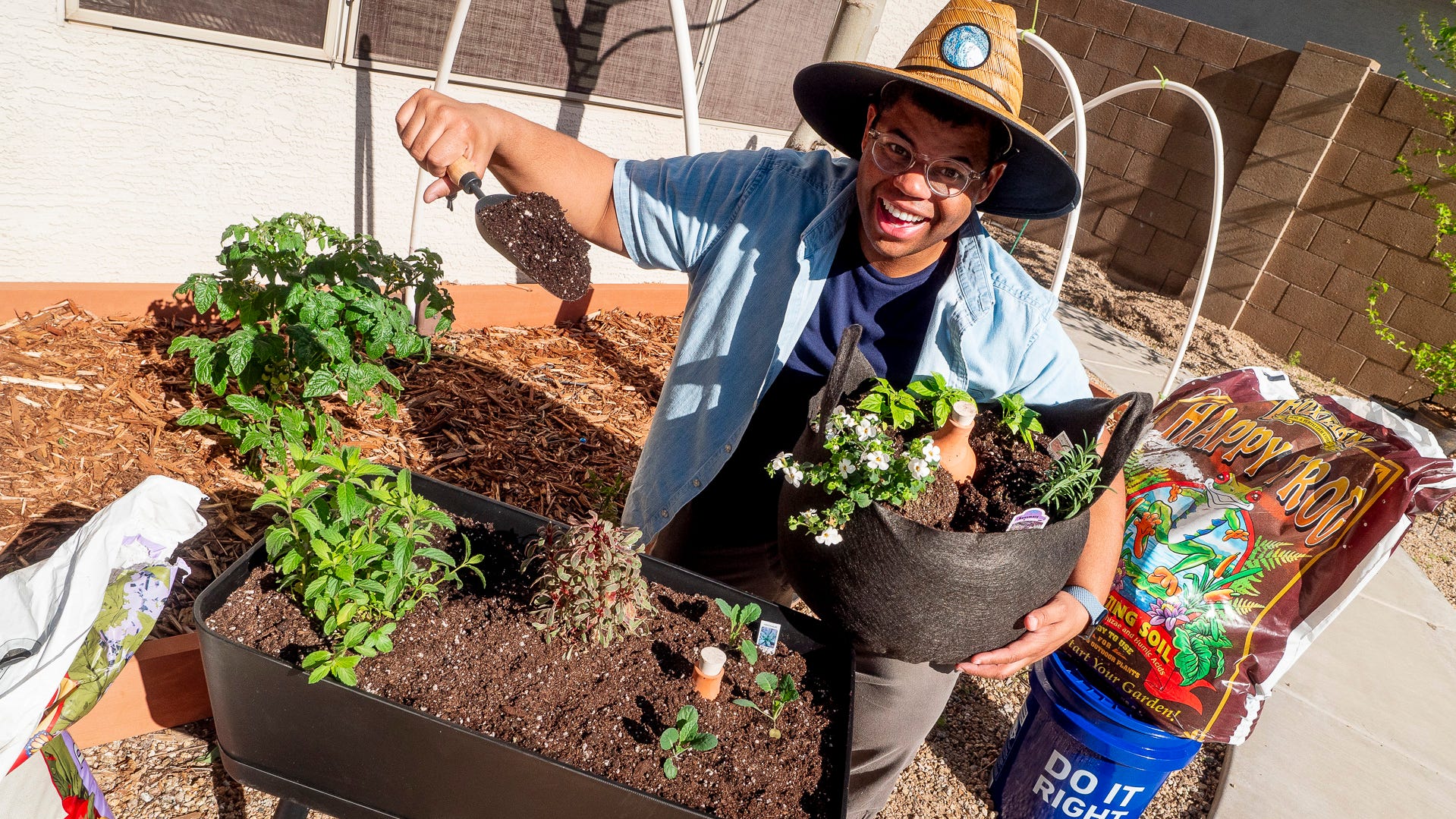
While many apartment and condo dwellers lack the space to grow a garden on a grand scale, most people can find space on their balcony, deck, porch, or even steps to grow vegetables, herbs and flowers in containers. Spaces for hanging baskets and window boxes also provide opportunities for food production on a small scale.
What can be grown in containers?
While it is fairly common to plant annual flowers in pots during the growing season, it is less common to grow food crops in containers. However, most culinary herbs and many common vegetables can easily be grown in containers if garden space is limited.
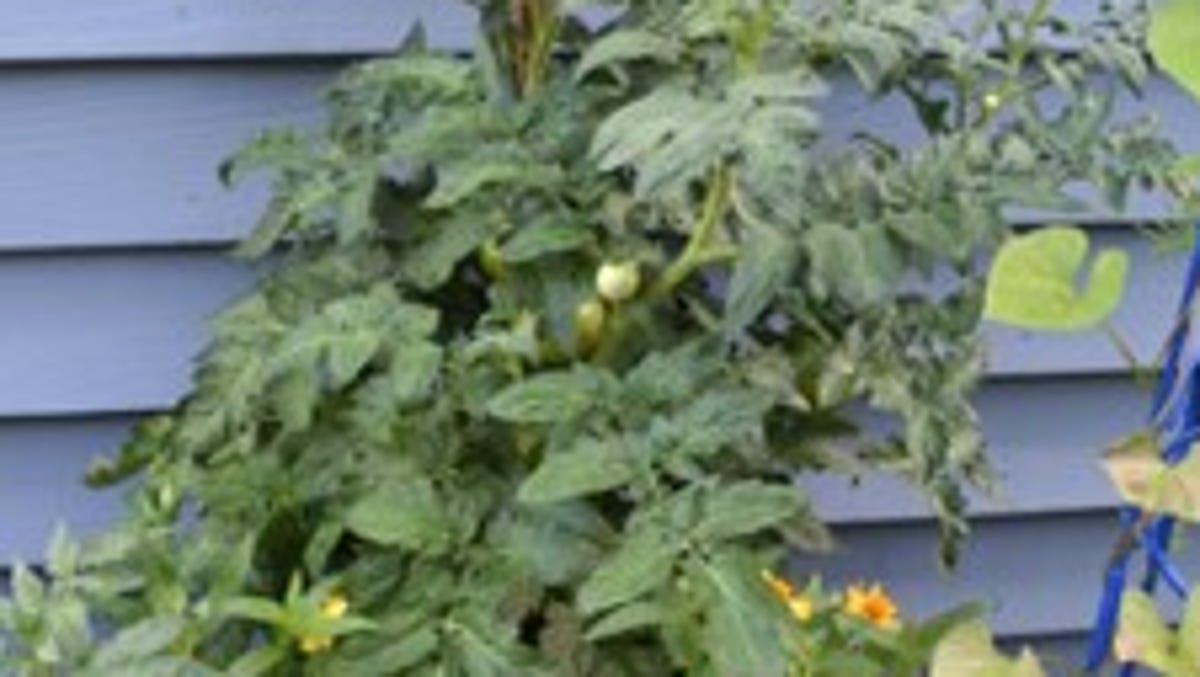
Popular vegetables such as tomato, cucumber squash, pepper, lettuce, and others can all be grown successfully in containers, often with less physical labor than growing in garden beds.
Some small fruits such as strawberries and blueberries can also be grown in containers. The key to success with growing food crops in containers is to choose appropriate containers and varieties of plants.
Choosing plant varieties for containers
When selecting varieties (also called cultivars) of food crops to grow in containers, look for varieties that have been bred specifically for their smaller size. Many times, such varieties are called compact, bush or patio varieties, signaling their suitability for planting in pots.
Most garden centers will offer varieties of transplants with compact characteristics. If you start your own seeds, be sure that the variety of seeds which you purchase are compact varieties. You will find compact varieties of seed or transplants for many vegetable crops such as tomato, pepper, cucumber, squash, and others.
Even in containers, some vegetables will still need to be supported by a small trellis or support system, including cucumber, tomato and squash. And not all vegetables grow well in containers.
Vegetables such as watermelon, sweet corn, winter squashes, and others are best grown in garden beds.
Almost all culinary herbs are easily grown in containers, and placing these containers right outside the kitchen door will make harvesting and use convenient.
Container choice is critical
While maintenance of container-grown food crops tends to be less work than maintaining these crops in garden beds, containers dry out more quickly than in-ground garden beds, requiring closer attention to soil moisture and more frequent watering.
Glazed pots and plastic, metal and glass containers are nonporous and hold moisture longer. While less expensive to purchase, unglazed clay pots dry out very quickly in the summer heat and require constant watering.
Whatever type of container you choose, be sure that there are drainage holes at the bottom to prevent root rot during periods of extended rainfall. If a container does not have drainage holes, use a drill or awl punch to add some.
To prevent soil from washing out of the drainage holes onto your porch, deck or steps, place a coffee filter or sheet of newspaper over the drainage holes before filling the container with planting media.
Loose soil required
When growing plants in containers, you can mix the soil to the exact requirements for container-grown plants, which will provide for better growth and production. Container-grown plants require a loose, well-drained soil high in organic matter.
You can mix your own container soil using equal parts of potting soil, perlite, Sphagnum peat moss, and compost. If you are lazy like me, you can purchase bagged container soil mixes and avoid the measuring and mixing!
Avoid using native soils from the yard or garden as these soils are too heavy for container growing and typically contain weed seed, soil-borne insects or disease pathogens.
Water and fertilizer
Most containers of vegetables and herbs will need to be watered daily during hot summer months. The potting media should always be moist but never waterlogged. To make sure you are thoroughly watering containers, add water until it starts to drain out of the bottom of the pot.
Because container-grown plants only have access to the nutrients in the container, they require more frequent fertilization than in-ground plants which are able to access nutrients in the surrounding soil.
To keep container-grown vegetable plants healthy and productive throughout the season, add a slow-release fertilizer at planting time and reapply a soluble fertilizer every two to three weeks.
Mike Hogan is Extension Educator, Agriculture and Natural Resources and associate professor with Ohio State University Extension.
hogan.1@osu.edu
Comments are closed.