
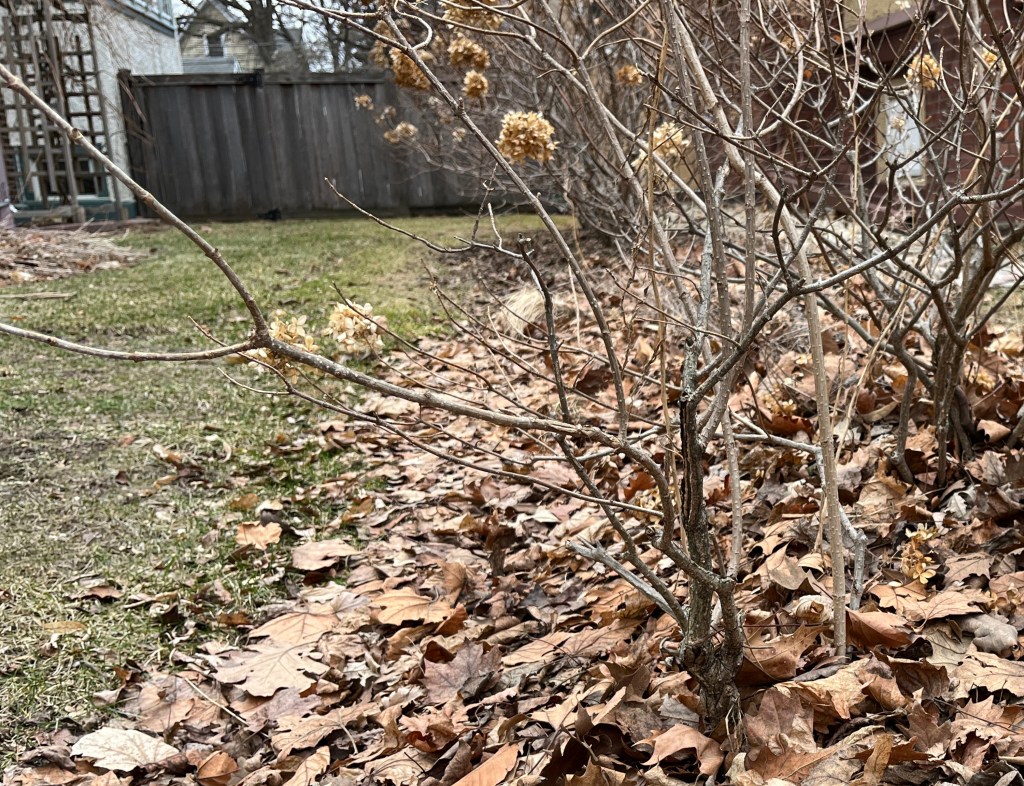
Sometimes February can feel like springtime — for a few days. It’s warm enough to wear a T-shirt in the afternoon. You may notice buds swelling and small hints of green under last year’s fallen leaves. It’s easy to be tempted to start working on the yard.
Then spring dreams are shattered. Temperatures fall below freezing, especially at night. There is snow or freezing rain.
“It’s still winter,” said Sharon Yiesla, plant knowledge specialist in the Palant Clinic at The Morton Arboretum in Lisle. “Don’t be fooled.”
Spells in the 50s and 60s followed by swings back to the 20s are a normal part of a Midwestern winter, and a changing climate is making them more common. “That means we need to be wary,” Yiesla said.
Even in March, it will be too soon to start mowing the grass or transplanting, regardless of the temperature. “Plants aren’t ready and they can’t be pushed,” she said.
Here are some tips for gardening — and not gardening — in late winter and early spring.
Go by the weather and the plants, not the calendar: Decide what to do based on the current weather, the 10-day forecast, how the soil feels and what you see your plants doing. The weather varies too much from year to year and week to week for a garden calendar of precise dates to be helpful. “Garden planning based on dates will usually be wrong,” Yiesla said.
Stay off wet, thawed soil: All plants will struggle in soil that has been compacted, or packed down to be so dense that water, air and roots can’t get through it. Compacting your soil is easy in early spring, when it is newly thawed and often wet. Digging in wet soil, or putting weight on it with a lawnmower or even by walking on it, is enough to do the damage. The clay soil common in the Chicago area is especially easy to compact. The condition is very difficult to correct, so it’s best to avoid compacting soil in the first place. “It’s fine to work on soil that is still frozen,” Yiesla said. “But once it thaws, avoid walking on it or digging in it until the surplus water has drained away and a handful of soil feels moist, not wet.”
Step carefully: Before you do late-winter tasks such as pruning deciduous shrubs or cutting back ornamental grasses, check the soil in that area to see whether it is still hard and frozen. If it feels soft underfoot, avoid compacting it by using stepping stones to distribute your weight. Foam kneeling pads can make good temporary stepping stones.
Leave the lawn alone: “There is no point in mowing until the grass has actually grown long enough to need a trim, which probably won’t be until at least late April or early May,” she said. It’s also a bad idea to spread fast-release fertilizer in early spring to try and make the lawn green up sooner. “That is likely to stress the grass plants and make them weaker in the long run,” she said.
Don’t go by what is for sale: Retailers often put lawn products and even plants on sale long before it is the right time to use them. For example, crabgrass preventer products may be on sale in February, but they should not be applied to a lawn until late April, about the time the redbuds bloom.
Clean up, but not too much: It’s fine to tidy up fallen branches and other debris from lawns and gardens, but don’t rake away the layer of fallen leaves and mulch that protects your plants’ roots. “That insulating layer keeps the soil cool so plants stay dormant and don’t sprout too soon,” Yiesla said. Tender early growth is vulnerable when the weather swings back to freezing. “Plants that are protected by mulch are more likely to come out of dormancy more slowly and safely, when it’s the right time,” she said.
For tree and plant advice, see the online resources of The Morton Arboretum at mortonarb.org/plant-care, or submit your questions online at mortonarb.org/plant-clinic or by email to plantclinic@mortonarb.org. Beth Botts is a staff writer at the Arboretum.
Comments are closed.