
 2 min read
Dreaming of tulips in spring or dahlias in summer? It’s as easy as planting a few bulbs and letting nature do the rest. While bulbs might look simple on the outside, they’re actually packed with everything they need to thrive. “Flower bulbs are neatly bundled packages that are uniquely programmed with everything they need to grow and bloom on their own,” says Angelika Zaber, a lawn care specialist and gardening expert at Online Turf. “They store food and moisture, keeping the plant alive during periods of difficult conditions, such as drought or dormancy.”
While maintenance is minimal, timing still matters. According to Zaber, understanding how bulbs work—and when to plant them—can make all the difference in your garden. Here’s what to know before you dig in.
When to plant bulbs.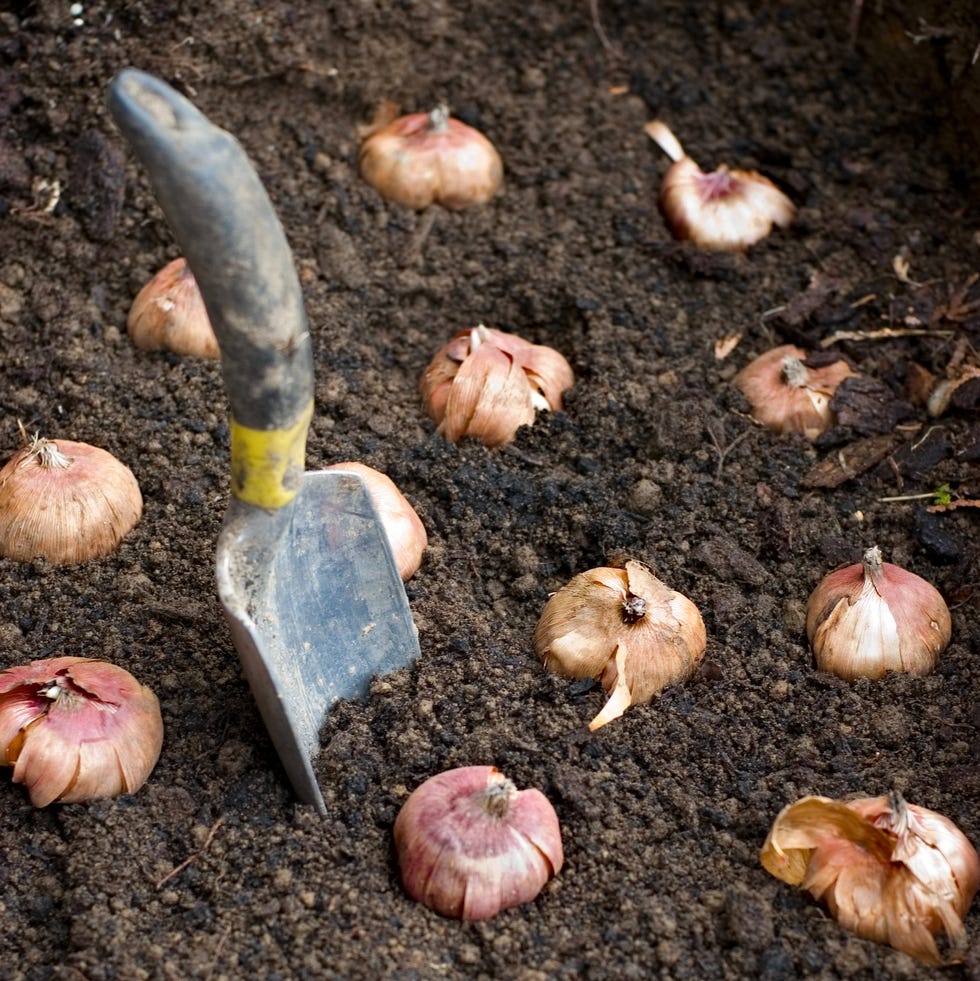
carrollphoto//Getty Images
The timing for planting bulbs depends entirely on when they’re meant to flower. Summer-flowering bulbs like dahlias and cannas do best when planted in spring, while spring-flowering bulbs such as daffodils, crocus, and iris should be planted in fall to give their roots time to establish before winter sets in.
“Spring-flowering bulbs need a period of cooler weather, also known as vernalization, to form the flower bud,” Zaber explains.
Summer-flowering bulbs are different. “They tend to be more tender and need warm temperatures to thrive,” she says. “If planted in the fall, it is likely that they will simply die over the winter.”
How deep should you plant bulbs?
How deep you plant your bulbs plays a big role in how well they perform. If they’re planted too shallow, they can shift, dry out, or become exposed to temperature swings. Too deep, and they may struggle to bloom.
“As a general rule, you should plant your bulbs at two to three times their own depth,” says Zaber. “For example, if your bulb is 4 centimeters deep, dig a hole that’s anywhere between 8 to 12 centimeters.”
Always measure the bulb’s height (not its width) before digging. Set the pointed end facing up, loosen the soil at the bottom of the hole to help roots spread, and water thoroughly after planting to settle the soil in place.
Can you plant spring bulbs after the first frost?
Missed the fall planting window? If you ask Zaber, you may still have time.
“Spring-flowering bulbs can be planted after the first frost, as long as the ground is not frozen,” says Zaber. “This is because spring-flowering bulbs need a period of cold weather to thrive anyway, so it will not cause any harm.”
In fact, many gardeners prefer waiting until temperatures cool to prevent bulbs from sprouting too early. The key is having workable soil because once the ground freezes solid, planting season is over.
With the right timing and know-how, bulbs are one of the easiest ways to add color to your garden. Plant them at the proper time, and you’ll be rewarded with a beautiful, bloom-filled garden when growing season begins.

Tierney McAfee is a freelance writer and Country Living and The Pioneer Woman contributor who covers entertainment, holiday & entertaining, food & drinks, design ideas, DIY, and more.
Comments are closed.