
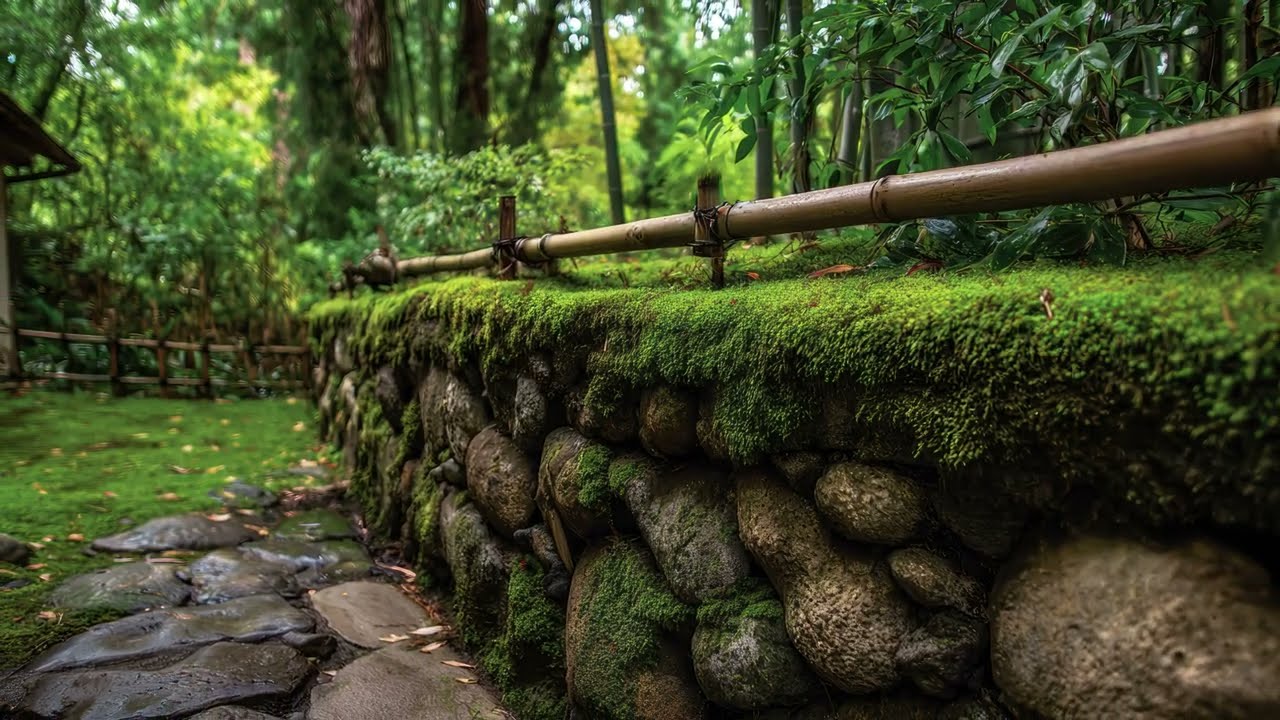
In the world of Japanese garden design, walls are never just barriers. They are canvases—silent companions that frame space, soften edges, and invite the eye into stillness. In this video, “Garden Walls as Zen Canvases: Texture, Moss, and Bamboo Panels,” we explore how a simple Japanese garden wall can become a living artwork, blending nature and design into a seamless experience of serenity. Through moss, bamboo panels, and textured backdrops, you will discover how garden walls transform into vertical Zen gardens that breathe with time and season.
A Japanese garden wall does not exist to keep you out. Instead, it creates intimacy, separating the garden from chaos outside and offering a sanctuary within. Unlike rigid concrete fences, these walls use materials that age gracefully—stone, clay, bamboo, and wood. Each choice matters. A textured backdrop is not flat decoration but a stage where light and shadow perform. Morning sunlight may highlight the grooves of stone, while evening lanterns bring out the warmth of bamboo panels. The wall is alive, always shifting with the rhythm of nature.
One of the most beautiful qualities of a Japanese garden wall is its relationship with time. Moss grows slowly, creeping into cracks and softening hard edges. This is wabi-sabi in action, the Japanese philosophy that finds beauty in imperfection and aging. A wall with moss is not decayed; it is seasoned. It shows patience, acceptance, and the quiet poetry of nature’s hand. When a vertical Zen garden forms on the wall, each layer of green tells a story—not of perfection, but of harmony between stone, air, and water.
Bamboo panels bring another dimension. Their vertical lines add rhythm, making the wall feel light and breathable. When wind brushes through them, you hear a gentle rustle, reminding you that the garden is not silent but alive with subtle voices. A wall made with bamboo is not static; it dances with weather, sways with seasons, and carries the memory of rain. As part of a textured backdrop, bamboo contrasts beautifully with stone or clay, adding warmth where solidity might otherwise dominate.
A vertical Zen garden does not need elaborate decoration. Instead, it thrives on restraint. The design principle here is minimalism—using less to evoke more. A single patch of moss on stone, a clean bamboo panel casting long shadows, or clay walls washed with rain are enough to awaken reflection. Japanese garden design teaches us that the wall’s role is not to overpower but to frame the experience of stillness. In doing so, the wall itself becomes a guide toward mindfulness.
Throughout this video, we will walk you through ten unique scenes where walls transform from structure to spirit. We will explore the tactile feel of stone, the slow spread of moss, the play of shadow across textured surfaces, and the gentle rhythm of bamboo panels. You will see how Japanese garden walls evolve with time, how a textured backdrop can shift mood from day to night, and how a vertical Zen garden brings life to stillness.
By the end, you will understand that a wall is not just an element of enclosure. It is an active participant in the garden. Its surfaces breathe with the seasons, its textures invite touch, and its moss whispers of patience. To build or imagine your own Japanese garden wall is to accept that beauty is not immediate—it is cultivated through time, weather, and care. Whether you have a large outdoor space or a small courtyard, the lessons of textured backdrops, bamboo panels, and moss can guide you toward peace.
This video is perfect for anyone seeking inspiration for Japanese garden design at home. Whether you are creating a full-scale landscape or simply enhancing a corner of your yard, learning how to use walls as Zen canvases will bring depth and serenity. We invite you to see walls not as restrictions but as opportunities for expression, a way to frame your own sanctuary of calm.
If you enjoy exploring garden philosophy, design principles, and practical ideas for peaceful outdoor spaces, make sure to subscribe to our channel. With every video, we bring you closer to the timeless wisdom of Japanese gardens. Let this journey remind you that walls are not the end of a garden—they are the beginning of reflection. #garden #japanesegarden #gardendesign #landscaping
Comments are closed.