
Linnea Geddes
| University of Minnesota Extension
Minnesota gardens may be frozen right now, but many gardeners are planning for spring — paging dreamily through seed catalogues, readying their indoor seed-starting spaces, and plotting their vegetable beds.
For many dedicated University of Minnesota Extension Master Gardener volunteers, preparations for seed libraries are also well underway.
Seed libraries sprout up around Minnesota
On a recent dreary winter afternoon, eight volunteers gathered at Hennepin County’s Eden Prairie Library to sort seeds. They divided packets of commercially packaged seeds donated by local businesses into smaller envelopes, adding information on the plants and how to start them.
Seed libraries, often located in public libraries, provide free access to seeds and educate communities about gardening, serving as hubs for sharing local plant knowledge and resources. Master Gardener volunteers often play a key role in organizing and running the seed libraries.
Master Gardeners in Stevens County began working on a new seed library in the Morris Public Library last year. Volunteer Melvin Lauer, who is leading the effort, admits it’s been a challenging project. He’s driven by “a vision of making gardening available to anyone who has access to sunlight.”
Thanks to the team’s hard work, a grand opening is set for March.
Addressing gardening challenges
Free seed libraries address challenges such as cost, leftover seeds, unreliable information, and a demand for more native plants.
Don Smith, Mower County Master Gardener volunteer, has six years of seed library experience under his belt. He likes giving experienced gardeners a low-risk way to try new seeds. Seed libraries distribute seeds from the previous season that seed companies can no longer sell, but are typically still usable.
The Austin seed library — Mower County’s largest of five — usually gives away 1,000-1,500 seed packages each year. According to Smith, seed packets often contain more seeds than the average home gardener wants or needs for a growing season (or even several).
One challenge for new gardeners is finding reliable information. Anecdotal or misleading information on the internet can be confusing, but the Master Gardeners volunteering at the seed library are trained by the University of Minnesota Extension in research-based knowledge and best practices.
Master Gardeners in Mower County teach classes on starting seeds, container gardening, and, at the end of summer, saving seeds for the following season. (While this particular library does not accept seeds from home gardens, several do.) They also provide materials in English and Spanish.
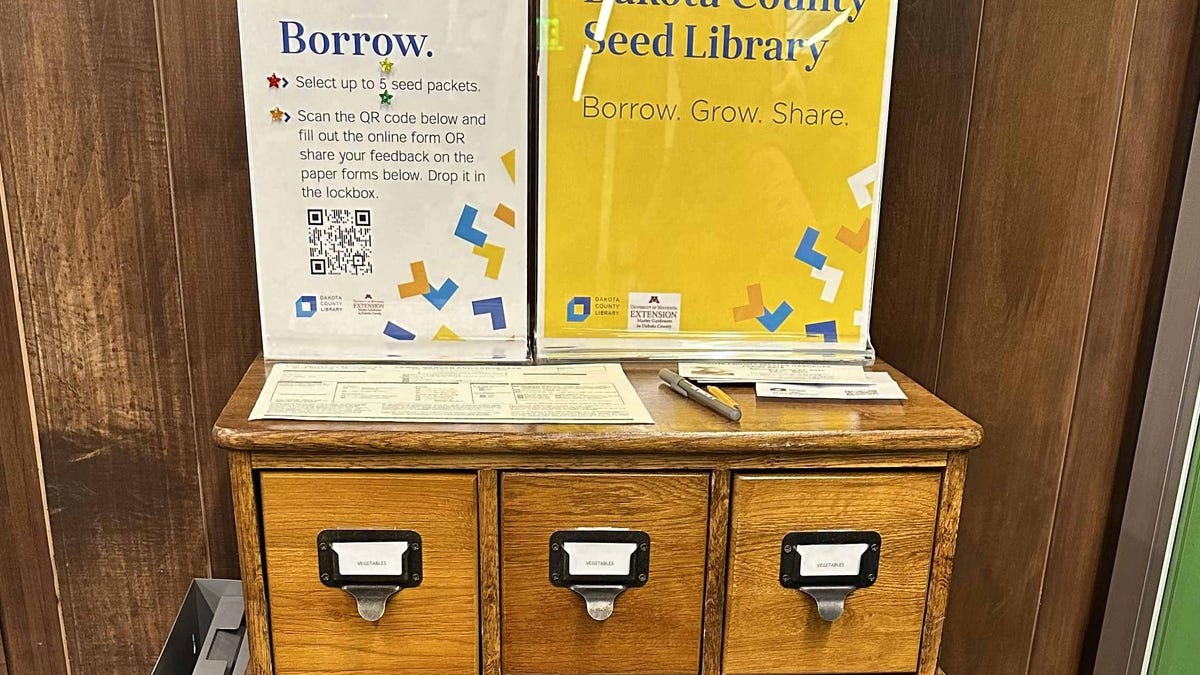
Native plant seeds are in high demand. Master Gardeners in Dakota County work with a local park program to harvest, clean and package seeds from native plants grown in the parks. The team made 800 packages of native seeds across 62 varieties, according to Master Gardener Janet Schutte. The goal is to encourage people to grow plants that thrive in Minnesota: “things that would be here normally if we weren’t here.”
Planting seeds for healthy childhoods
Dakota County is opening a second seed library this year, the Kaposia Seed Library in South St. Paul, where encouraging home gardening will complement the library’s child nutrition program.
“We’re not going to end hunger, but if I get one kid to plant one vegetable and realize that that lettuce doesn’t taste like the lettuce at the grocery store,” Schutte says, “maybe they grow up loving lettuce a little more.”
Comments are closed.