
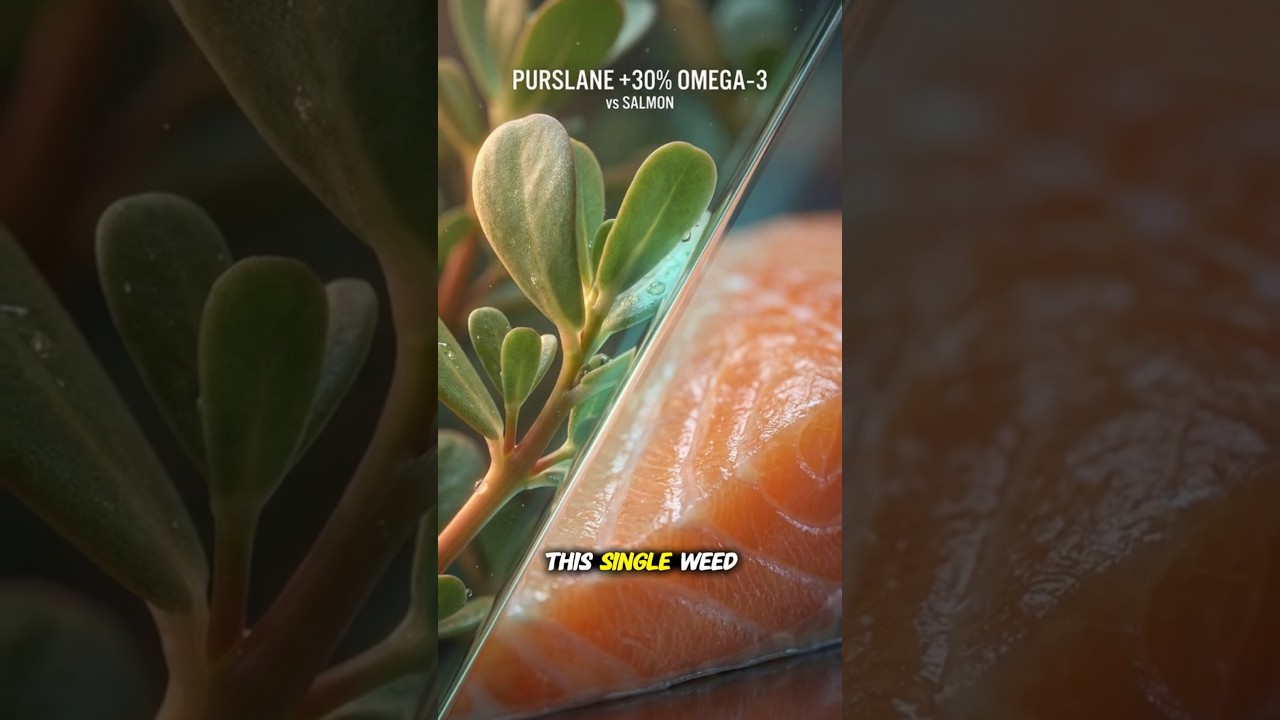
Did you know the “weed” in your driveway might have more Omega-3s than your fish oil supplement? 🌿🐟
In this video, we identify Purslane (Portulaca oleracea), a common backyard plant that scientists at Yale have dubbed a “super plant” for its incredible nutrient density and unique photosynthesis abilities.
We also cover the #1 Safety Rule for foraging this plant: The “Snap Test.” Learn how to instantly tell the difference between edible Purslane and its toxic look-alike, Spurge (Euphorbia).
In this video you will learn:
🌿 How to identify Purslane vs. Spurge (Milky Sap Test).
💪 Why Purslane is considered the highest plant source of Omega-3 fatty acids.
🥗 How to turn a common garden weed into a free superfood.
⚠️ SAFETY DISCLAIMER: Never eat a plant unless you are 100% certain of its identity. Avoid foraging from areas sprayed with pesticides or herbicides (like driveways or manicured lawns). Spurge contains a toxic milky sap—always check the stem!
Subscribe to All Into Nature for more backyard survival secrets! 🌎✨
#purslane #foraging #superfoods #omega3 #gardening #edibleweeds #plantscience #survival #allintonature #portulaca
⚠️ HEALTH & SAFETY DISCLAIMER
1. Foraging & Identification Risk
The content in this video is for educational and entertainment purposes only. Never consume any plant unless you are 100% certain of its identity. Purslane (Portulaca oleracea) has a toxic look-alike called Spurge (Euphorbia), which contains a poisonous milky sap. Always perform the “stem snap test” demonstrated in this video. If you are unsure, do not eat it. The creator of this channel is not responsible for any adverse reactions resulting from the consumption of misidentified plants.
2. Location & Contamination Warning
Purslane often grows in driveways, sidewalk cracks, and lawns. Do not forage from areas that may have been treated with pesticides, herbicides (weed killers), or industrial run-off. Plants growing in concrete or near busy roads can absorb heavy metals and toxins from exhaust. Only harvest from areas you know are chemical-free.
3. Medical & Dietary Caution
This video does not constitute medical advice. While Purslane is nutritious, it is high in oxalates, which can cause complications for individuals with a history of kidney stones or kidney disease. If you have a medical condition, are pregnant, or are taking medication, consult your doctor before adding wild plants to your diet.
USE AT YOUR OWN RISK. By watching this video, you agree that All Into Nature and its creators are not liable for any injury, illness, or damages that may result from the use of the information provided.
20 Comments
After parboiling purslane, my dad added fresh tomatoes, onions and fish sauce for a delicious salad.
Curious: How much of this knowledge is derived from INDIGENOUS WISDOM?
Thank you very nice
Can one get Purslane seeds? New Delhi pavements had a lot of these earlier. Don't see any now.
Awesome food ❤❤❤❤❤❤❤❤
Great content!
Animals have long chain Omega 3, plants not, so you can't really compare them since long chain are a lot more valuable than short chain.
I love purslane, and didn't know about spurge. Thanks for the wisdom.
❤
Thank you
Akulikuli
I have it growing in my kitchen window 😊
My grandparents used to put it in salads
The cities be spraying these with a vengeance….
I got this plant
Alusiman sa bisaya..
I didn't know that, thanks.
This true!?
Are you suggesting that the starvation times are coming?
Beware, for like with many other things eating this weed in large quantities might cause kidney failure. People, do not trust blindly. Research about it first.
We called it pigweed in Australia