
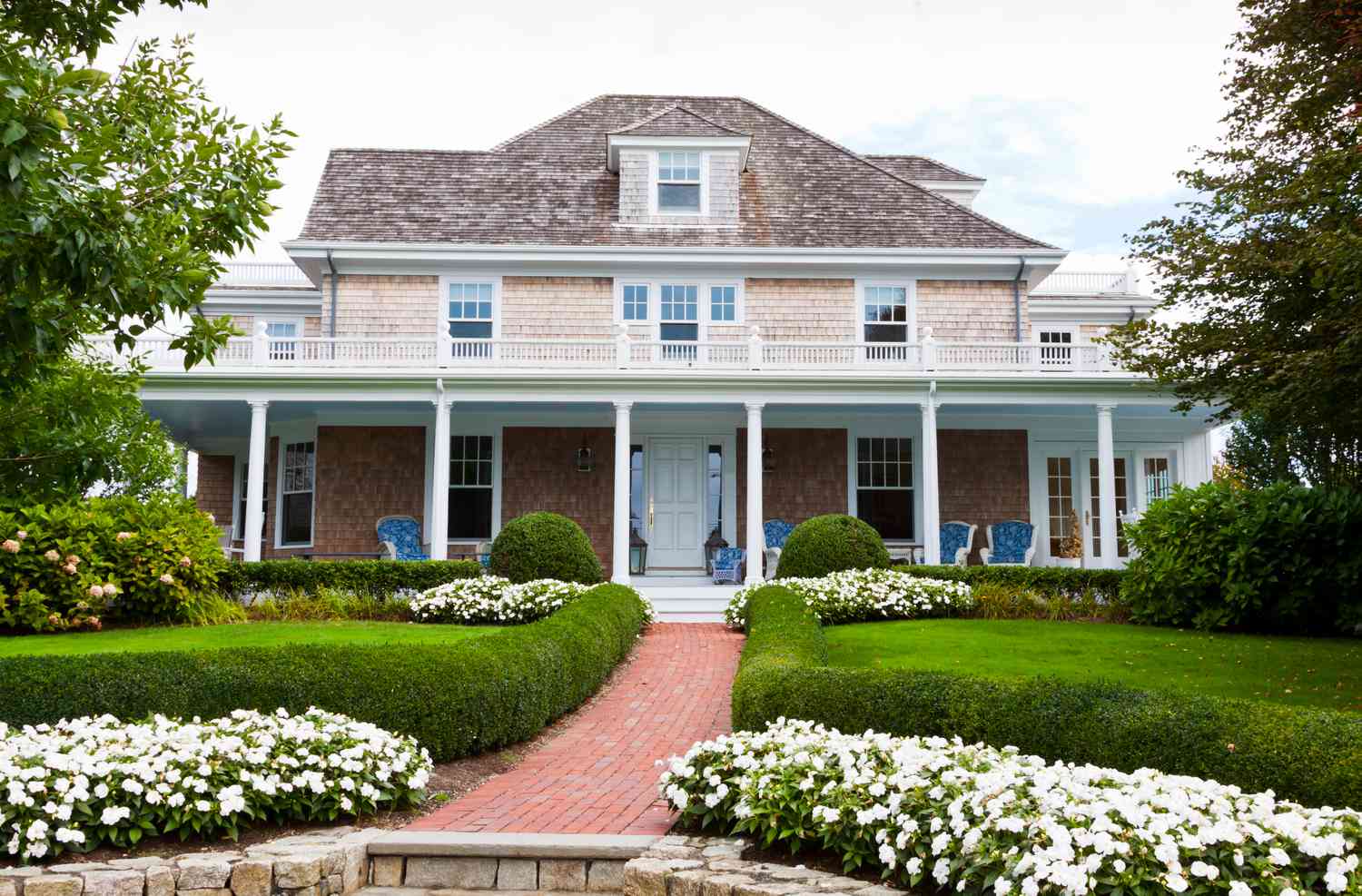
While our paint color selections, furniture choices, and even the layout of our home might all have been impacted by passing trends, we could be less inclined to think of our landscaping as something equally deserving of an of-the-moment focus. “The garden is a living, thriving classroom where we can play, experiment, and learn,” says Linda Vater, Design Expert for Southern Living® Plant Collection. “Don’t be afraid to take risks, push boundaries, and grow something you’ve never grown before.” If you do, the plant expert says you might just find yourself inspiring the next big gardening trend—only this time, hopefully, it will have a little more staying power than the outdated take on this list.
Credit:
Getty Images
Excessive Irrigation and Thirsty Plants
Overwatering your lawn isn’t just bad for your water bill; it can also lead to water waste, increased disease risk for your plants, and shallow root growth, says Mike Hrivnak, Director of Agronomy at Canopy Lawn Care. Instead, he suggests deep, infrequent watering, smart irrigation systems, rain sensors, and even soil improvements that can increase moisture retention.
If you’re still looking for more ways to conserve water, Vater suggests looking to your plants. Opting for plants that do well with less water can help keep your garden growing while also cutting back on your utility bills. “If you think water-wise means low on blooms or bright colors, think again,” she says. “Stellar reblooming picks like Ever Amethyst™ Agapanthus and Ever White™ Agapanthus positively pop in the landscape, offering month after month of abundant blooms with low water needs once established.”
Overly Manicured Lawns
Looking for more ways to decrease water usage has also impacted how we view our lawn in 2025. “A perfectly green, trimmed, uniform lawn was once a status symbol, associated with wealth and suburban perfection,” says Alex Betz, Landscape Designer, Plant by Number. “Now, folks are veering from this pristine look due to the excessive water needed to upkeep it and the high-maintenance requirements,” Betz says. A more natural, almost unkempt look is in. Large lawns are being replaced with native plants, ornamental grasses, and drought-tolerant ground covers that require less upkeep and H20.
Fussy Shrubs
“It’s fine to have a favorite plant or two in the yard that gets a little extra love, but who wants to have an entire landscape filled with ‘plant divas?’” asks Vater. “Nowadays, there are plenty of landscaping shrubs that look and perform like superstars without a star’s long list of demands.” For a garden with mega color and charm, but with minimal to-dos, look for deer-, drought-, and pest-resistant evergreens and compact flowering shrubs. Miss Lemon™ Abelia, ‘Kaleidoscope’ Abelia, and Purple Daydream® Dwarf Loropetalum all fit the bill.
Bold Mulch Selections
Whether we’re talking bright red mulch or white rock gardens, these bold ground covers are taking a back seat as they seem out of touch with the more natural aesthetic currently taking over garden trends in 2025. Instead of red mulch that can leak harmful chemicals into the soil, Betz recommends a natural bark mulch that looks more organic. And, instead of white rocks that quickly get dirty, don’t support plant diversity or local pollinators, and can create heat buildup, he recommends using a mixture of more prominent stone elements and natural-toned gravel while incorporating drought-resistant native flowers and succulents.
Single-Tree Front Yard Landscaping
“Having a single, large statement tree, like a palm or maple, in the center of a front lawn was seen as simple and elegant, but it lacks visual interest, shade coverage, and biodiversity, making the landscape feel bare and outdated,” explains Betz. To give your yard a more modern feel, the landscape expert recommends a more layered look that includes multiple shrubs and trees, creating a forest-like feel—veering away from a symmetrical look that can feel both high maintenance and uninviting. Taking a more lived-in, organic approach can improve your curb appeal and support local wildlife and pollinators.
Plastic Edging
We hate to tell you, but your plastic edging is aging your garden—and not in a good way. “The problem with plastic edging is that it tends to crack, warp, and looks artificial over time, lowering the overall quality of the landscape,” says Betz. Instead, he recommends opting for stone borders, native-plant borders, or metal edging. All of these options can provide a more durable and natural-looking transition between the zones in your garden.
Stepping Stones
While DIY-friendly, stepping stones can create a host of problems like awkward transitions, uneven footing, and even an unfinished appearance. For those reasons and more, Betz says it’s worth investing in a continuous, well-integrated pathway made of decomposed granite, permeable pavers, or flagstone. “If you prefer stepping stones, set them closer together with low-growing ground covers, like creeping thyme or moss, for a more polished, functional, and natural look,” he says.
Lackluster Mailboxes
“Overlooked, under-planted mailboxes are becoming yesterday’s news as more homeowners realize the potential of this small yet highly visible space,” says Vater. “Adding colorful flowers, trailing vines, and attractive evergreens can transform a dull mailbox into a charming focal point that adds serious curb appeal.” She recommends lower-growing plant varieties (think under 2 feet) for a tidy look. You can add vertical interest with climbing vines, but beware of introducing anything prickly or thorny. Vater assures your mail carrier that they will thank you for your thoughtful selection.
Comments are closed.