
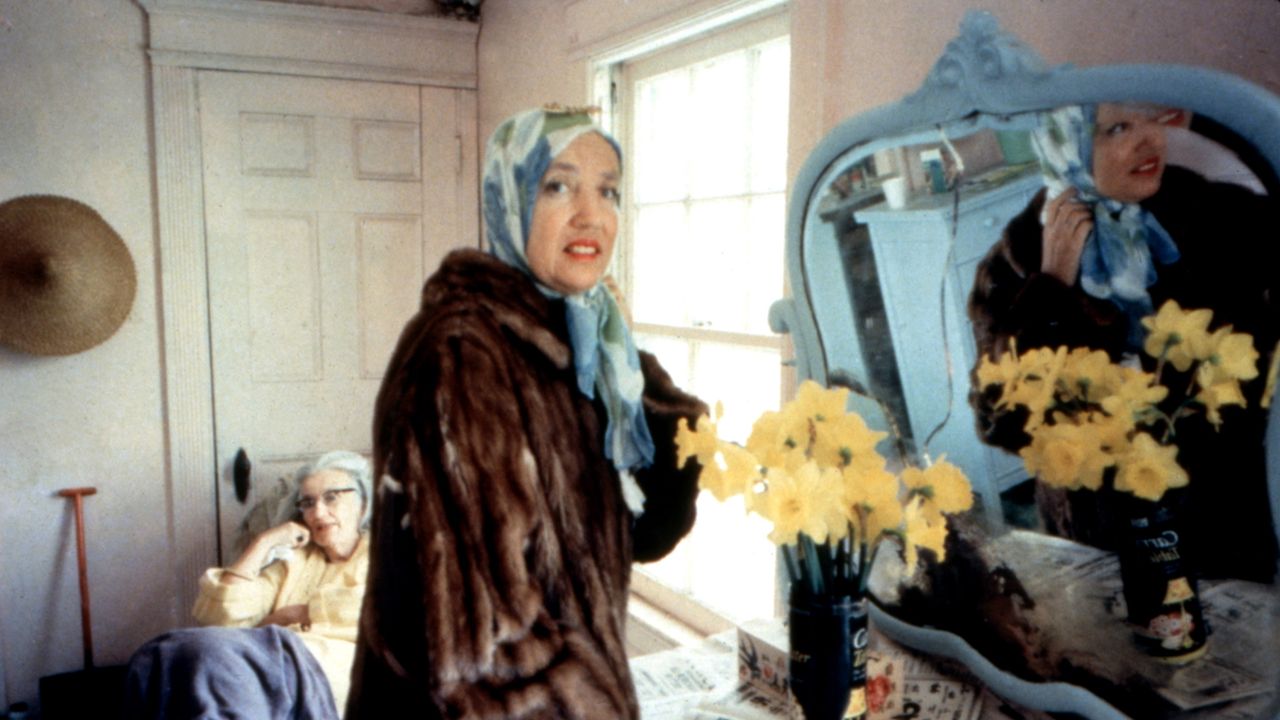
In the few short months leading up to its wide release, the filmmakers behind Grey Gardens were in a frantic state of damage control. Albert and David Maysles’s now iconic documentary, chronicling the eccentric lives of high-society dropouts “Big” and “Little” Edith Bouvier Beale—Jackie O’s aunt and first cousin—had been courting controversy even before its fall 1975 debut at the New York Film Festival. Critics at its first press screening called the film disgusting, accusing it of exploiting both its oblivious subjects and the beloved former first lady. “You just sloughed off Jackie Kennedy,” reviewer Rex Reed spat at the Maysles brothers as they took the stage after the credits rolled. The Trenton Times gossiped that the film “nearly provoked a fight.”
Grey Gardens was hardly the Maysles’s first foray into controversy, but their latest feature-length film was also their first to feature female subjects as main characters. The filmmakers’ timing—smack-dab in the middle of the women’s lib movement—was either impeccable or atrocious, depending entirely on whom you were asking. Those interpretations hinge upon how a given viewer might interpret the Beales themselves: Were they financially desperate and probably mentally ill victims of patriarchal systems that embarrassed and exploited them? Or were they defiant objectors to societal norms, rightfully cashing in by telling their story of non-conformity on their own terms?
Even now, half a century after Grey Gardens hit mainstream theaters, fans, scholars and critics are no closer to a consensus about the enduring legacy of the film. Let’s review what of the eccentric Beales endures—and what, as Little Edie would say, was merely the best costume for the day.
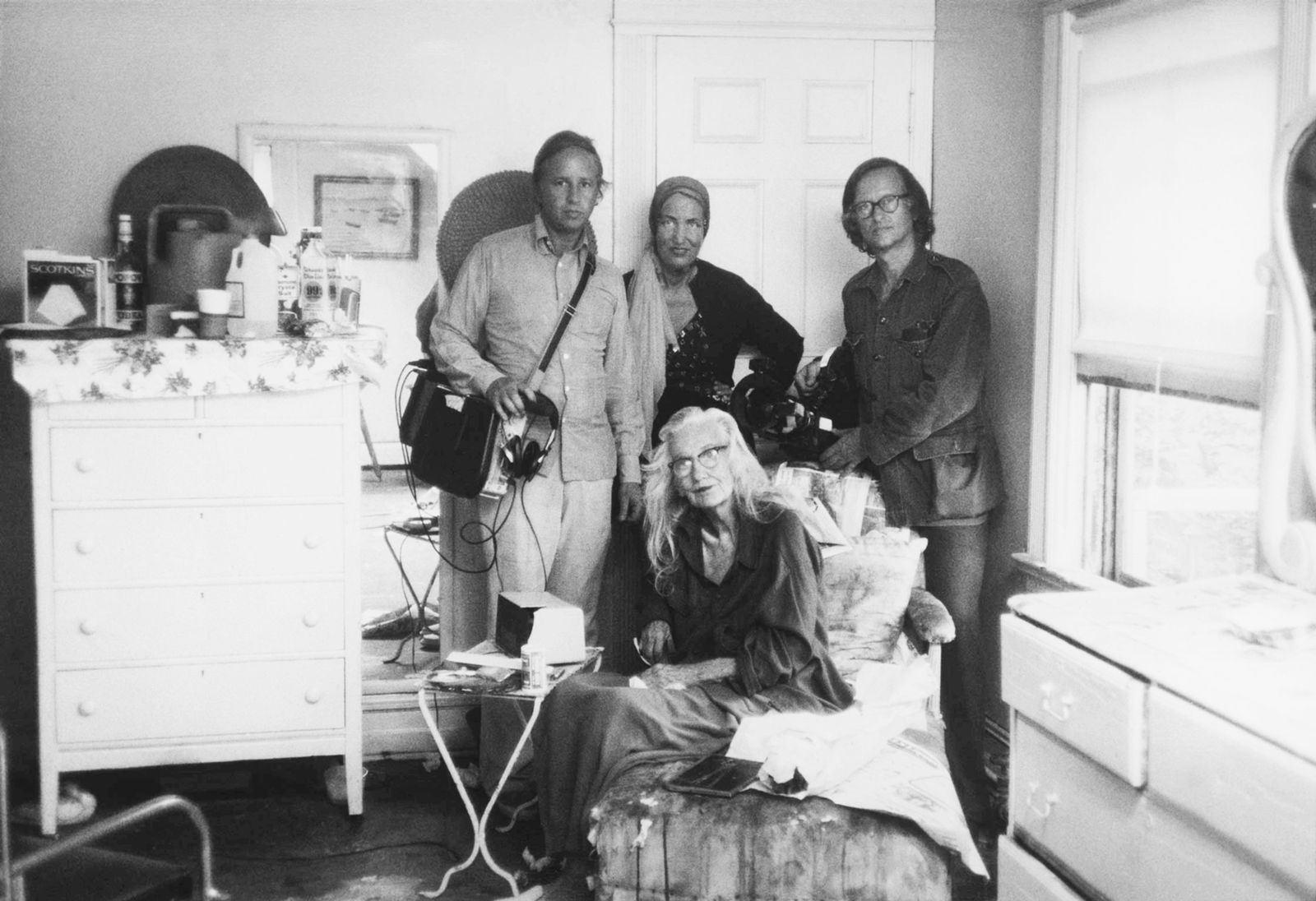
David Maysles, Edie Beale, Edith Bouvier Beale (seated) and Albert Maysles, 1975.©Janus Films/Everett Collection
The seeds of Grey Gardens
In 1960, a young Albert Maysles worked on the JFK campaign film Primary. Tasked specifically with filming Jackie Kennedy, Maysles did that job and more, capturing telling moments—the future first lady nervously fidgeting with her white gloves, for example—that traditionalists felt should have remained private. In the early 60s, explains Georgetown University professor of communications, culture, and technology Matthew Tinkcom, intimate shots like these were part of a new and controversial filmmaking style called “direct cinema” (or, in fancy French terminology, cinéma vérité). “Filmmakers were supposed to be a fly on the wall and no more present than you need to be,” says Tinkcom, author of BFI Film Classics: Grey Gardens.
Jackie was a passionate cinephile who must have appreciated the innovative approach: A full decade later, Lee Radziwill, Jackie’s little sister, remembered the Maysles’s work and chose them to shoot a subsequent personal project about her and Jackie’s society-girl summers in the Hamptons. The Beales were just two of many would-be subjects from the extended Kennedy clan. But as soon as Albert’s camera (with David on sound) captured the pair on film, their charisma stole the spotlight—and Radziwill’s vanity project was shelved. Instead, the brothers decided to tell the Bouvier relatives’ far more interesting tale: a reclusive mother-and-daughter duo living in squalor with dozens of cats and a handful of raccoons. The prim and polished Bouvier sisters were horrified, and forbade the Maysles from using the footage they’d already shot.
The brothers later circled back, sans both Bouvier sisters, to convince the Beales to appear in an experimental film. It wasn’t difficult. “They said, ‘These are our lives. Take them. Record them’,” Albert told The Trenton Times. In return, the Beales were paid a paltry $5,000 each (about $30,000 today) to expose themselves to the world. Like many documentary subjects before them, they hoped for ample royalties on the other side—but as usually happens in cases like this, that money never actually materialized.
Comments are closed.