
NEW ORLEANS (WVUE) – As the days grow longer and the sun climbs higher in the sky, that familiar gardening urge starts to kick in.
The warmth of spring is calling, but patience is essential. Plant too early, and a late frost or freeze could devastate your hard work before the season truly begins.
For the growing season to truly take off, two things are non-negotiable: warmth and sunshine. The good news is that both are naturally on their way.
As we move deeper into spring, the days lengthen, and the sun’s angle rises higher in the sky, which means warmer days are inevitable. However, this doesn’t guarantee that frost or freeze events won’t make a surprise appearance.
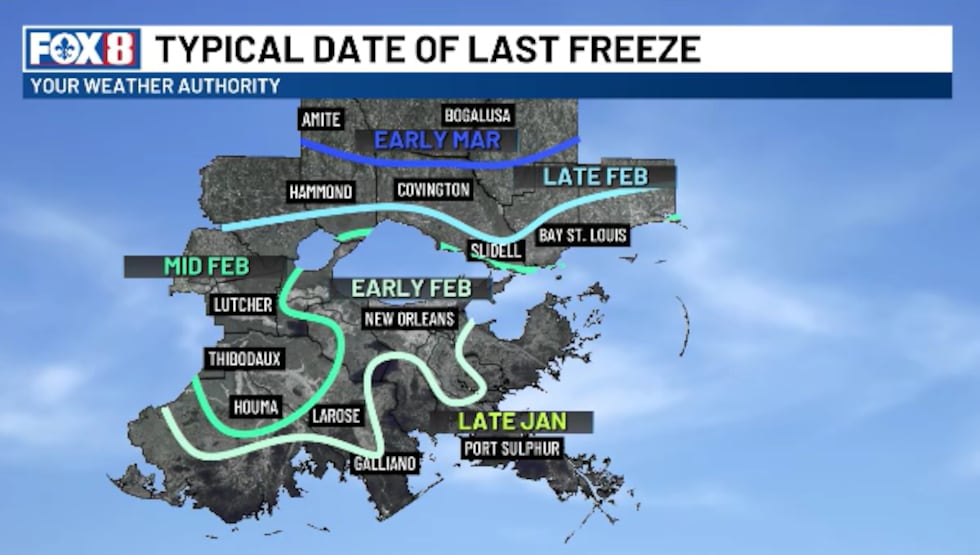 The typical last freeze for Southeast Louisiana.(WVUE)
The timing of your region’s last freeze matters significantly.
If you live along the south shore, a freeze in late February is far less likely than it would be for those in northern areas like Washington Parish or northern Tangipahoa Parish. That’s where the typical last freeze date doesn’t arrive until late March.
The specific weather pattern each year ultimately determines just how late freezing temperatures might linger in your area.
While freezing temperatures aren’t always what to watch out for.
Frost develops quietly on calm, clear nights when temperatures dip below 40 degrees.
Over the past five years, the last frost potential in our region has occurred anywhere from mid-February through mid-March, depending on the year.
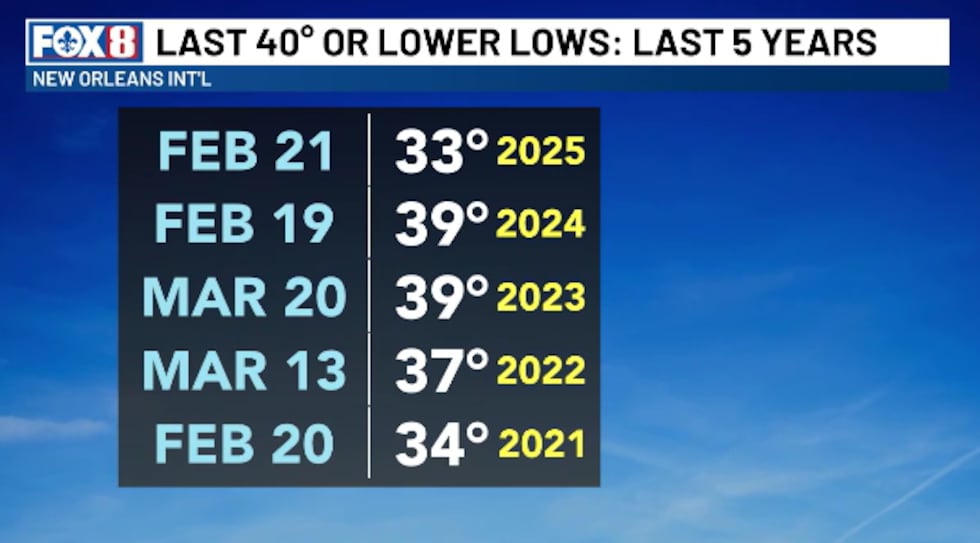 Typical last frost dates in the last 5 years..(WVUE)
Looking ahead at the current weather pattern, late February and early March are shaping up to be exceptionally warm along the Gulf Coast, which is good news for gardeners.
The extended forecast shows above-average temperatures for the next 8 to 14-day timeframe, which aligns well with typical growing season timelines.
Historically, the south shore sees its growing season begin in early March, while the north shore typically waits until late March or early April. Given the warm pattern we’re expecting, the weather is working in your favor for planting.
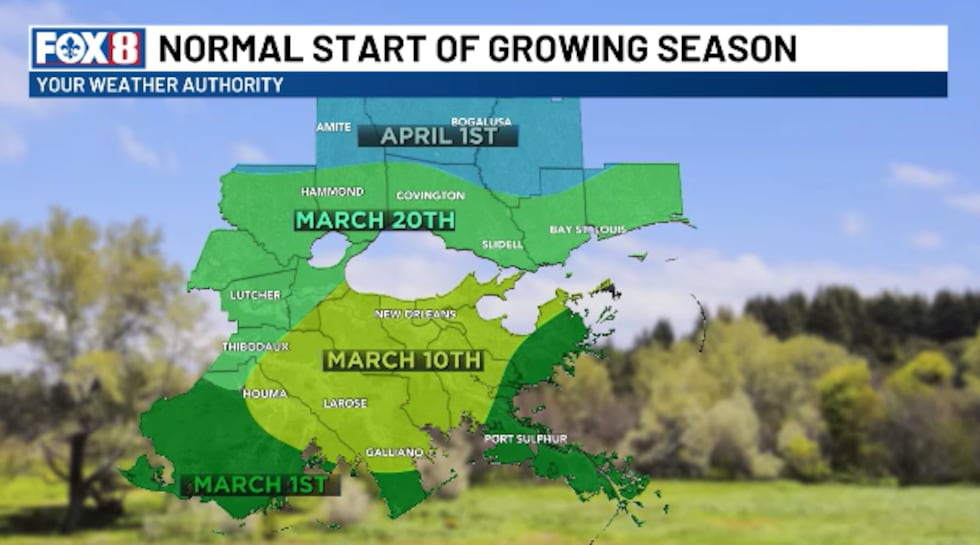 The typical start to the growing season for Southeast Louisiana.(WVUE)
That said, if you’re gardening on the north shore, keep a close eye on the forecast. Most tender, newly planted vegetation won’t survive overnight lows in the 30s, even briefly.
Be ready to cover plants or bring them indoors if temperatures threaten to dip that low.
With each passing day as we move from February into March, the likelihood of frost or freeze events along the Gulf Coast continues to decrease.
Nature is already responding to the warming trend. The USA National Phenology Network tracks spring growth patterns through its Spring Leaf Index Anomaly, which shows how far ahead or behind plants are compared to their normal schedule.
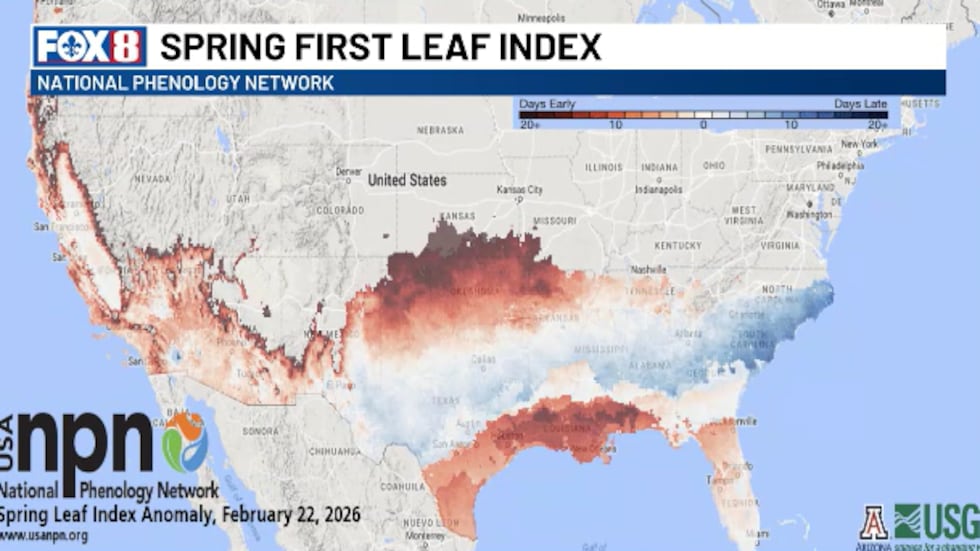 The Spring First Leaf index identifies the start of spring by measuring the first leaf growth. This map shows how far or behind normal the growth is so far this year.(WVUE)
You have noticed a stall in early leaf growth across Texas, parts of northern Louisiana, and toward the Carolinas.
This slowdown is a direct result of January’s snow and ice storm.
According to the USA National Phenology Network, snow and ice events delay spring growth by keeping soil temperatures low, restricting root activity, and potentially damaging tender buds that emerged too early.
The bottom line: spring is coming, and your garden is likely ready.
Just stay informed about your local frost potential, monitor forecast changes, and you’ll be planting with confidence in no time.
However, those on the north shore should monitor the forecast for
But the likelihood of a frost or freeze happening along the Gulf Coast lowers with each day as we round February and move into March.
There is already new growth.
The USA National Phenology Network puts out the Spring Leaf Index Anomaly. It shows how ahead or behind the first leaf growth is from normal.
Notice the stall in growth from Texas, parts of northern Louisiana, and toward the Carolinas. That is where the snow and ice storm occurred in January.
(First leaf report)
The USA National Pheonology Network says ice and snow typically delays early spring growth by keeping soil temperatures low, restricting root activity, and potentially damaging tender, prematiure buds.
See a spelling or grammar error in our story? Click Here to report it. Please include the headline.
Subscribe to the Fox 8 YouTube channel.
Copyright 2026 WVUE. All rights reserved.
Comments are closed.