
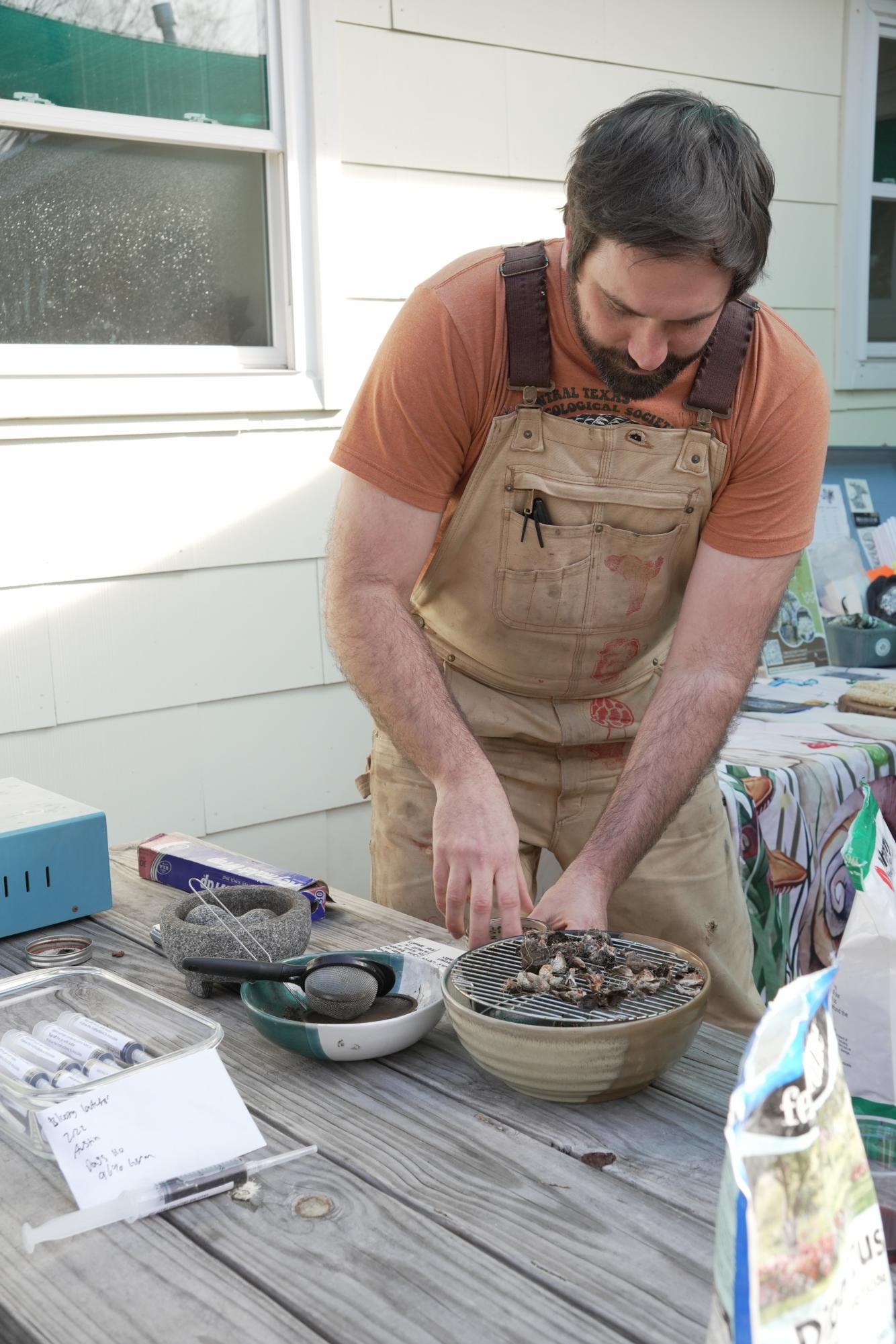
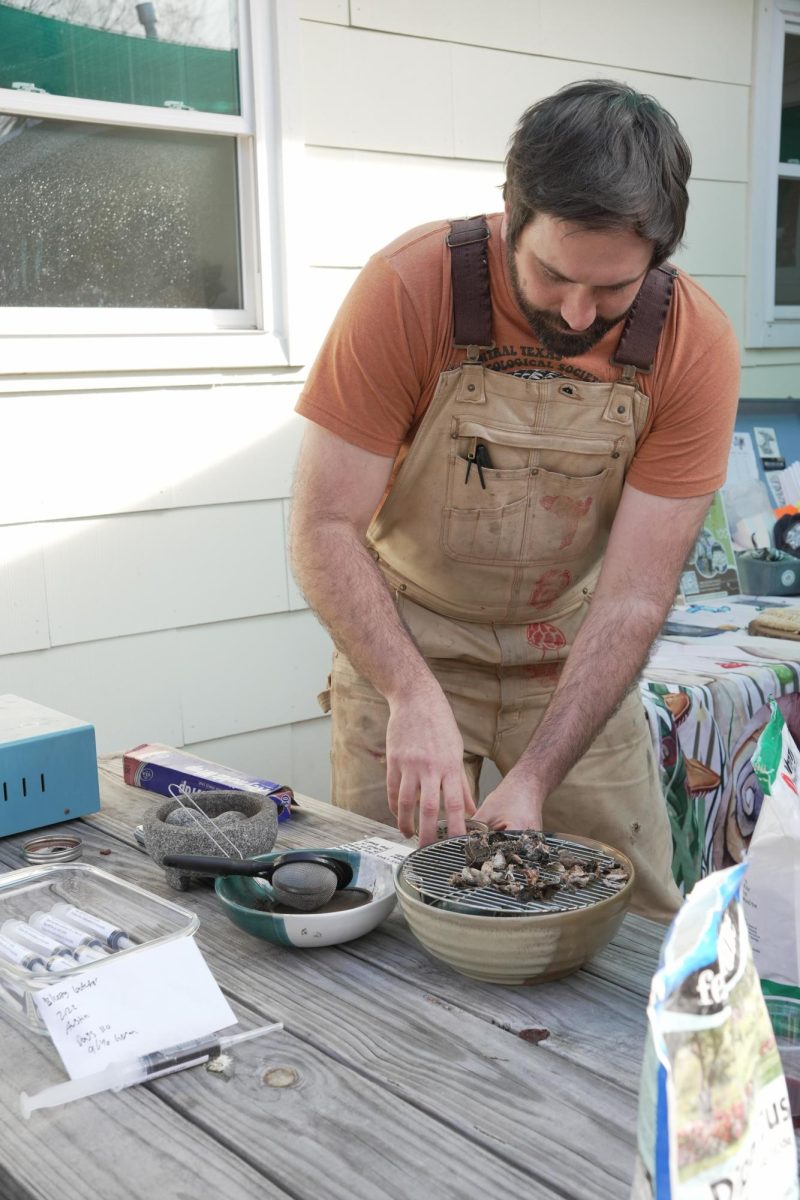
On Sunday, Nick Steinhauser, an IBM engineer, handed 30 in-person participants a syringe in his backyard and taught them how to infect their corn with spores on purpose.
The Central Texas Mycological Society hosted the workshop teaching how to grow corn and cultivate huitlacoche, a Mexican corn fungus commonly referred to as “smut” due to American farmers deeming the crop unworthy if infected. For the participants and instructors, the workshop was about more than just gardening: it was about growing community.
“A lot of times (connection) can come back to the spaces and the things we have in common,” Anamaria Gutierrez, a garden manager for the restaurants Este Garden and Nixta Taqueria, said. “Food is one of those (things).”
Gutierrez led the first half of the workshop, talking specifically about corn cultivation. Gutierrez gave recommendations to the participants on how to grow corn here in Austin, as well as the cultural and historical significance of corn in South and Central America.
“I tell people to just think about the significance,” said Gutierrez. “It could be of the corn in their past generations or any crop that has fed you and your past generations and to give thanks.”
The workshop also focused on what happens when a specific type of fungus gets into the corn, transforming the corn into huitlacoche.
“Our agricultural system has done a really good job as labeling (huitlacoche) as something we don’t want,” Gutierrez said. “It’s kind of been demonized.”
Steinhauser presented on huitlacoche cultivation, which derives its name from the Nahuatl language of the Aztec civilization.
“I love (that corn) grows so well for a backyard garden type of situation,” Steinhauser said. “I’d love to get that into the hands of other folks around town.”
Participants Jose Montes and Amada Garcia traveled to Steinhauser’s backyard, interested in starting food-related gardening.
“My background is Hispanic, so I’m familiar with huitlacoche,” Montes said. “That’s part of the reason why we came out today.”
Despite the shared passion for huitlacoche, Steinhauser and Gutierrez arrived at huitlacoche from very different places.
Steinhauser said his interest comes from an academic standpoint. After reading about and eating huitlacoche, Steinhauser wanted to give cultivating huitlacoche a try.
“It’s such a mystery every season,” Steinhauser said. “When you grow it, (it’s) like ‘What’s it gonna do, what are you gonna get’ as (you) hone in on the right techniques.”
While urban farming for the past nine years, Gutierrez said that huitlacoche pops up in her garden every once in a while. Gutierrez said a recent trend calls huitlacoche “corn truffle.” Gutierrez said this new title still feels problematic, as it’s important to remember the historical significance of this fungus.
“I’m excited to hopefully see more people grow corn and huitlacoche,” Gutierrez said. “It’s like an act of resistance and defiance. It will show up, and it’s deemed unwanted, but it is actually very rich, and nutritious and significant, and so despite the efforts to suffocate it and eradicate it, we continue to see it show up and even more so try to cultivate it.”
Comments are closed.