
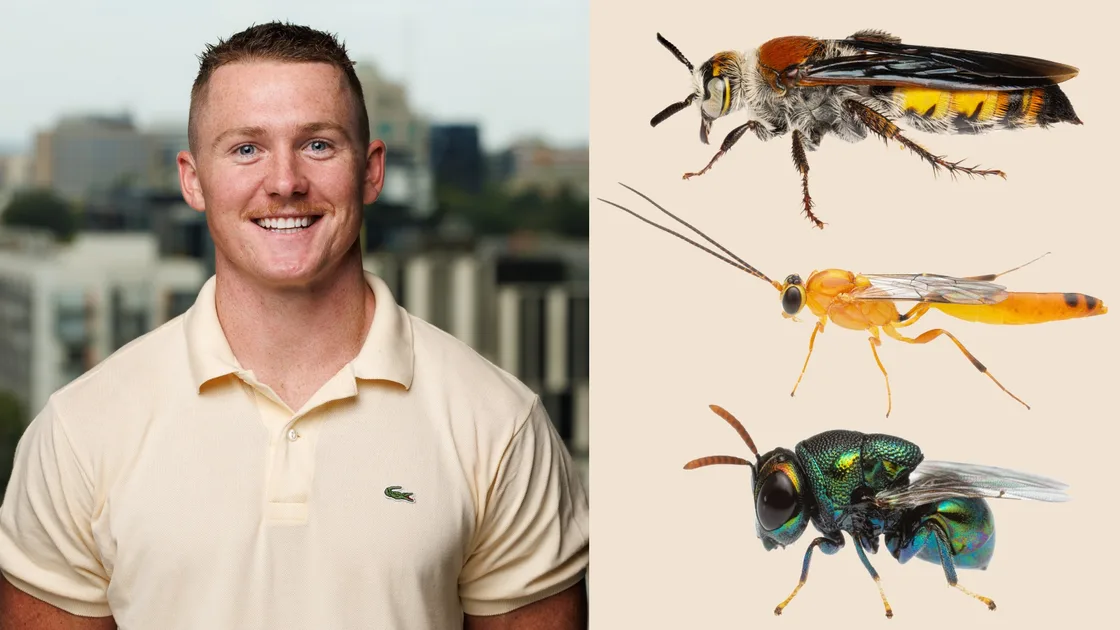
What if I told you that wasps were one of the main things keeping your garden and its local ecosystem happy and healthy?
If you’re like most Australians, then you might have grown up with a prejudice against the unsung heroes of our backyards – native wasps. So, on Australia’s behalf, I would like to apologise to our wasps and foster the love and appreciation for wasps that they truly deserve.
Wasps are incredibly important pollinators and predators, and quite frankly, deserve a whole lot more of the spotlight. Australia has an incredible diversity of wasps, with more than 12,000 documented species. Taxonomists estimate there are more than 20,000 native species out there. There is a species of wasp for just about every possible role in the ecosystem, cementing them as a vital part of the ecological function of our backyards and bushland.
Why you shouldn’t be afraid of native wasps
We all know someone who is scared of wasps, quite often because of that one time they were stung or harassed. However, that was likely inflicted by one of two species that don’t even belong here: the European wasp that hangs around a barbecue or the Asian paper wasp that sets up shop under your pergola or in your shed. Both are invasive species and are far more aggressive than native wasp species, so removing their nests can be a good idea to protect your pets and family.
These two species can be easily identified by their social behaviour and bright yellow bands, or by taking a photo of the wasps and adding it to the iNaturalist website or app or doing a Google Lens search.
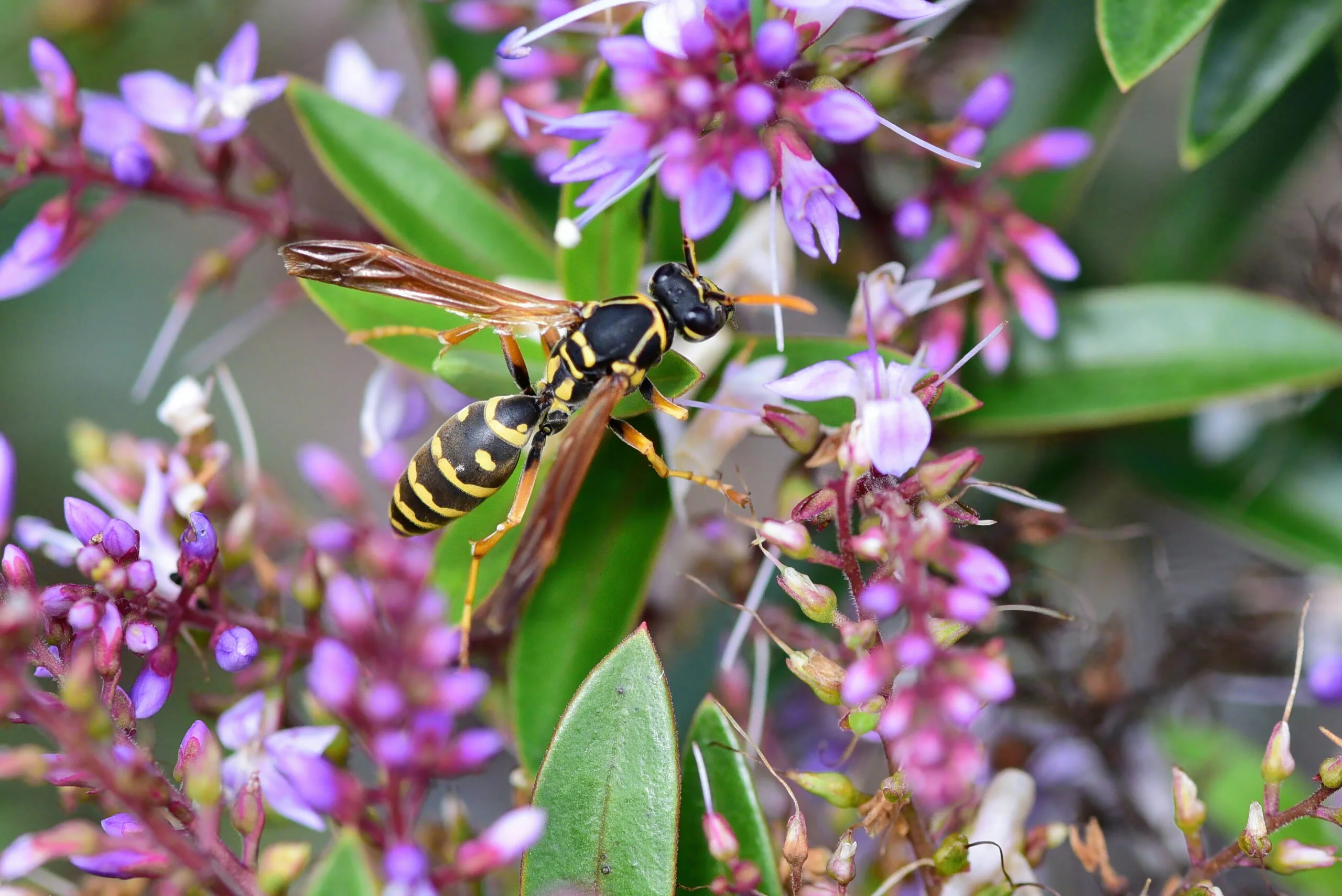 Have you ever noticed an Asian paper wasp hanging around the eaves of your roof? (Credit: Adobe Stock)
Although a number of native species have the ability to sting, they very rarely do. It usually only happens if, for instance, a native paper wasp’s umbrella-shaped nest is disturbed. So if you have a native wasp nest in your garden, you could save yourself a few hundred dollars in removal fees by just letting them get on with their job.
 (Credit: Brent Wilson)
How native wasps tackle garden pests
There are many pests that native wasps battle against in the garden, including these three common ones:
Aphids
Think about the wars that we have all waged on the aphids on our roses. There is a species of wasp – the Aphidius genera – which will fight this battle for you.
Catepillars
There are also species of wasp that will keep caterpillars off our vegies. You’ll no longer have holey leaves – instead, your crops will be bountiful, thanks to the work of native wasps.
Spiders
Some wasps take care of just about every type of spider that can cause havoc in your garden. That’s right, wasps will keep your garden from turning into a sea of cobwebs, will protect your plants and vegies from pests, and even keep the populations of other wasps in check.
Thanks to an egg-laying organ called an ovipositor, some wasps (like the ichnuemoid wasp, below) are able to place an egg inside or outside the caterpillar or spider host. This will slowly consume its host as it develops into a baby wasp! (In some species, that ovipositor has been modified over time to become the venom-injecting stinger we so fear.)
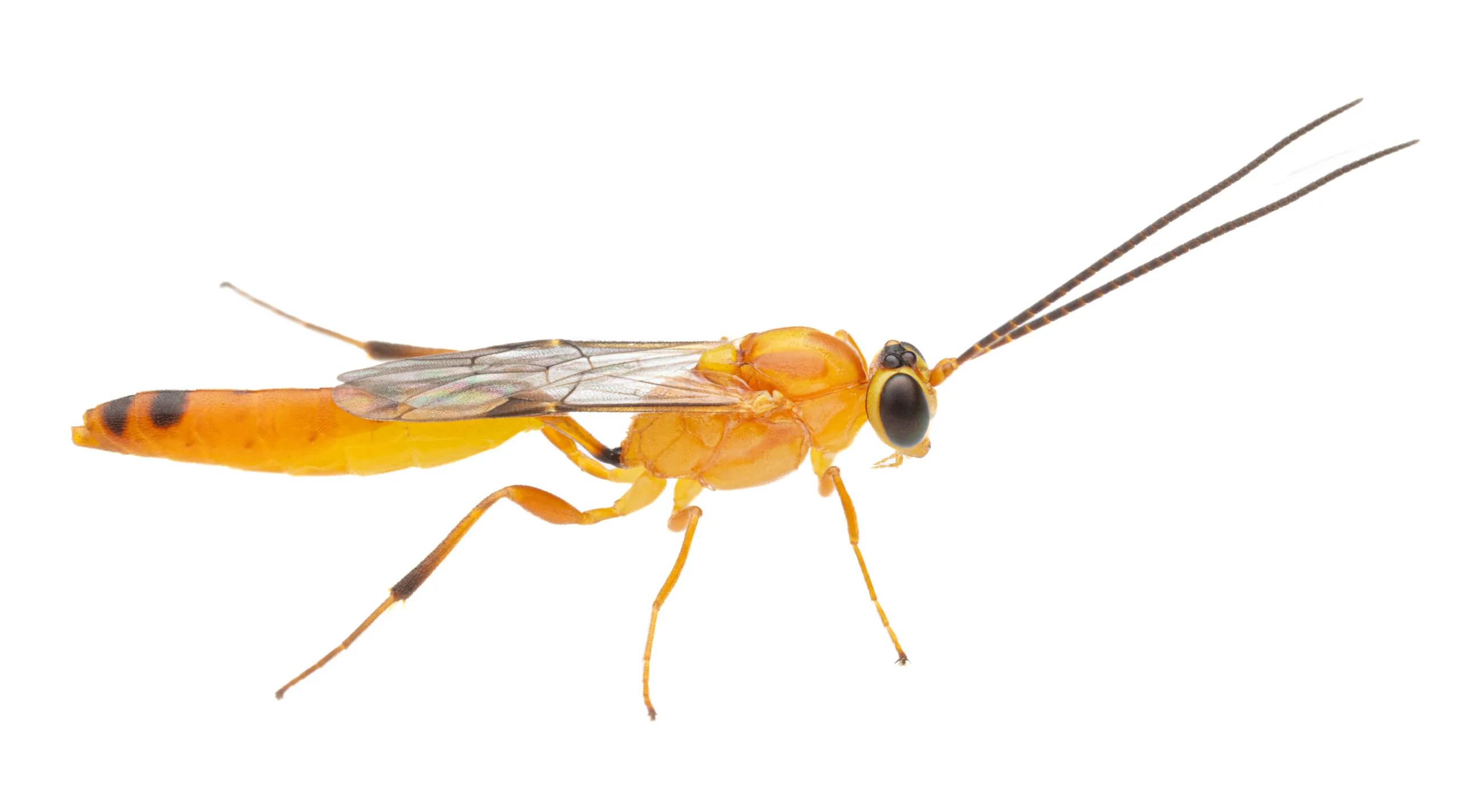 The Ichnuemoid Wasp is a clever predator. (Photography: Nick Volpe)
Why are native wasps so colourful?
Wasps truly are amazing! Every single shape, every single colour, every single style. Picture the most amazing colour you can possibly imagine, it wouldn’t come close to the incredible bluey-green iridescence of blue ant, cuckoo or disco wasps. This colour, unlike pigment colours, is usually structural.
Structural colour can come from microscopic layers in the wasp exoskeleton that bend light, reflecting certain wavelengths in the same way that soap bubbles or oil slicks shine brightly.
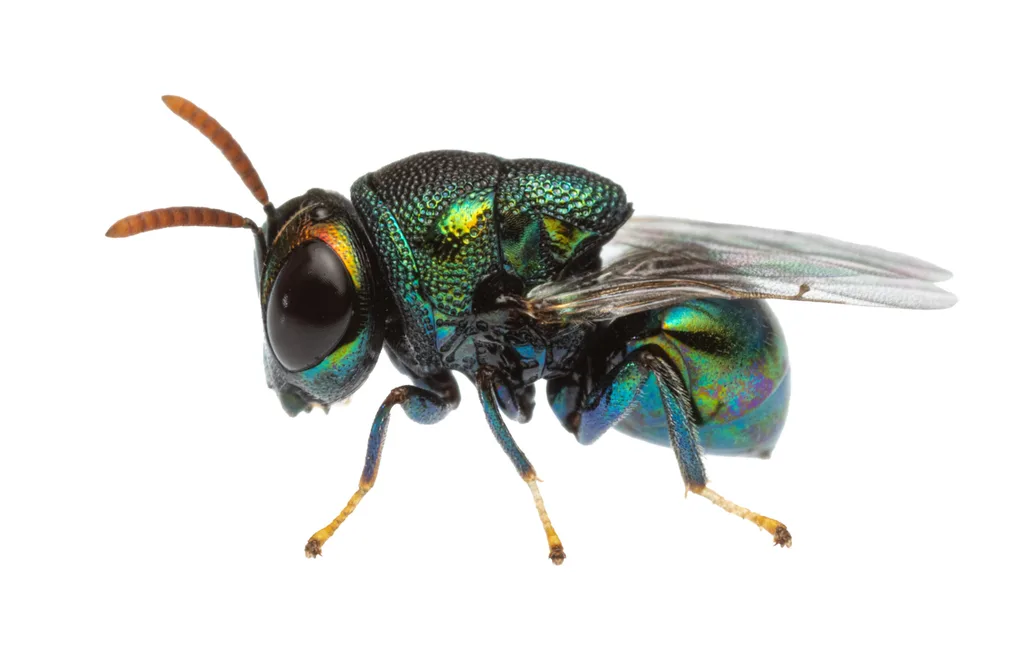 The disco wasp is an iridescent icon! (Photography: Nick Volpe)
How do Australian native wasps pollinate flowers?
Often, bees get credit for pollinating our flowers, but there are a number of things that would not exist without the presence of wasps.
Figs are the result of a tiny female wasp that crawls through a small opening at the tip of the fig (the ostiole) to reach the flowers inside. Pollination occurs as the wasp moves through the fig and lays its eggs.
The larvae develop inside certain flowers, forming galls like those seen in some types of citrus and eucalyptus trees.
 (Credit: Sue Ferris)
Funnily enough, some pollination is done by male wasps. Some of the most incredibly rare orchid species trick male wasps into thinking they are getting lucky. They emit a scent that imitates the odour of a receptive female wasp. While attempting to mate with the orchid flowers, the male wasps are pollinating these trickster orchids.
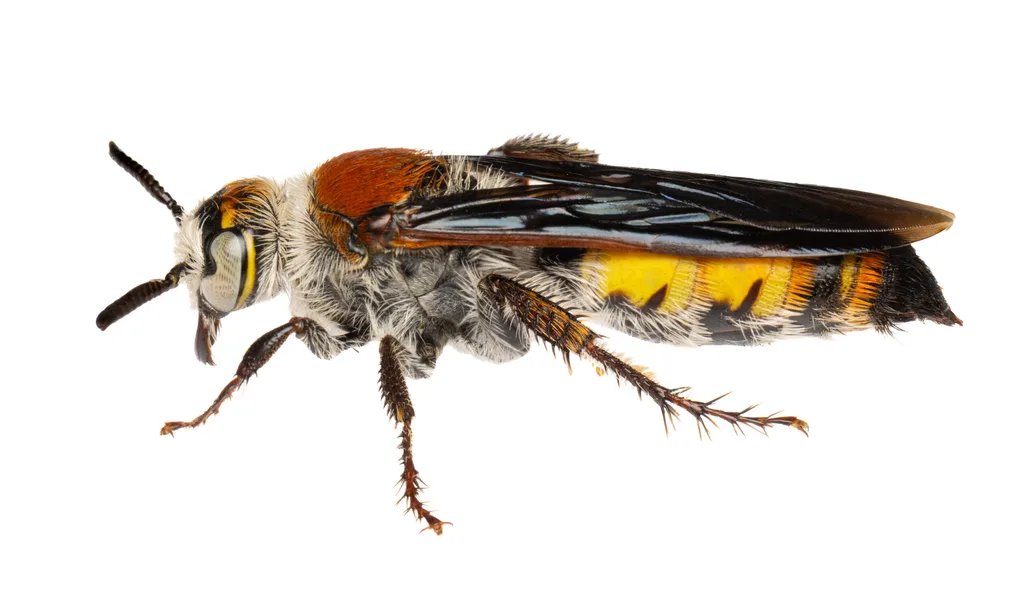 The hairy flower wasp is a hard-working pollinator. (Photography: Nick Volpe)
It doesn’t matter if you are in the tropical rainforests of North Queensland, the deserts of Alice Springs, the rolling hills around Adelaide or the Melbourne suburbs, there will be dozens, if not hundreds, of species of native Aussie wasps battling for your garden!
So next time you are out in the garden, appreciating nature’s beauty, just remember these little unsung heroes and their incredible importance to our local ecosystem.
Related

Contributor
Clancy Lester ‘Bee Man’
Environmental Educator
Sign up for our newsletter
Sign up for the latest news from Better Homes & Gardens including offers and discounts we choose to share with you.
Disclaimer: By joining, you agree to our Privacy Policy & Terms of Use
About your privacy Are Media Pty Limited collects your personal information through this site to process registrations, send out newsletters, communicate offers, discounts, competitions, or surveys, and to provide you with targeted advertising based on your online activities. Our Privacy Policy contains information on how you can access or correct your personal information, which entities we may disclose your personal information to (including overseas recipients), how to opt out of targeted advertising, and how to lodge a complaint.
Related
Comments are closed.