
Eastern hemlocks
 by Jude Hsiang
Maine is truly “The Pine Tree State,” famous for its white pine and its relatives, the red, jack and pitch pine. Botanists recognize that the pine (Pinus) family includes members from around the world including firs and spruces. Two more Maine species belong to the family: hemlocks and tamaracks.
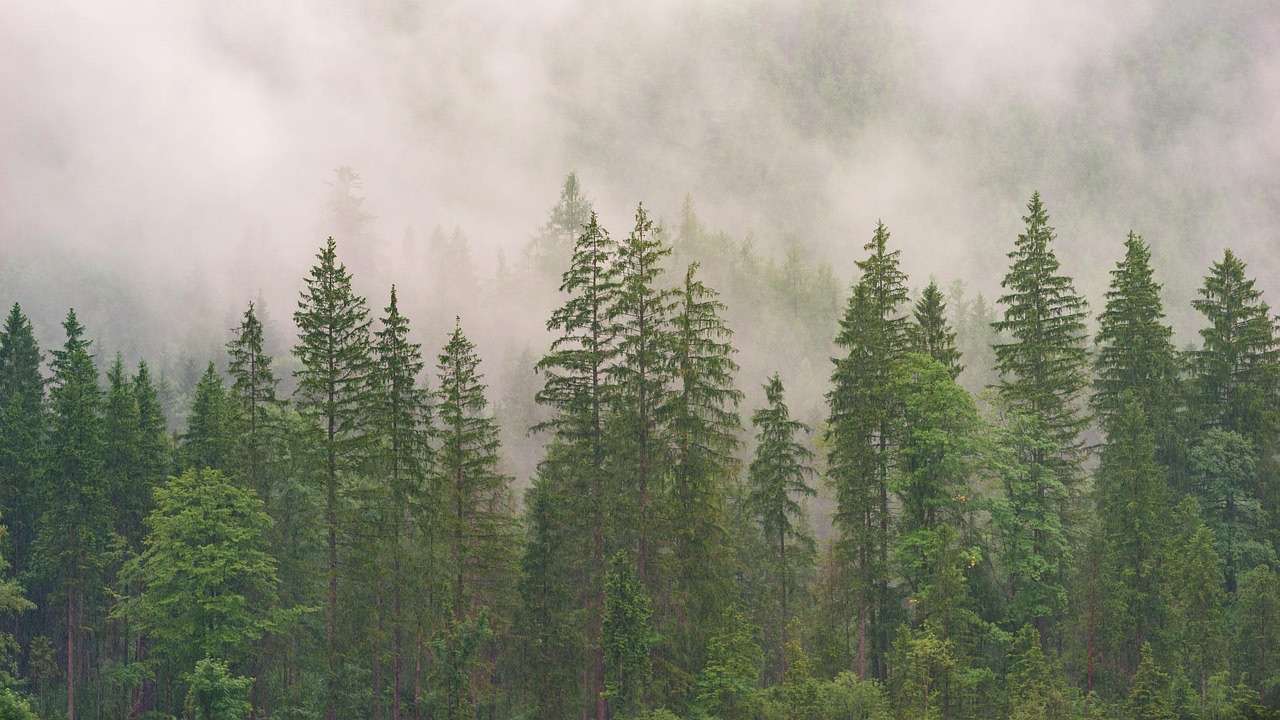
Eastern hemlocks are widespread and found in mixed forests and areas where it is the dominant tree species. The name hemlock is also used for a poisonous plant for reasons unknown. In the 1700s settlers were drawn to Maine by its great forests and most of the large mature hemlocks were left. Later, as other species became more popular, hemlocks could again reach great size. However, hemlocks seem to struggle in locations with human activity more than some other tree species. In recent years the hemlock woolly adelgid was accidentally introduced to the US from northeast Asia and has caused serious damage. Researchers have found that several predators of that insect in its native home could be safely brought here and reared in laboratory settings to be released in our hemlock forests. When the hemlock woolly adelgid was discovered in York County, this work had been underway for years giving Maine’s a better chance of survival.
The tamarack, also called hackmatack or eastern larch, is the most unusual member of the pine family because it is deciduous, losing its leaves in the same way as familiar broad leafed trees like maples and oaks. The bright green needles appear in spring, turn gold and drop in the fall, leaving the tall, straight conical tree bare all winter. Often growing in large stands in the wetter soils they prefer, tamaracks make an impressive sight at any time of year. These very hardy trees will be found far into northern Canada, becoming smaller as they approach the limits of the tree line. Tamarack’s strong lumber has many uses.
There are two other conifers, both evergreen, that are native to Maine but do not belong to the pine family. These trees can illustrate the confusion that comes from using common names for plants because they are both members of the Cypress (Cupresseae) family. Most folks think of the baldcypress of southern swamps when they hear that name, but the baldcypress belongs to the Redwood (Taxodiaceae) family. No wonder people claim botany is hard!
One of these confusingly named, yet easily recognized trees is the eastern redcedar, also called red juniper and having the scientific name of Juniperus virginian. They are native to the southwestern corner of Maine and to a wide area of the southern and central part of the U.S., too. They are tough trees, resisting drought and cold. In addition to the aromatic wood used for a wide variety of uses, redcedar provides an oil used in medicines. Many people find redcedar attractive as a landscape plant and several ornamental forms have been developed by horticulturalists. Cedar waxwings are one of the many birds and other animals that eat the blue, berry-like cones. Apple orchardists are wary of these trees because a fungal disease, cedar-apple rust, alternates between the two species during its life.
The northern whitecedar is a more widespread Maine native tree, also called eastern arborvitae. Like the redcedar, it has a challenging scientific name: Thuja occidentalis. Arborvitae means “tree of life” and was given the name by the earliest European explorers of the northeastern region of North America. Its bark made into a tea, now known to be high in vitamin C, was credited with curing scurvy that plagued the crew members of the Jacques Cartier expedition. Medicinal oil is still distilled from the twigs and the wood is popular for fence posts and similar uses. As an ornamental plant, arborvitae has a serious drawback, because deer love to eat them, especially in winter when other food is scarce. As the deer nibble the tasty branches closer and closer to the main trunk, the stems will not be able to grow new green needles. Arborvitae hedges often develop an odd appearance as the area that won’t regenerate below the point that the deer can reach. Some varieties of arborvitae trees are said to be more resistant to deer browse, but don’t count on it – a hungry deer, just like a human, will eat whatever it can find.
Responsible journalism is hard work!
It is also expensive!
If you enjoy reading The Town Line and the good news we bring you each week, would you consider a donation to help us continue the work we’re doing?
The Town Line is a 501(c)(3) nonprofit private foundation, and all donations are tax deductible under the Internal Revenue Service code.
To help, please visit our online donation page or mail a check payable to The Town Line, PO Box 89, South China, ME 04358. Your contribution is appreciated!
Comments are closed.