
Key Takeaways
Carrots thrive in cool weather with loose, well-drained soil, and take about 60 to 90 days to mature depending on the variety.For Southern gardens, plant in early spring or late summer, with fall often yielding sweeter carrots due to cooler growth conditions.Successful germination depends on steady moisture and soil temps between 55ºF and 75ºF, plus a well-prepared, debris-free planting bed.
There are plenty of ways to love carrots, whether as crisp dippers with your favorite vegetable dip, shredded in carrot salad, or as a sweetener in carrot cake. You’ll find a multitude of reasons to grow carrots in the garden so you can enjoy the bounty. Carrots (Daucus carota subsp. sativus) are cool-season crops that are easy to grow in the right conditions—full sun, consistent moisture, and loose, deep, well-drained soil. Depending on the variety, carrots can take about 60 to 90 days to grow from seed to harvest, and they can be slow and tough to germinate. They don’t grow well in soil temperatures above 75ºF, so you need to time their planting just right to avoid germination in the heat of summer, which can reduce their quality and cause a bitter taste. Since carrots like cool weather, you can have more than one crop a year: spring and fall. Here’s how long it takes carrots to grow and when to plant them for the best crops.
How Long Does It Take Carrots To Grow?
In general, carrots have a low germination rate, meaning not all of the seeds you sow will sprout. The ones that do will take two to three weeks. They mature in 60 to 90 days, depending on the type. Here’s how long it takes popular varieties to reach harvest time:
Nantes: heirloom carrots with sweet flavor, 60 to 75 days‘Shin Kuroda’: deep orange, tender and sweet, 70 to 80 days‘Romance’: sweet, ready to harvest at 6 inches long, 75 days‘Nelson’: hybrid variety, harvest at baby or full size, 55 to 65 days‘Bolero’: sweet, juicy flavor, 75 days‘Yellowstone’: yellow and mild, 70 days
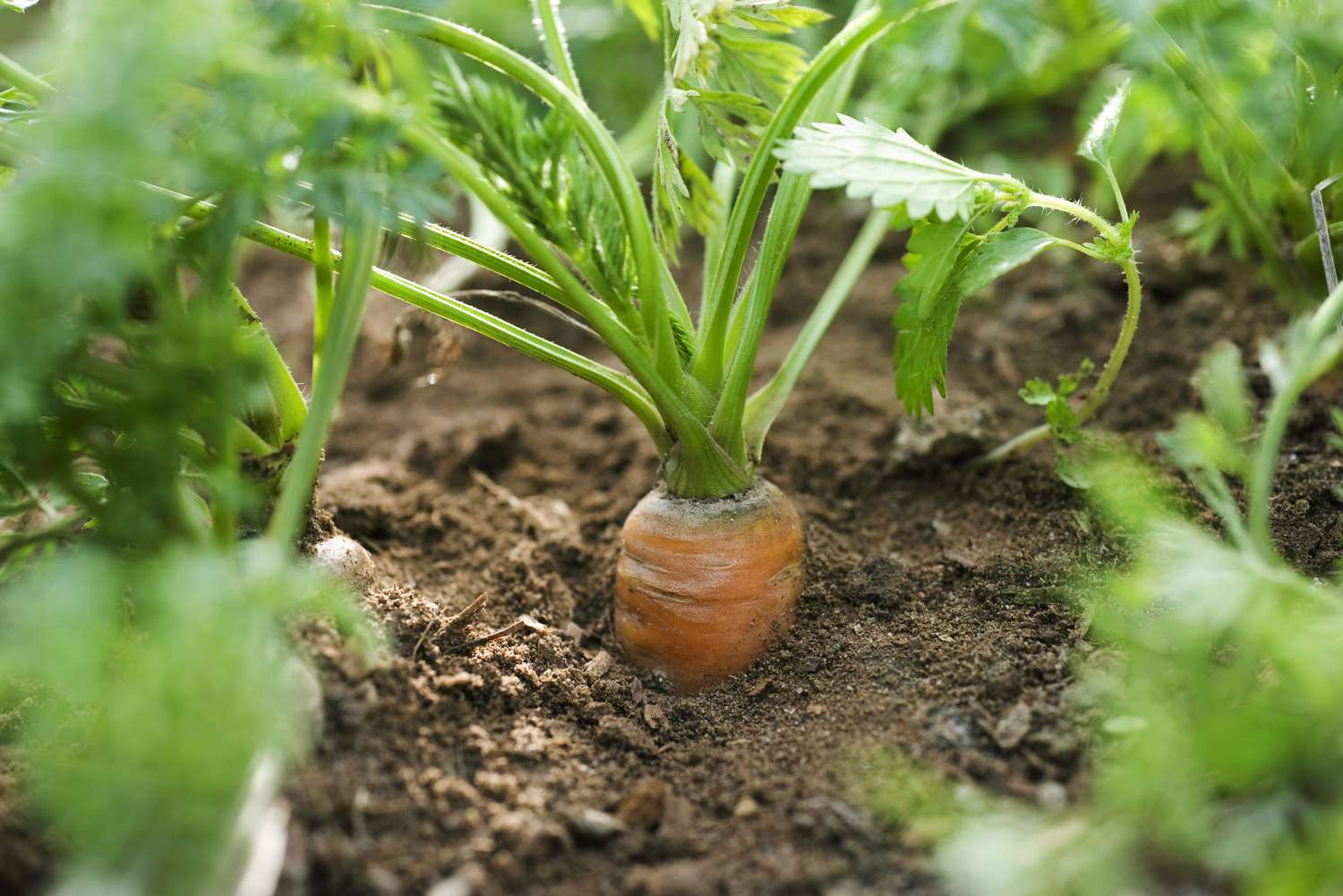
You’ll know when it’s time to harvest them when the lush green tops are about 12 inches tall and the shoulder (top) of the carrot may begin to poke through the soil. The shoulder should be about ¾ to 1 inch in diameter. Use a garden fork to loosen the soil around the carrots. You can pull a test carrot to see if the crop is ready.
When To Plant Carrots
In the South, fall is the best time to plant carrots because spring carrots may go to seed quickly. For spring crops, sow seeds from February to April, depending on where you are in the South. The farther South you live, the earlier you should plant them to beat the summer heat. In the Lower South, for instance, February is a good time. For fall harvests, plant in late summer from July through September. When planted in the fall, seeds may go dormant during cold weather and begin growth in spring, which often makes these crops very sweet. In the Coastal South, planting can be done from September through March.
What Affects Germination?
Soil Preparation
It’s best to plant carrot seeds directly in the soil because they don’t like for their roots to be disturbed. Starting seeds indoors and transplanting them later can damage roots and disrupt growth. Carrots prefer deep, loose, fertile, loamy or sandy soil. For long, straight carrots, loosen heavy soil to a depth of 10 inches and add in compost to ensure good drainage. Remove sticks, rocks, clumps, and other debris from the soil that can impede growth.
Soil Temperature
Carrots are picky when it comes to soil temperature. If it’s consistently too hot or too cold, that can decrease the germination rate. That’s why it’s important to time their planting right. Plant when the soil temperature remains between 55ºF and 75ºF.
Moisture
Give carrots consistent moisture or you may end up with misshapen, tough, bitter, or undersized vegetables. Keeping the seeds evenly moist during germination is key. If the soil dries out at all, they may not germinate. Once they start growing, give them an inch of water each week, about two deep waterings for sandy soil and one for heavy soils, for healthy root development.
Comments are closed.