

The previous post can be found here.
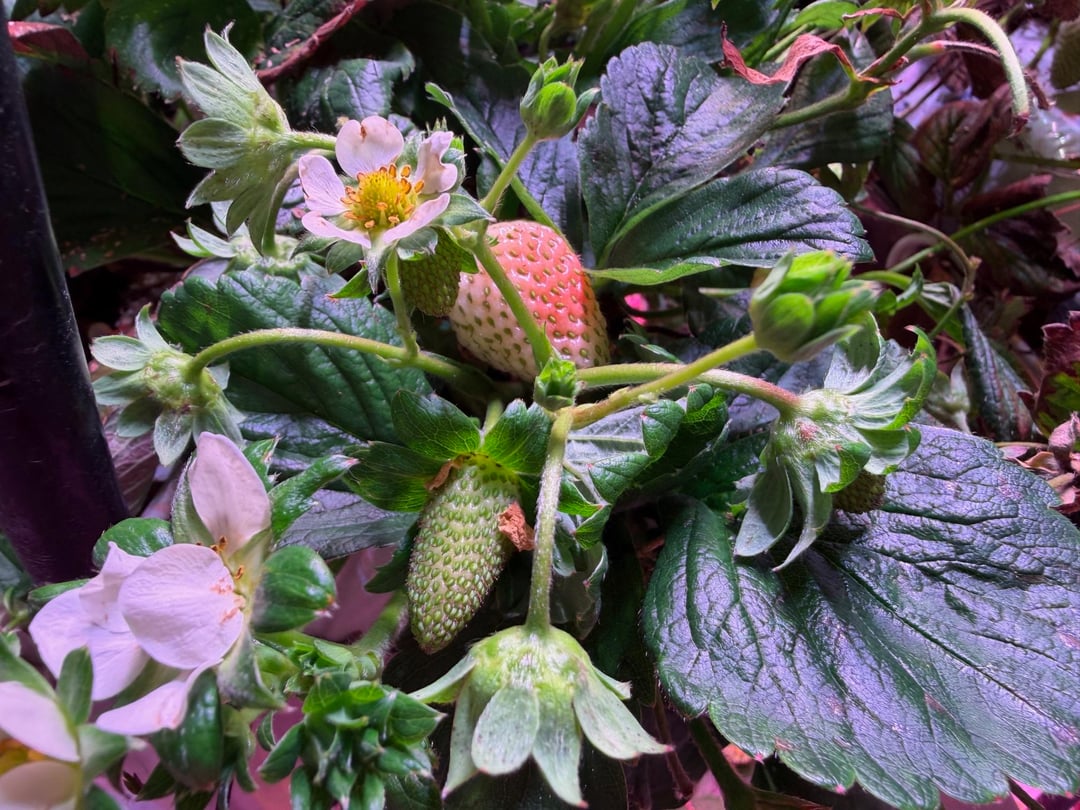
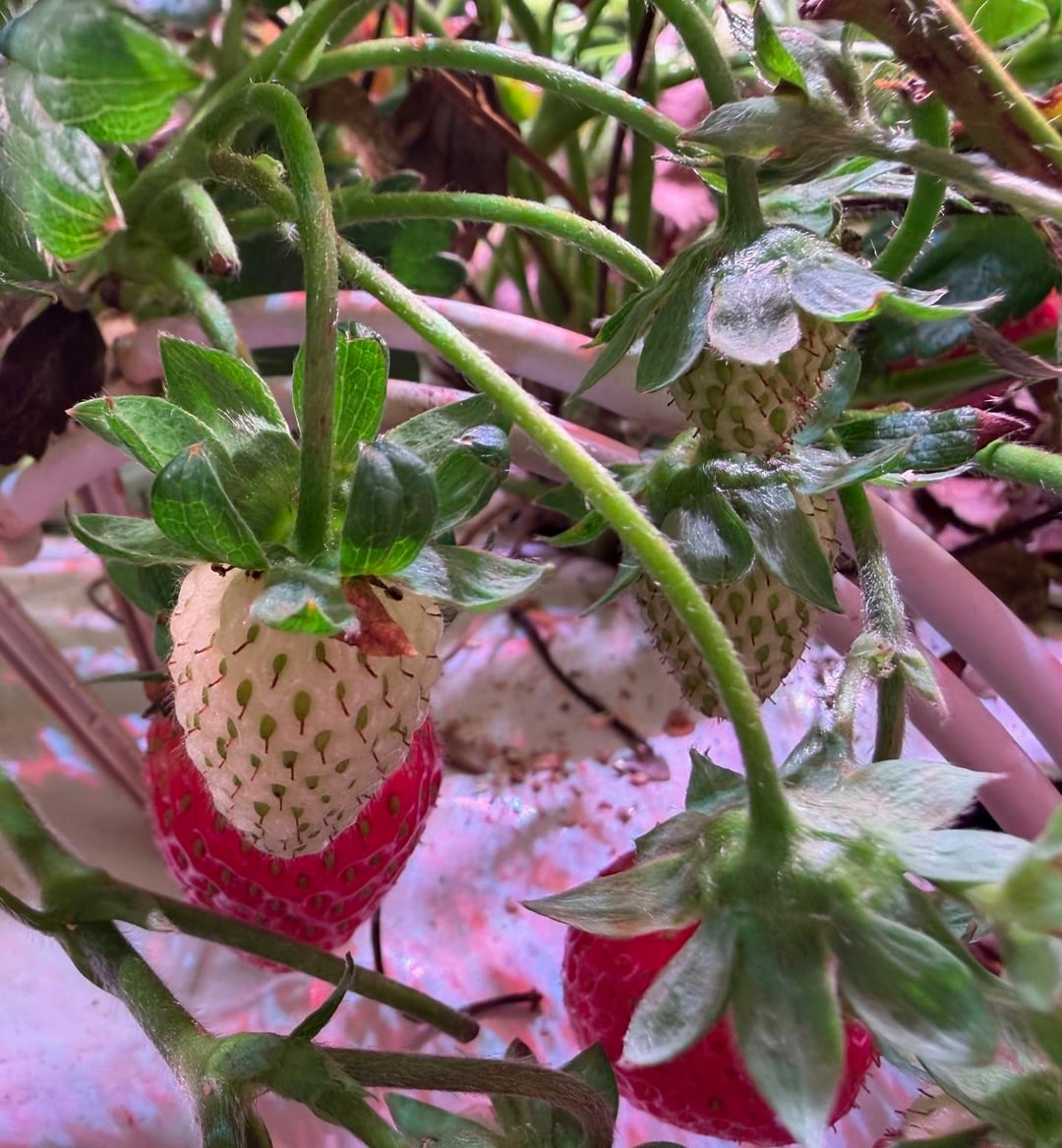
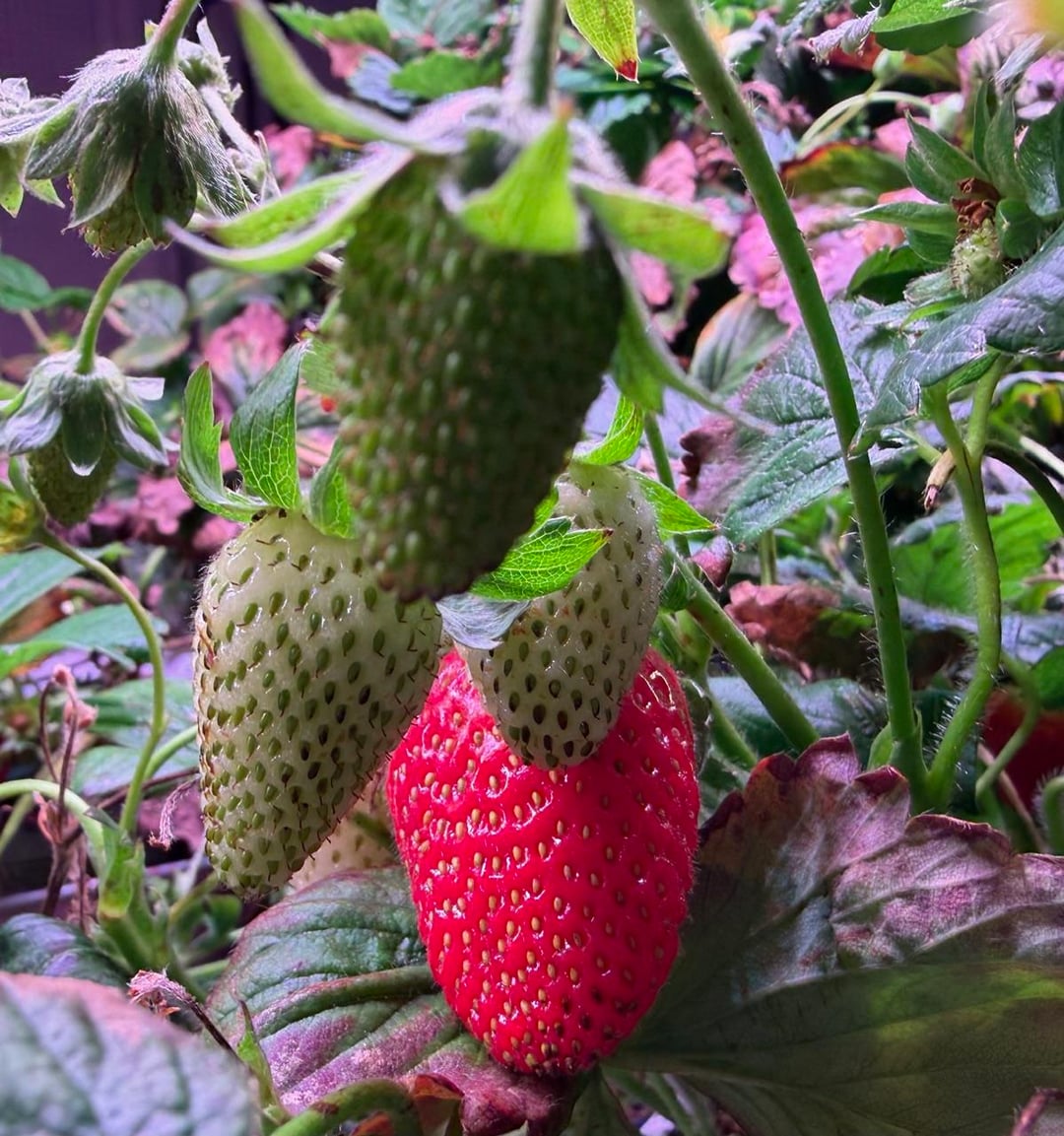
With the discovery of a medium sized thrip infestation around the date of my last post, I applied Cucumeris to the room shortly thereafter. I'm pleased to say that new pest bug count on the sticky cards is very low, and none of the harvested berries from the last 3 harvests (since ~9 days ago) have had bronzing tips, nor are there any new desiccated and cracked berries on the plants. Harvest quantity has also in the last 5 days sharply risen again, and we appear to largely be back on track to the same metric level as before mid January. There's also an explosion of the Anystis population, so there's a great indication that the predator insects are working their magic.
I did observe a small spider mite colony on six plants (in a cluster) about two weeks ago, however the existing Anystis in conjunction with Persimilis and Fallacis appears to have also taken care of them as of yesterday's observation of the same area.
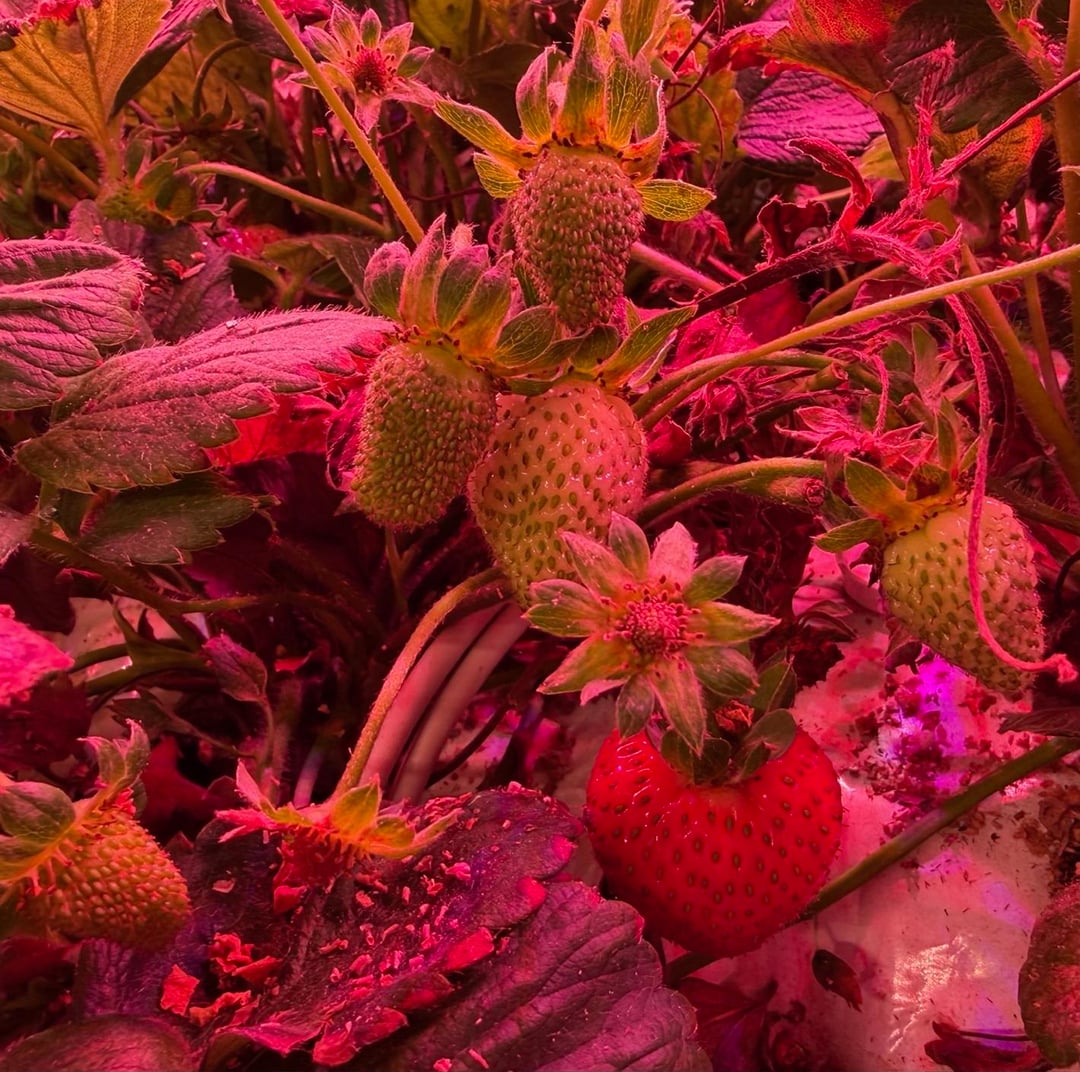
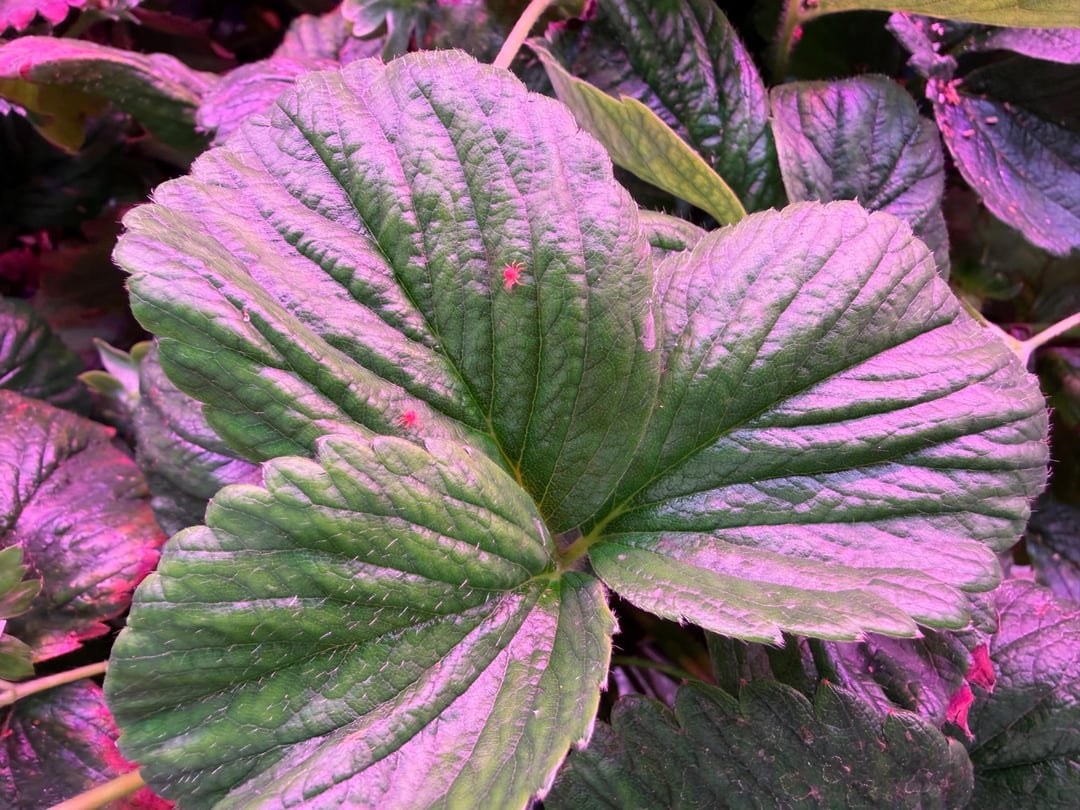
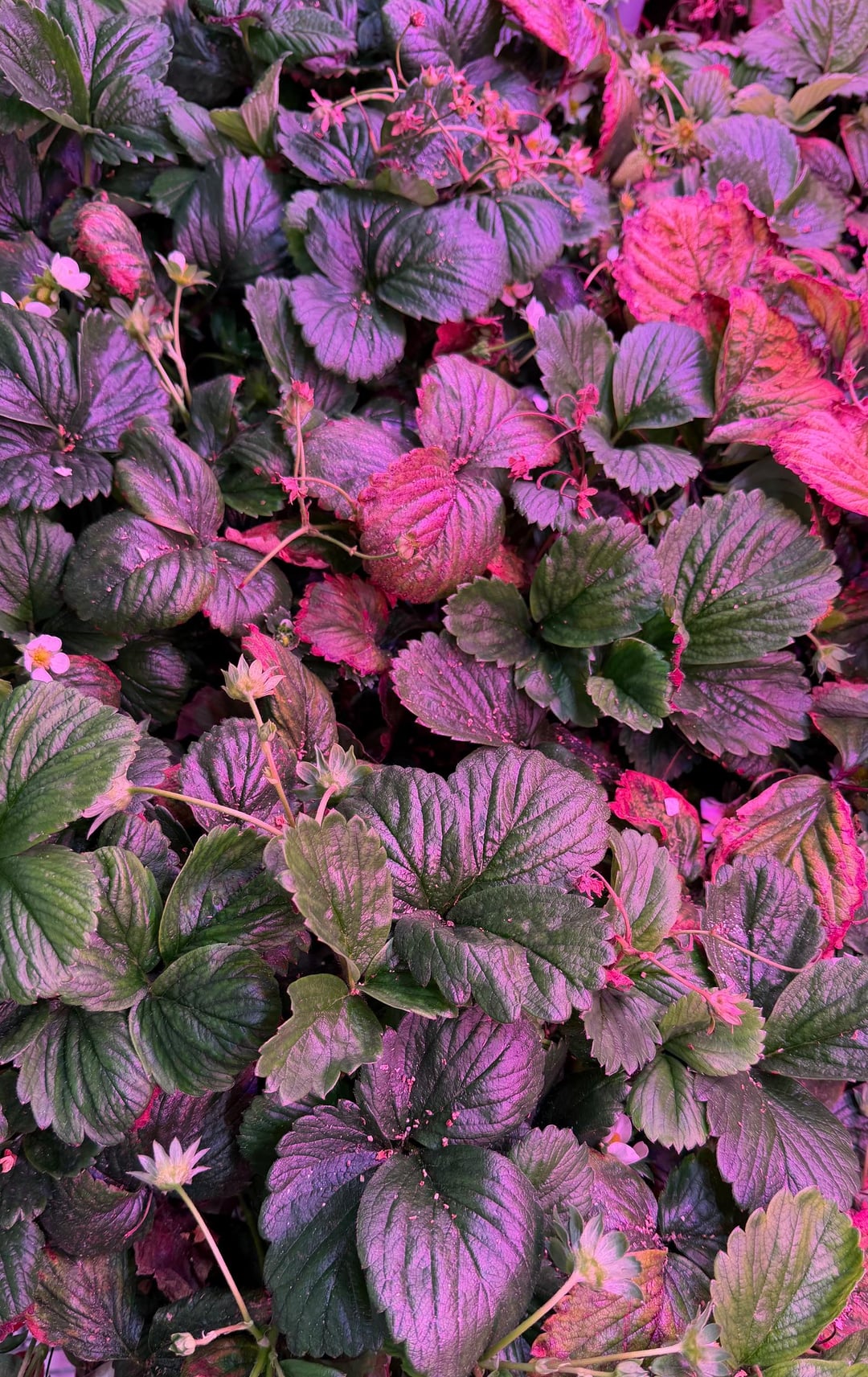
Revisiting the boron issue from the December post, boron levels in the water were lowered since early January and the plants have finally responded. No longer are the older leaves as brittle, nor discoloured. I will point to the last image included in this post for reference. The real old leaves (still afflicted with excessive boron) you can see along the right hand side, more so at the top right of the image. Boron when it's added to plants continues to accumulate over time, and once older leaves have too much of it, they discolour, turn brittle and eventually die off. Up until December, I'd see this on ~8 week old leaves, but using the same picture for reference, the real dark green leaves throughout the picture are now about 10-12 weeks old without discolouration (while the discoloured ones are now pushing 16 weeks old).
I finally have some data from experimenting with the reverse osmosis unit. After running multiple water analyses on the various configurations and membranes I have, I am making the switch from DuPont XLE-4040's to DuPont's TW30 PRO-4040 membranes (Part #: 12080472). The TW30's (and specifically their newer "PRO" line which is just a more recent model version than the TW30-4040's) reduce my feed water boron levels down to 0.2 mg / L. It also reduces my Na and chloride mg / L counts further too (from ~12 mg / L respectively closer to ~1.5 mg / L). I'll note that Na and Chloride values weren't bad to begin with, but they weren't more ideally where I wanted them to be. Also since I'm very small scale, snow water has been useful to get B levels down recently too. The RO water though will also impact my summer tree orchard, so there's a dual purpose to getting on top of this now! The new model membranes I'm hoping to fully install this coming weekend (~March 1st).
I also re-configured the water path. Now the feed pump splits into two avenues running into two membranes in parallel, and then one membrane in series from each of the initial two parallel membranes. DuPont techs (note this is a link to a PDF from DuPont's website) recommended a 2 parallel to one series (three chamber total) setup, but as I have enough pressure and flow, and also one element (membrane) per chamber, we're going to give this a try. This will lower the TDS concentration which initially went into membrane (element) #3 and #4 in series before, and should keep all four membranes going for longer before fouling.
Once I get a bit further into March, I will run more water analysis and tissue analysis. But again, the plants are visually responding well to current changes, and the berry quality has returned to what it was in November and December, so I'm on the right path for the time being at least!
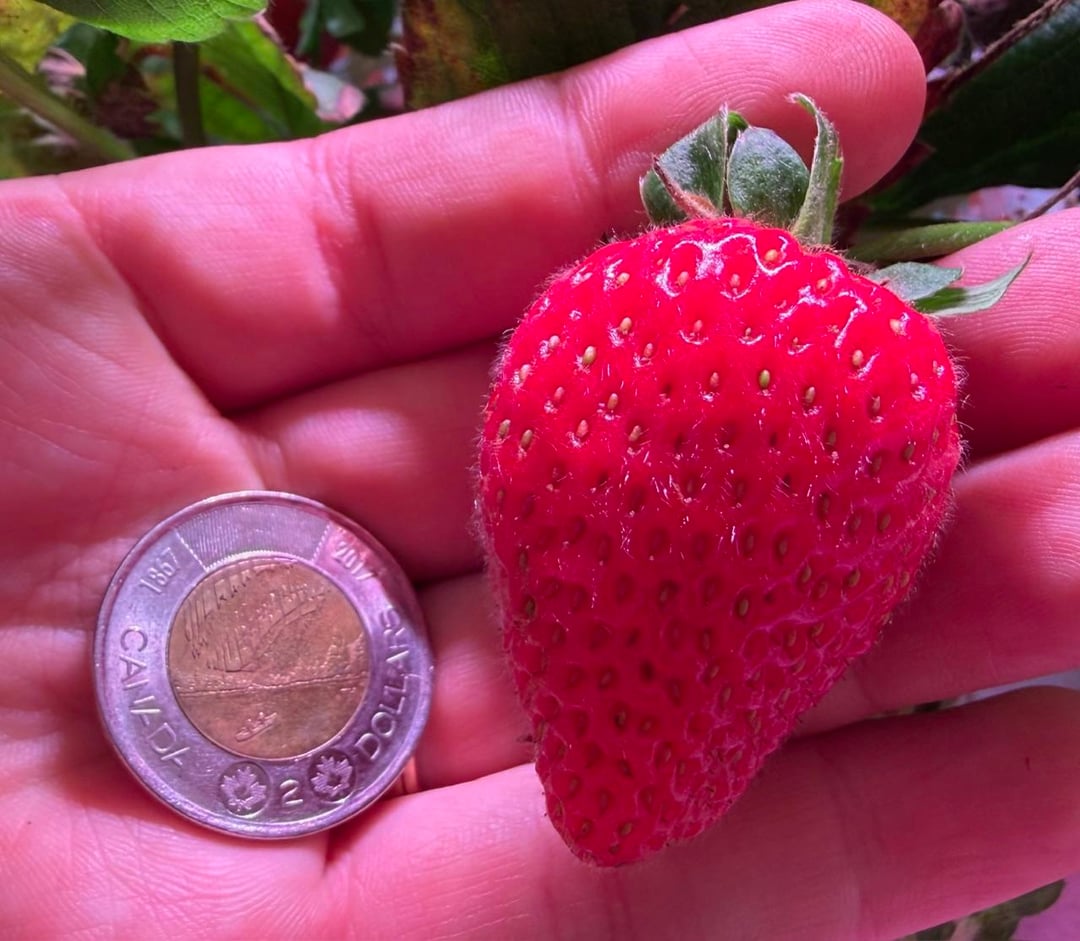
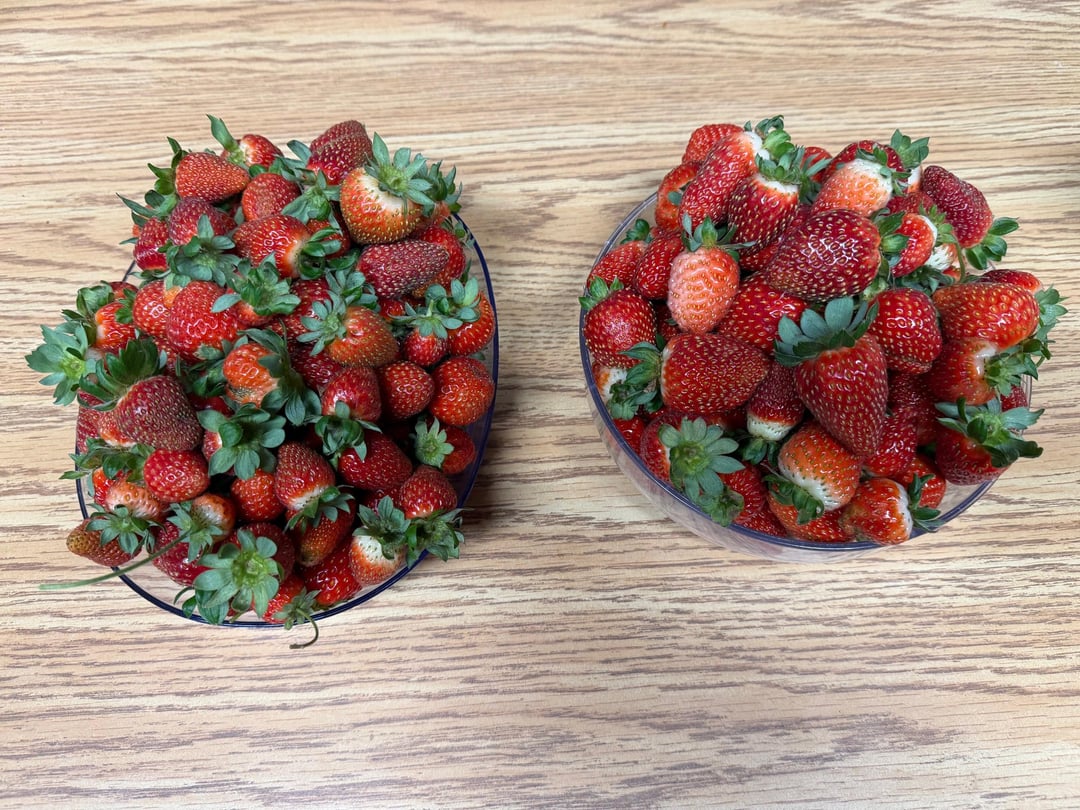
Speaking of berries, we are 23 weeks in and have a harvest quantity of ~70kg (200 plants). Note that this counts the first 5 weeks of plant growth with no berry harvest at all. This does not include the garbage berries I had to throw away since mid January due to thrip pressure and excessive B pressure. Including the actual weight of tossed berries would have me closer to 80kg today, maybe slightly more as the desiccated berries are hard to gauge what size they could have been if the thrips didn't suck them dry! Even so, 70kg is still ahead of previous years, but the harvest quantity lead has narrowed relative to year 5's metric this far in with the loss of ~10kg over the past 7 weeks.
Brix values are running average to year 5 as well. They would be higher this year (year 6) by roughly 0.5-0.8, but I have been artificially increasing temperatures as of late to begin sprouting my summer garden seeds (onions, peppers, and next weekend tomatoes). As we consume all strawberries that we produce, we don't mind berries with a little lower brix concentration due to the higher temperatures. Brix average is currently 11.5 for the year with optimal temperature conditions moving that closer to 12.5-15.0 (15.0 being more the outliers) for Albion strawberries, and closer to 9.0-10.0 (9.0 being more the outliers) for higher temperature nights.
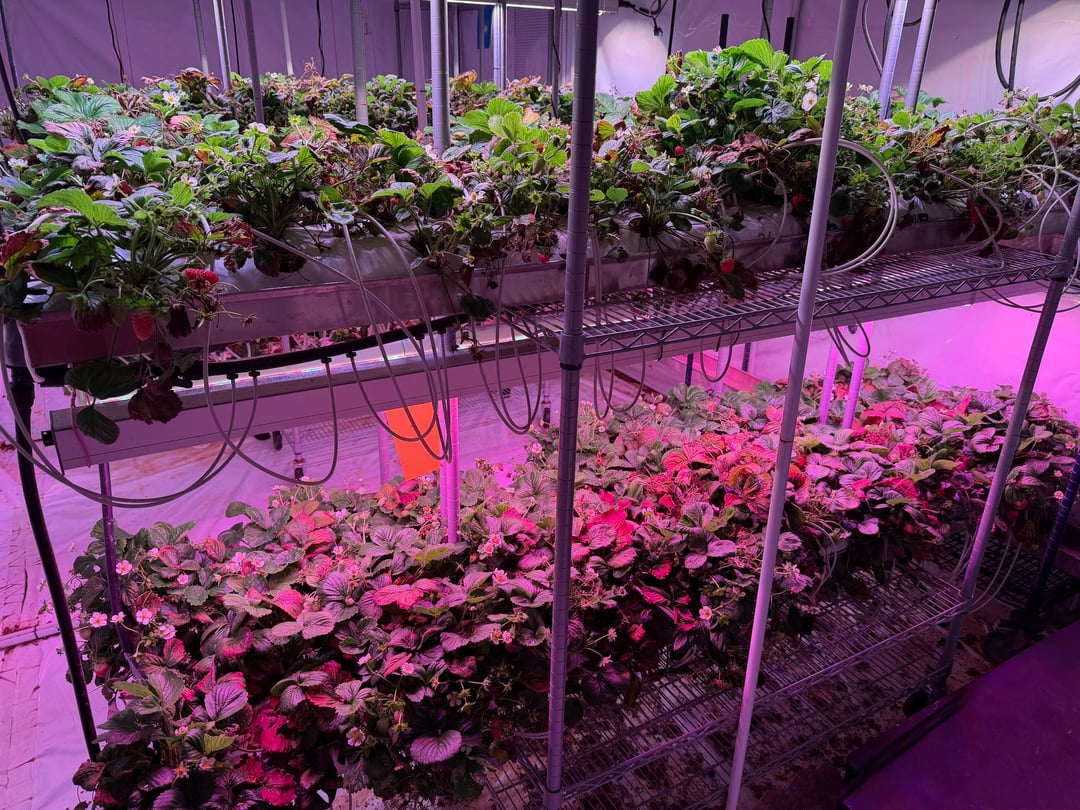
I also now have two years of data regarding light spectrum experimentation. The top shelves are a whiter light while the bottom shelves are more red with a little bit of white and blue. The bottom shelf accomplishes this with two fixtures, so there are multiple points of light which assist with canopy penetration, however the mmol / m^2 / sec across the canopy is very close between shelf heights (within 10 – 20 mmol / m^2 / sec with the higher difference towards the canopy edges).
Brix values between the spectra are the same. I can categorically say that with the data I have, spectrum either makes no difference or minimal difference to sugar content. However, the redder spectrum subjected plants do outproduce the whiter spectrum plants in weight and average berry size. Over year 5, there was a 13% difference where the redder spectrum subjected plants produced that 13% more weight over the top shelves. This year, the redder shelves are currently ahead by 18%, but the year isn't over yet. Comparing this time of year to last year, the % is in line with last year's metrics and should settle out a little bit more. The average running % is ~15%, so I expect in early June to be there +- 2%.
However, to be sure, I will be increasing the mmol / m^2 / sec of the top shelves with more white light (and from more points above the canopy to somewhat mimic the bottom shelves). This will not be before early April, and I am debating not making these modifications prior to the start of year 7 either.
As always, thanks for reading. I expect the next update (likely will be delayed until early April) to be a bit shorter!
by RubyRedYoshi
1 Comment
How do you keep the mites alive once they’ve eaten the pests? I tried strawberries last year but had to chuck it as I have vertical towers and they became top heavy, pulling themselves out with the heavy berries. Will try again with horizontal setup using Kratky Method as I do with my tomatoes. What NPK ratio are you using for the strawberries?