
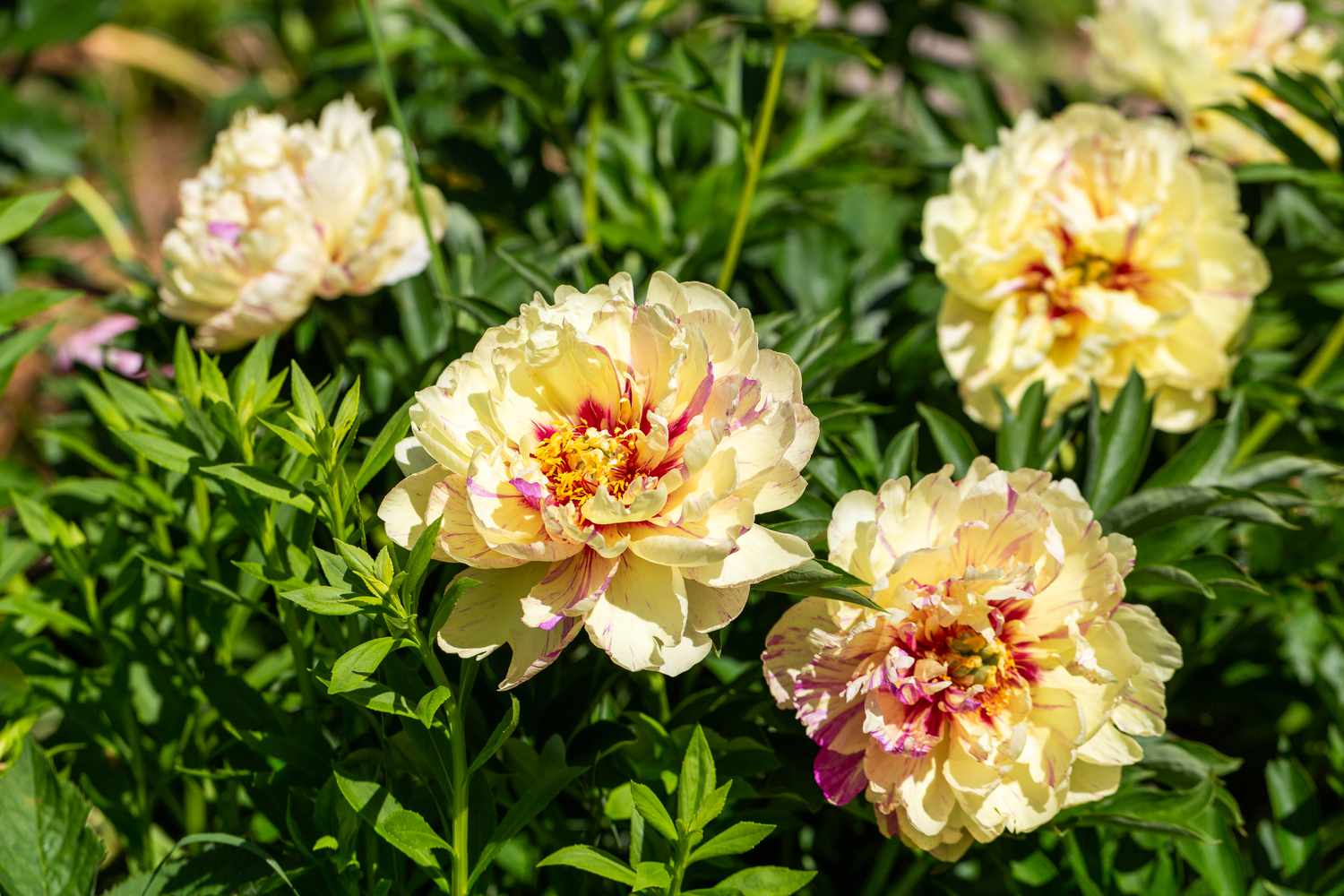
Peonies are a beautiful and timeless addition to your garden. With their fragrant, show-stopping petals and glossy foliage, these plants steal the spotlight in any landscape. But before planting one in your garden, it’s important to know whether it will return next year. Understanding the lifecycle of peonies will help you determine where to plant them and manage your expectations for the following growing seasons. Will it shine for one season only or provide beauty for years to come? Ahead, gardening experts answer the question of whether peonies are perennials and provide must-know care tips.
Are Peonies Perennials?
The most popular types of peonies are herbaceous peonies, tree peonies, and itoh (or intersectional) peonies. All of these peonies are perennials, meaning they fade at the end of the growing season and rebloom the following year. “Herbaceous peonies die back to the ground each winter and regrow in spring,” says Kelly Funk, president & CEO of Jackson & Perkins. “Tree peonies are woody shrubs that keep their above-ground structure year-round. Itoh peonies are hybrids between herbaceous and tree peonies; they die back like herbaceous types, but have sturdier stems and large blooms like tree peonies.”
When Do Peonies Bloom?
Most peonies take two or three years to establish after planting, so you’re unlikely to see blooms immediately. “If they do flower, plants are often less floriferous and sometimes have different flower forms than the established plant will,” says Tess Kuracina, director of Living Collections and curator of Herbaceous Collections at the New York Botanical Garden. “To allow the plants to devote all their energy to root growth, cut off flower buds for the first season or two.”
Once established, each type of peony blooms on a slightly different cycle, allowing you to keep your garden filled with just-opened flowers from April through June (assuming your climate and spring temperatures cooperate). “Having all three in the garden allows for peony season to extend up to eight weeks,” says Kuracina. “The sequence begins with tree peonies, blooming from mid-April through early May; then Itoh peonies flower from mid-May to early June. Lastly, herbaceous peonies bloom from mid-May through mid-June.”
While individual flowers last only about seven to 10 days, you can look forward to decades of repeat blooms with the right care. “Peonies are extremely long-lived; many plants thrive for 50-plus years, with some documented to live 75 to 100 years,” says Funk.
Common Reasons Your Peonies Aren’t Blooming
Credit:
Claudia Totir / Getty Images
If your peonies aren’t budding and blooming with the vibrancy you expected come spring, they may be facing one (or more) of these issues with sunlight, soil, location, or stress.
Lack of Light
Peonies are full-sun plants that require 6 to 8 hours of sunlight daily to produce their best blooms. “In too much shade, plants produce foliage but few or no blooms,” says Funk.
The fix: The simplest solution is trimming overhead branches from nearby trees or taller shrubs. If that’s not possible, relocate your peonies to a sunnier spot. “For best results, choose a permanent planting site with full sun from the start,” says Funk. “Peonies dislike frequent transplanting.”
Deep Roots
Like potatoes, peonies have growth points known as eyes, which should be planted just below the soil. “About 2 inches deep for herbaceous and itoh peonies, and 4 inches for tree peonies,” says Kuracina. “None should be planted deeper than 6 inches, as they are likely to rot.”
The fix: If your roots are only slightly too deep, you may be able to remove loose soil from around the crown of the plant. Otherwise, bringing the roots up requires removing and replanting, says Funk. “Improper planting depth is one of the most common reasons peonies fail to bloom,” she says. “To fix this, lift and replant in the fall at the correct depth. Always check planting depth before backfilling soil.”
Soggy Soil
Dense, soggy soil that keeps the plant’s roots in water can cause root rot, which results in yellowing leaves, a wilted appearance, inhibited growth, and fewer blooms, says Funk.
The fix: Plant peonies in a well-draining spot, avoid planting in low areas, and add compost to loosen the soil as needed. Be careful not to overwater: “Peonies appreciate consistent moisture but are not tolerant of water-logged soils; they should only be given supplemental water as needed,” says Kuracina.
An Overcrowded Garden
Peonies planted too close to each other—or to the other plants in your garden—are likely to come up short on nutrients, light, and airflow, causing a drop in bloom quantity.
The fix: Before planting a new peony, map out its full-grown size; the plants should be about 3 feet apart, says Funk. If you’re trying to salvage a mature plant, you can divide the crown. “Complete crown divisions in the late summer or early fall, and be sure to leave at least three eyes per division,” says Kuracina.
Soil Imbalance
Peonies won’t reach their full bloom potential in soil with the wrong pH or nutrient levels. “Improper pH can limit nutrient absorption and reduce flowering—peonies prefer slightly acidic to neutral soil (pH 6.5 to 7.0),” says Funk. Using a fertilizer with too much nitrogen can also affect blooms, as it promotes the growth of foliage instead of flowers.
The fix: An at-home soil test can help you identify the pH of your garden bed. “Add lime to raise pH if soil is too acidic, and incorporate compost to improve soil structure and nutrient balance,” says Funk. “Switch to a balanced or low-nitrogen fertilizer, avoid lawn fertilizers near peony beds, and apply fertilizer in early spring as new growth emerges. Peonies are not heavy feeders. Light feeding once per year is usually sufficient.”
Division or Transplant Shock
While dividing or relocating peonies can help combat issues with overcrowding or improper placement, the shock may cause the plant to take a year off from bloom production. “Peonies often skip a bloom cycle after being divided or moved,” says Funk.
The fix: Have patience—and provide consistent care. “Give the plant time to reestablish, ensure proper planting depth, and water consistently during the first growing season,” says Funk.
How to Care for Peonies After They Bloom
Peonies may wait until spring for their most show-stopping displays, but proper care during the rest of the year helps your plant prepare for its warm-weather spotlight. Boost your chances for a major flower harvest next year with proper post-bloom care and maintenance.
Deadhead
Remove faded flowers promptly to help your plant use energy most efficiently for the rest of the year. “After peonies bloom, they can be deadheaded,” says Kuracina. “This allows plants to redirect their energy to root growth, fending off disease, and next year’s flower production, rather than creating seed.”
Cut Back
Leave the foliage of herbaceous and itoh peonies to soak up energy all season, pruning only after a hard frost. Then cut them back to the ground in late fall, making room for new growth in the spring. Tree peonies don’t need annual pruning.
Winter Protection
Peonies require a period of cold dormancy to set their buds, so apply mulch carefully to protect them during the cold season without entirely insulating them. “In the winter, give the cut-back plants a couple of inches of mulch, being careful not to bury the crown of the plant,” says Kuracina.
Spring maintenance should also include watching for frosts and freezes that can damage buds, says Funk. “Cover plants overnight with frost cloth when frost is predicted and remove damaged buds to redirect energy,” she says. “Plant in locations protected from harsh wind and frost pockets to avoid frost damage.”
Comments are closed.