
Key Points
Dust can build up on houseplant leaves in winter when there is less ventilation and humidity.Experts say dust on plants attracts dust mites, which may attract destructive pests such as silverfish.Cleaning plant leaves with a soft cloth helps prevent dusty build up.
It’s easy for dust to accumulate on large, sturdy plant leaves, and although it can be time consuming to clean your houseplant leaves, it turns out it’s an important part of plant care, especially in winter when dust accumulates faster. Keeping the leaves of plants clean is important because, in addition to being unsightly, dust can affect plant health.
We asked an expert for their thoughts on why dust build-up can be harmful to house plants—and how to keep plant leaves shiny and dust-free.
Meet the Expert
David Joles is a pest management expert and COO of PURCOR Pest Solutions.
Do Some Plants Accumulate More Dust Than Others?
Credit:
The Spruce / Carson Downing
Just like we may notice dust more on shiny, glossy furniture, the same is true with houseplants: Thick, glossy leaves like those of monstera, aloe vera, and ficus can show dust faster than others with more velvety or rougher surface textures. But that doesn’t mean other plants don’t have dust on them; it’s just harder to see.
Some plants are more negatively affected by dust than others, and some plants aren’t bothered by dust at all. Low maintenance houseplants that thrive with little care are usually not too bothered by dust build up. This includes parlor palms, ZZ plants, rex begonias, snake plants, and many succulents like sedums and jade plants.
Why Too Much Dust Can be Harmful to Plants
Much like a healthy skincare routine is good for humans, the “skin” of a plant, or leaf surface, needs upkeep, too. Keeping plants dust-free keeps them looking nice and encourages the growth process, according to experts at the Iowa State University Extension. Heavy dust-build up can prevent absorption of light and moisture to leaves, and a shortage of these can affect overall plant health.
Another less-obvious issue to be aware of is that dust attracts dust mites, says pest control expert David Joles, and this causes a chain effect.
“Dust mites themselves don’t directly harm plants because they don’t eat them,” Joles says, but the bigger issue is that dust mites attract other insects who will harm either your plant or your home.
Dust mites attract spiders and silverfish, and the latter can cause damage to fabric and wallpaper.
Tip
Dust vs. powdery mildew: If you see a white powdery substance on your plant leaves, especially bee balm or ornamental trees, it might actually be powdery mildew due to low light, overwatering, or overcrowding, according to North Carolina-based Master Gardener Janet Moore. Treat this by removing affected leaves and applying fungicide.
How to Prevent Dust Build Up on Plants
When plants are outside, rain, wind, and sun effectively keep dust off of plants, but indoors, houseplants rely on their human caretakers for maintenance.
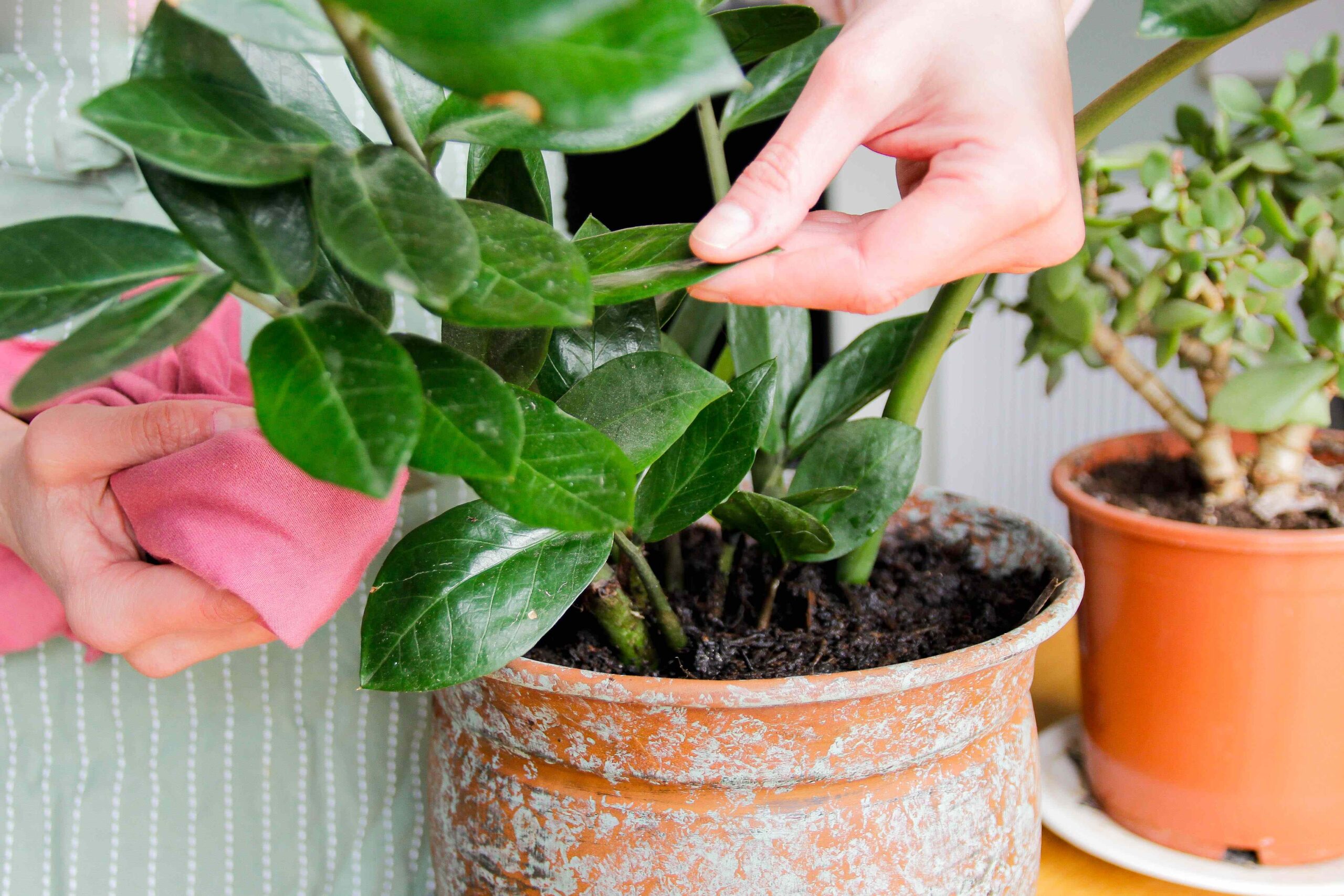
Use a microfiber cloth to dust large-leaved plants. Most plants with large thick leaves can be dusted gently using a soft cloth. You can also moisten the cloth with a bit of water first, but don’t use soap or vinegar, which may harm some plants.
For smaller plants, use a plant mister helps keep leaves clean.
It’s also best practice to dust your home regularly, and if dust mites are persistent, try methods for getting rid of dust mites like vacuuming fabric and upholstery regularly.
Comments are closed.