
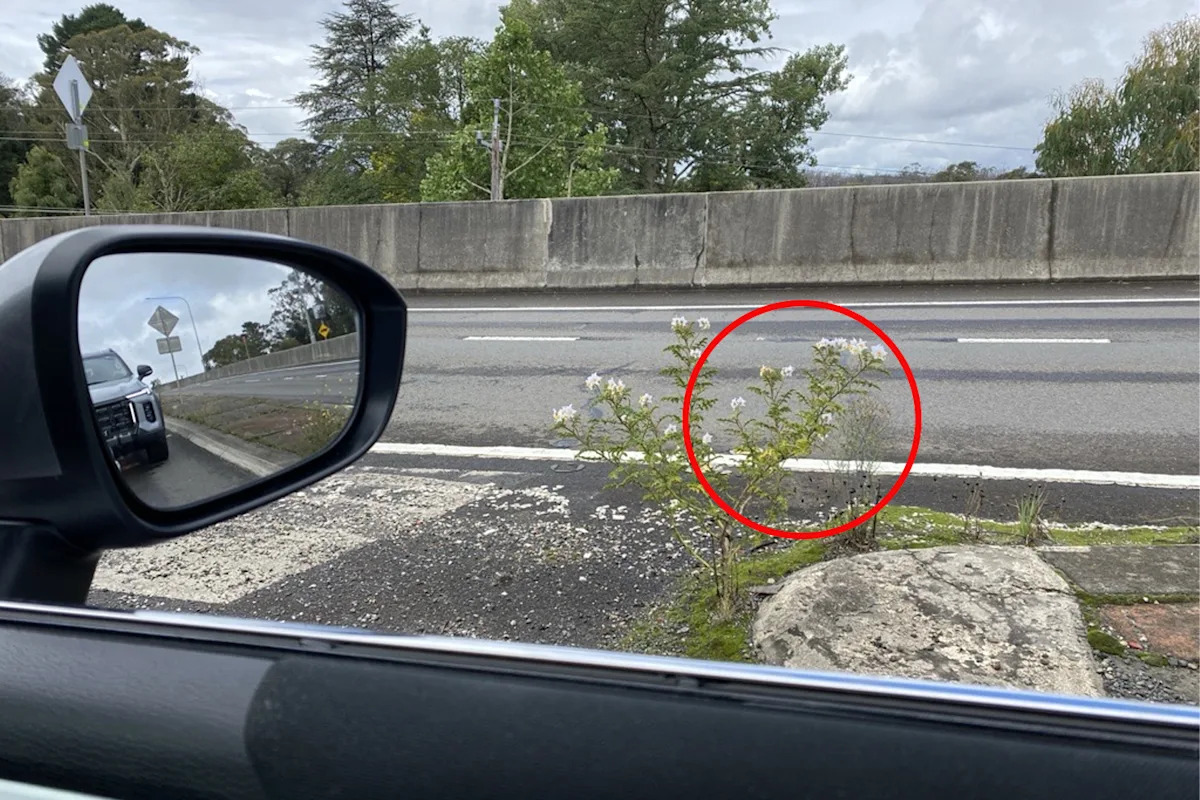
Australians are being urged to keep a lookout for a nasty invasive weed spreading across the country, as governments spend billions annually to combat introduced pests. People are being warned that sticky nightshade “will actually spread” when mowed or chopped.
This makes it all the more important to report all sightings to the relevant authorities.
This week, Greater Sydney’s Local Land Services renewed the alert, with the species spotted along roadsides throughout the city.
“Sticky nightshade is more than a weed; it’s an invasive pest that can injure your animals and choke out your pasture,” it warned.
“Growing up to 1.5m tall, it’s covered in nasty prickles with white or pale blue star-shaped flowers.
Mowing or slashing this will further spread it, the LLS said. “If you see it, report it to your local council biosecurity weeds officer.”
Recent research from the CSIRO and the Centre for Invasive Species Solutions shows that the direct cost of weeds is about $4.9–$5 billion per year, mainly due to agricultural production losses and expensive chemical control.
Over the past 60 years, invasive plants have cost Australia around $200 billion, making them the single most expensive category of invasive species, even more than feral cats or rabbits.
There are so many species to manage, it’s hard to keep track.
Do you have a story on weeds in your area? Contact newsroomau@yahoonews.com
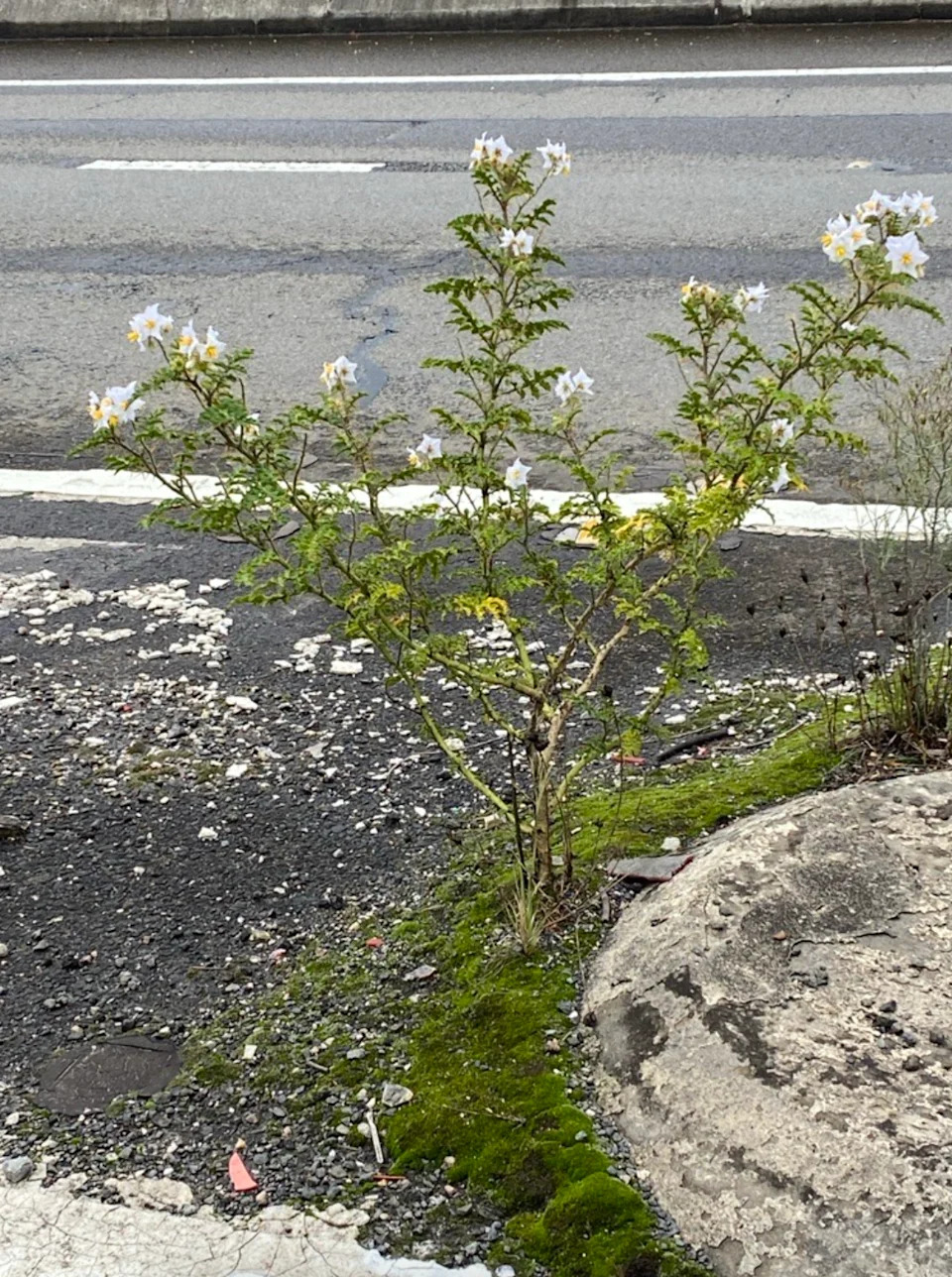
It was likely introduced to Australia as a stowaway in drought fodder. Source: Greater Sydney LLS
Dr Carol Booth from the Invasive Species Council told Yahoo News that the organisation’s data had previously revealed that billions were being spent annually to remove escaped garden plants and stowaways in particular.
Online this week, Australians branded sticky nightshade “bad news”.
“This weed is bad news. I have seen it coming up in cracks in concrete and in relatively undisturbed bushland,” one woman said. “Needs a higher biosecurity rating and funding for mapping.”
“This is all along the Great Northern Road, which will see a lot of transport with the opening of the new airport. Everyone seems to just watch it grow and spread,” a second said.
“Northwest Sydney is covered in it,” echoed a third.
How did sticky nightshade get to Australia?
In the case of sticky nightshade, most records indicate it was introduced unintentionally, likely as a contaminant in imported horse or drought fodder.
In Queensland, sticky nightshade was introduced in the 1920s around Toowoomba, but significant spreading wasn’t recorded until the 1970s, around 50 years later.
The species has since been documented in Western Australia, NSW, Victoria, the ACT, and Queensland.
In the NSW Central Tablelands, it is thought to have arrived with drought fodder in the 1980s, and spreading in the region has increased rapidly over the last few decades.
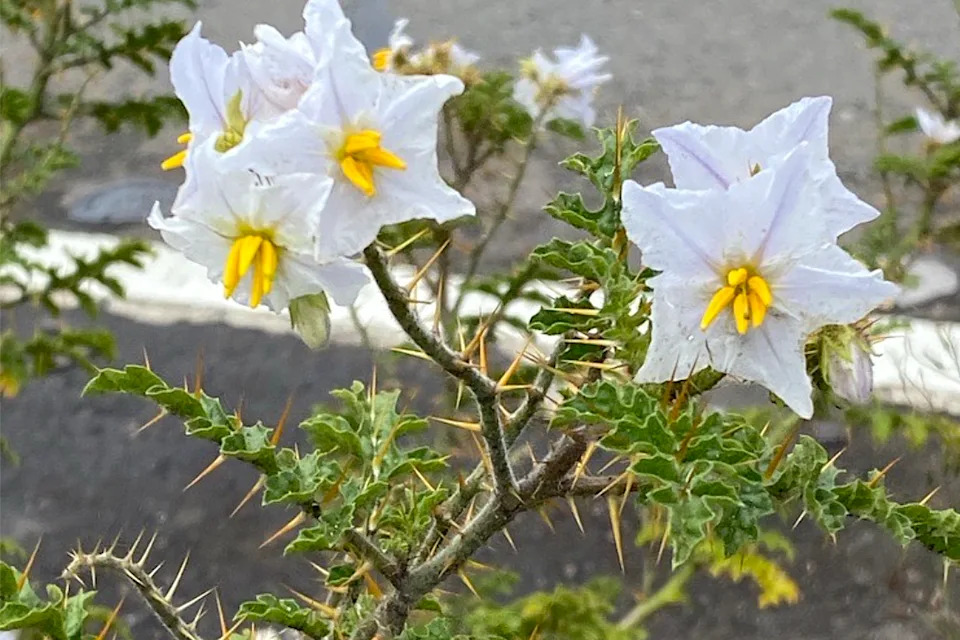
Sticky nightshade is considered an invasive and noxious weed in several Australian states. It produces abundant seeds, which help it spread rapidly. Source: Greater Sydney LLS
Recent years have seen a “marked rise in records”, mainly along roadsides but also at established sites, the Sydney Weeds Network reported.
“Governments should be putting a lot more resources into elimination and prevention so that our grandkids and their grandkids don’t have to try to manage yet another invasive threat,” Dr Booth said.
Its ability to produce lots of seeds and tolerate a variety of soils has allowed it to spread beyond gardens, which is why it’s now listed as an invasive species in a number of Australian states.
Do you have a story tip? Email: newsroomau@yahoonews.com.
You can also follow us on Facebook, Instagram, TikTok, Twitter and YouTube.
Comments are closed.