

 5 min read
A manicured lawn with thick, vibrant grass has a way of making any home feel a little more welcoming. Just look at the bright-green rolling fields and pastures of Drummond Ranch! If you’re hoping to achieve an equally lush look, it all starts with the basics: planting grass seed.
Whether you’re dealing with sparse spots or brown patches, working with a new lawn, or simply hoping to maintain the healthy state of your landscaping, when and how you seed your yard will affect the results. “Preparation is everything,” says Dr. Clint Waltz, turfgrass specialist at the University of Georgia. “The most important thing to remember is that seeds must make good contact with the soil in order to germinate. You also must get your grass established before environmental conditions become too hot or too cold for the young grass to survive.”
While the right timing and technique matter, the good news is that seeding a lawn isn’t all that difficult. For an average-sized lawn (8,000 square feet), most homeowners need a few materials and a free weekend to spread their seeds. Wondering how? Just follow the tips and tricks below for the best time and method for planting grass seed, and you’ll be ready to mow in no time!
The best time to plant grass seed on your lawn.
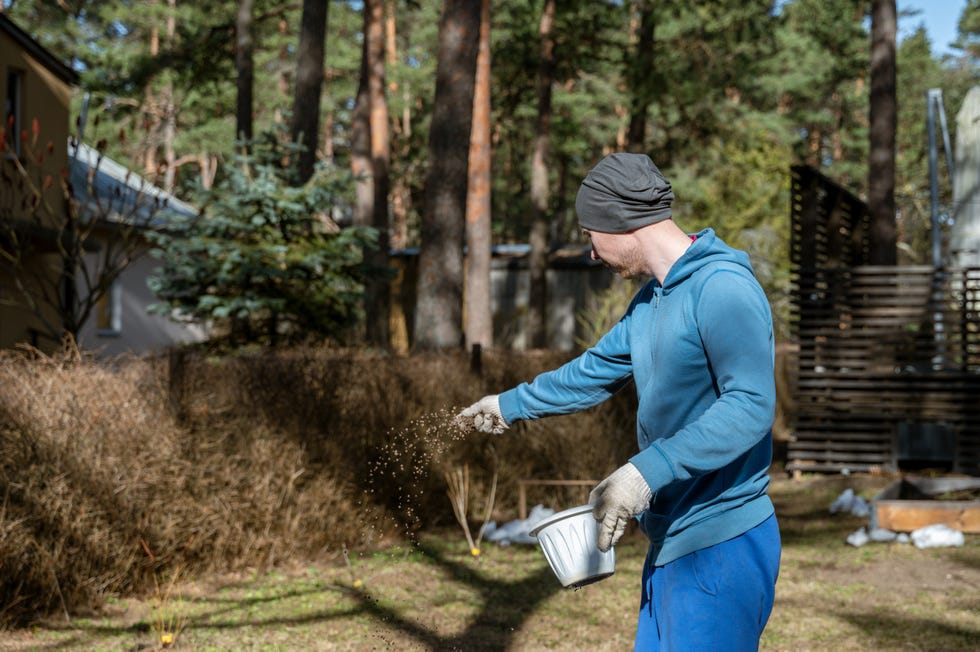
karetoria//Getty Images
The best time to plant grass seed depends on your climate and the type of grass you’re planting. If you aren’t sure which species of grass you have, check your local university co-op extension service or the U.S. Department of Agriculture. You can also gauge soil temperatures in your area by heading to GreenCast.
Warm-season grasses:
For warm-season grasses, which typically grow in the south and thrive in heat, the ideal window of time for planting grass seed is late spring to early fall. In the warmer months, grass is actively growing, and the soil tends to reach 65 degrees Fahrenheit, the ideal temperature needed for fast germination.
Cool-season grasses:
Cool-season grasses, on the other hand, are generally found in the north and grow in cooler weather. So, the best time to plant grass seed in these areas is early fall, usually late August to mid-October. During this time of year, the soil temperature falls between 55 to 65 degrees Fahrenheit, the air is cooler, the rainfall is more consistent, and the weeds are less prevalent, which are all factors that help grass germinate.
The best types of grass seed for your lawn.
The type of grass seed you use depends on your climate and the conditions of your site, such as how much sunlight and foot traffic your yard receives.
Grass seed types for your climate.
If you live in a region where warm-season grass species would thrive, the best types of grass for your locale are Bahia, zoysia, Bermuda, St. Augustine, and centipede species. Alternatively, for cold-season grasses that can tolerate cold temperatures, stick to species like tall fescue, fine fescue, Kentucky bluegrass, and perennial ryegrass.
Grass seed types for your site condition.
The specific conditions and uses of your yard will also determine which type of grass seed you select. For example, if your lawn receives full sun and a lot of foot traffic (either from kids or pets), Kentucky bluegrass or Bermuda grass is your best bet. For shady locations, you’re better off with fine fescues or other shade-tolerant blends. In high-heat areas that are prone to drought, opt for tall fescue, zoysia, or Bermuda grass.
How to plant grass seed on your lawn.
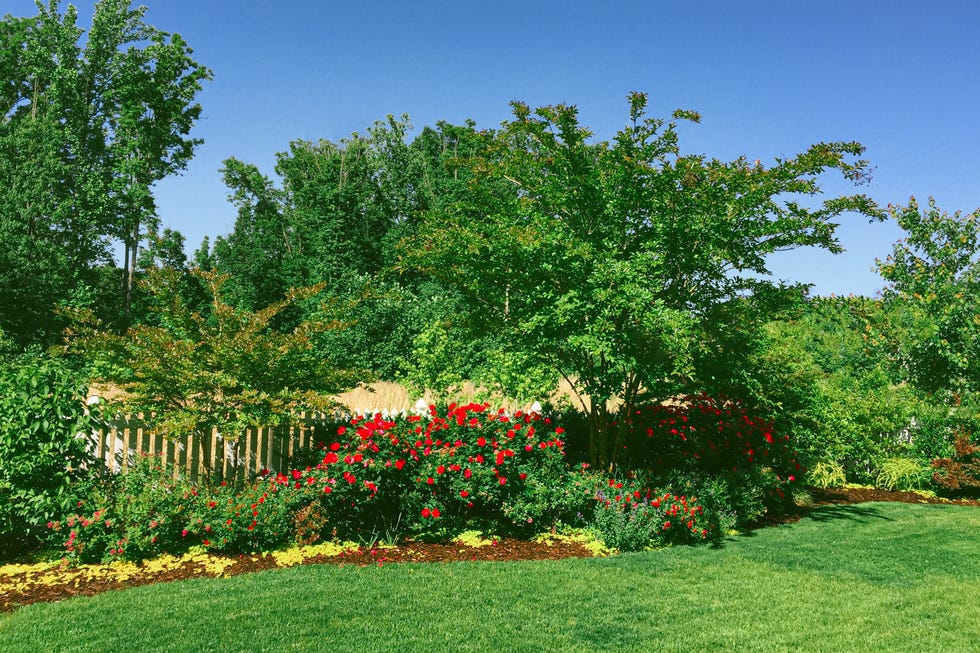
Grace Cary//Getty Images
Once you’ve identified the best time of year for seeding your lawn and you’ve chosen the right type of grass seed for your area, you’re ready to start sowing the seeds! Here’s how to plant grass seed:
Prepare the surface.
Before you start scattering the seeds, you’ll first need to prepare the surface. Start by clearing any sticks, stones, scraggly grass, or thatch to create a blank slate. Then, till up the area three to four inches deep. (You might need to till additional materials like potassium or phosphorus, so be sure to get a soil test from your university county coop extension first.) If you have in-ground irrigation, now’s the time to check the heads.
Next, smooth and flatten out the area with a lawn roller to remove any lumps or bumps. “You want it firm, so that it barely leaves a footprint when you walk across it,” Waltz notes. For the best results, roll the area in one direction before rolling at a right angle to the first passes.
Set the seeding rate.
Set your drop or rotary spreader to the recommended seeding rate, which you can find at the local university coop extension service or the bag of grass seed. For example, the recommended setting might be five to six pounds per 1,000 square feet.
Aim for even coverage.
After finding the right setting, start walking across your lawn, scattering the seeds evenly. Because the blades will spread out as they grow, you won’t need to cover every inch of bare soil. To avoid over-seeding and skipping spots, Waltz recommends splitting your coverage: Apply half of the seeds while walking in one direction and the other half in a perpendicular direction.
Add some mulch.
Once you’ve dispersed the grass seed, cover the surface with a very light layer of mulch, straw, pine straw, sand, or soil to keep the seeds moist and to prevent erosion.
Turn on the water.
Finally, hydrate the new seeds and continue to keep the area moist (but not sopping wet). If you let the area dry out, once germination occurs, the baby blades won’t have a reserve to rely on, so they’ll dehydrate.
Wait patiently.
Depending on the type of grass you have, it could take anywhere from a few days to a few weeks for the new blades of grass to sprout. Once the grass reaches its full, mature height and density, which is often within two to three months after seeding your lawn, you can start mowing the area. Waltz recommends removing no more than one-third of its height and waiting to fertilize your grass until you’ve gone through two mowings.
More Lawn Care Tips

Lilly Blomquist is the associate editor at The Pioneer Woman, where she writes lifestyle stories across a wide range of topics—including news, entertainment, holidays, food, and more.
Comments are closed.