

A Guide to Growing Year Round: Part 1
||| NO PLACE LIKE LOAM by ALEX TAMAYA-WOLF |||
What to Plant in February in 40–45°F Soil
My grandparents kept a garden before the war.
It was a hobby then. Orderly. Pleasant. A place to kneel in good weather and admire yourself. The kind of garden that convinces you you’ve mastered nature, when you’ve only enjoyed her consent.
Then the war began, and the garden lost its innocence. It was gardening under pressure, and the margin for error disappeared.
My grandparents didn’t respond by making the garden bigger. It got earlier. Then later. Then scaled up for more families, strangers, livestock.
Seeds went into cold soil because waiting meant falling behind, going hungry. Leaf crops were staggered. Roots were planted earlier than the calendar advised. Seeds were saved. Pigs and chickens were fed from the margins. Timing stopped being seasonal and became strategic.
The difference between hobby and survival is timing. You don’t plant when it’s comfortable. You plant when nature consents. That distinction hasn’t disappeared. We’ve simply forgotten it…because we could.
Gardening Year Round is a Gift
Here in the maritime Northwest, winter doesn’t end abruptly. It drags, loosens. Light returns before heat does. The soil stays cold and saturated while the air starts whispering about spring.
Most gardeners respond to the whisper. They buy starts. They rush tomatoes under grow lights. They plant by calendar and optimism.
Nature doesn’t reward enthusiasm. It rewards adaptation. It doesn’t care what the nursery growing calendar says or when you’re ready. It cares about physics, chemistry, not plans.
But nature here is more forgiving than the High Plains, where drought and frost take turns punishing miscalculation. Here, four-season gardening isn’t a necessity. It’s a gift. Here isn’t about heroic winter harvests, luck, or Instagram abundance. It’s about attention span and sequencing. It’s about building the year in layers so there’s no sudden scramble in May and no collapse in August.
You begin before warmth. You stage before abundance. You treat February as a structural month.
This isn’t “plant everything early.” It’s a negotiation. There are crops that’ll germinate in 42° mud. There are varieties bred for climates like this. There are seeds that’ll rot if you misjudge drainage by even a day.
The Frostbreak is the first window in a four-season system built for this coast — not by calendar, but by soil temperature and light return. It’s quiet. It’s restrained. It doesn’t look impressive. But it’s how you stay ahead. The full structure looks like this:
Window I — The Frostbreak (≈ 40–45°F Soil)
Window II — The Light Surge (≈ 46–52°F Soil)
Window III — The Heat Threshold (≈ 55°F+ Soil)
Window IV — The Decline Window (August)
Window I: The Frostbreak
(40–45°F Soil at 2 Inches)
This is not a period of time, not a calendar page. It’s a threshold. It’s permission to sow with strategy.
The Frostbreak is defined by soil temperature and drainage. Not calendar. Not optimism. Not light. Think of it as the opening rhythm to the full growing season.
Push a soil thermometer two inches deep. When it reads between forty and forty-five degrees, and your beds drain within twenty-four hours after a soaking rain, the window is open.
If you’re unsure about drainage, test it. Dig a hole eight to ten inches deep. Fill it with water and let it drain. Fill it again. If it hasn’t drained within twenty-four hours, don’t plant.
Germination is driven by soil temperature, moisture, and oxygen. That’s physics. Light? That comes later.
Seeds don’t fail from cold alone. They fail from lack of oxygen.
Cold + air = slow growth.
Day length affects growth rate after emergence, not whether the seed wakes up.
In late February in the maritime Northwest, photoperiod is already increasing. It’s adequate for leaf crops. What limits you now isn’t light. It’s soil temperature and oxygen availability.
Light still matters — just not yet as the gatekeeper. It determines:
But the Frostbreak opens in the ground, not in the sky.
This window demands restraint.
Once these conditions are met, we move to genetics.
Cold Soil Vegetables to Plant in the Frostbreak Window
Variety-Specific Planting for 40–45°F Soil
At this temperature, you are not choosing crops. You are choosing genetics.
Many vegetables can survive cool weather. Fewer will germinate reliably in cold, oxygen-limited soil. Fewer still will produce clean stands without protection.
This is the narrowed list. Field tested.
Carrot — (Daucus carota)
An early Nantes-type carrot that germinates more reliably in cold soil, producing sweet, uniform roots even when sown at 40–45°F during Frostbreak.
A quick-maturing hybrid carrot with strong early vigor that performs well in cool, rising soil temperatures and maintains sweetness without needing summer heat.
Spinach — Spinacia oleracea
Cold germination strength. Slower to bolt once warmth arrives.
Heavy leaf mass. Reliable in maritime climates.
Spinach germinates at ~40°F and tolerates slow early growth. It prioritizes root establishment before pushing leaf.
Peas — Pisum sativum
Bred in the Pacific Northwest. Cold tolerant. Reliable emergence.
Early snap variety. Compact and fast once light increases.
Peas germinate in cold soil and establish roots before top growth accelerates.
Fava Beans — Vicia faba
Classic cold-season broad bean. Handles damp soil better than most legumes.
Large-seeded, dependable in cool climates.
Fava beans tolerate cold, moist conditions and establish deep roots early.
Radish — Raphanus sativus
Consistent germination. Quick return.
Slightly longer but steady in cool soil.
Reliable germination in cool soil. Provides a 25–30 day return that keeps succession moving.
Mustard Greens — Brassica juncea
Cold tolerant. Strong early growth.
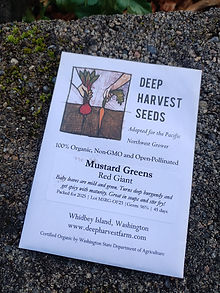
Red Giant mustard greens seed packet ready for early cold-soil planting in the maritime Northwest.
Uniform leaf. Reliable in damp spring beds.
Mustards tolerate cool soil and brief saturation better than lettuce.
Tatsoi — Brassica rapa var. rosularis
Dense rosette. Extremely cold tolerant.
Handles cold soil and low light exceptionally well. Compact growth reduces rot risk.
Mizuna — Brassica rapa var. nipposinica
Early Mizuna / Kyoto Mizuna
Feathery leaf. Quick baby harvest.
Fast germination and tolerant of fluctuating early-spring conditions.
Celtuce — Lactuca sativa var. augustana
Grown for both leaf and stem.
More tolerant of cool soil than standard head lettuce. Performs well in staggered early sowings.
Arugula — Eruca sativa
Fast, uniform germination.
Wild Rocket (Bonus: Perennial)
Slower but more cold resilient and stronger flavored.
Quick to emerge. Ideal for 2–3 week succession cycles.
Scallions / Bunching Onion — Allium fistulosum
Cold-tolerant and steady.
Slow but dependable in cold soil. Provides early structural harvest.
Borderline / Edge-of-Window Crops
Collards — Brassica oleracea var. viridis
Vates, Champion, Georgia Southern
Direct sow possible at upper end of window.
Why borderline: Germinates in cool soil but slower than mustards. Performs better once soil approaches 46–48°F.
Succession Map — 6 Week Cold Soil Strategy
The Frostbreak is not about abundance. It’s about positioning.
You are not filling beds. You are layering time.
This six-week map assumes soil temperatures between 40–45°F at entry and gradually approaching 46–48°F by the end.
Week 0 — Establish the Backbone
Spacing matters. Do not over-sow. Cold soil slows emergence, and crowding increases rot risk.
Goal: root establishment, not canopy.
Week 3 — Reinforce and Replace
Radish
Arugula
Mustard
Tatsoi / Mizuna
Add a second row of spinach if space allows.
Peas and favas are left alone. They’re building roots.
Goal: ensure continuous leaf supply when Week 0 radish matures.
Week 6 — Transition Point
By now soil may be approaching 46–48°F.
TO DO: Prepare beds for the Light Surge window.
This is the hinge between planting windows.
A March glut and April gap
Overplanting in cold soil
Beds sitting empty while waiting for “real spring”
The May scramble
Succession is not about planting repeatedly. It’s about overlapping maturity curves.
Cold Soil Strategy produces:
Peas climbing, fava thickening
And then the next planting window, Light Surge, begins.
First, some defensive gardening.
Managing the Cold Soil Window
The goal during the Frostbreak isn’t acceleration. It’s control.
You’re managing moisture, oxygen, and exposure.
Six inches of wood chips or leaf mulch does not raise soil temperature. It stabilizes it.
In maritime winters, that stability matters.
It prevents soil crusting.
It reduces compaction.
It moderates night temperature swings.
It preserves microbial life.
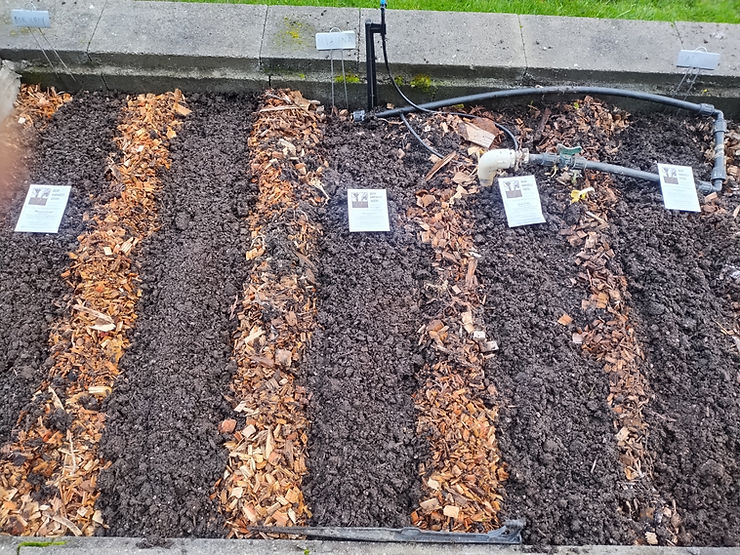
Frostbreak planting beds in February — mulch pulled back to create direct-sow trenches in 40–45°F maritime Northwest soil.
Pull mulch back. Create a narrow trench of exposed mineral soil. Sow directly into that strip.
Replace mulch loosely between rows, not over them.
You’re not trying to heat the soil. You’re trying to keep the seed zone oxygenated.
Mulch protects structure. The trench admits light and air.
Cold + saturated = failure.
Compaction is more damaging now than in May.
This window isn’t light-limited for germination, but it is for growth speed.
Plant in the most south-facing beds first.
Avoid north-facing cold pockets.
Dark soil surfaces warm faster than exposed mulch.
Microclimate selection matters more than adding heat.
Pest Pressure in the Frostbreak
One advantage of the Frostbreak window:
Insect pressure is minimal.
Cold, wet soil is slug habitat. They’ll eat emerging seedlings overnight.
Peas and radish seed are vulnerable.
Use light row cover if necessary.
In heavily mulched beds, mice may tunnel and steal seed.
Trench planting helps. So does firming soil after sowing.
This is the silent threat.
Cold soil doesn’t kill seed. Oxygen deprivation does.
That’s why drainage is the first rule of the Frostbreak.
The Frostbreak doesn’t look ambitious. It works quietly, below forty-five degrees, while most gardeners are still waiting for spring to feel official.
By early April, if you planted correctly, you’re already harvesting.
Radish. Mustard. Baby spinach. Arugula.
Peas are climbing. Favas are thickening. The beds are not empty.
This is how the year begins without panic.
But the Frostbreak does not last.
As soil temperature approaches forty-six to forty-eight degrees and day length pushes past eleven hours, growth accelerates. Diversity widens. Transplants become viable. Direct-sown carrots and turnips stop sulking. Lettuce becomes reliable.
That next window in the succession is the Light Surge.
The Light Surge is defined not just by soil warmth, but by cumulative daylight. It’s when leaf production shifts from survival to expansion. It’s when succession widens and timing becomes less defensive and more productive.
When the soil crosses the threshold and drainage remains intact, we move.
Four-season gardening in the maritime Northwest isn’t about stretching summer. It’s about sequencing reality.
The Frostbreak is the first decision in that sequence.
Plant what the ground will allow.
Then watch the light change.

**If you are reading theOrcasonian for free, thank your fellow islanders. If you would like to support theOrcasonian CLICK HERE to set your modestly-priced, voluntary subscription. Otherwise, no worries; we’re happy to share with you.**
Comments are closed.