
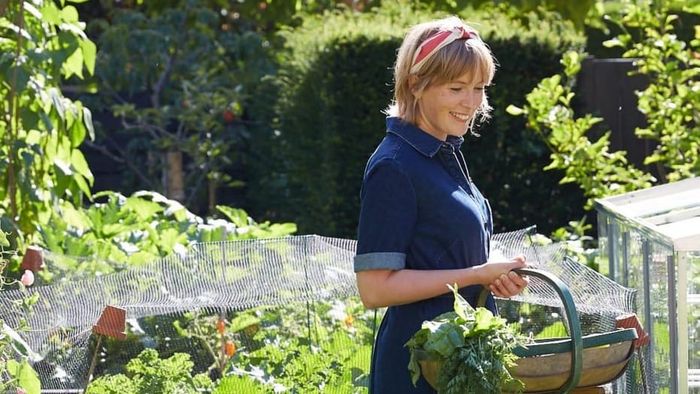
A high-flying advertising executive, who found herself burnt out and consumed by depression, believes gardening saved her. In a bid to improve her work/life balance, Kathy Slack moved from London to the Cotswolds, only to discover that she had a considerably longer commute.
So she quit her job – and didn’t get out of bed for quite a long time. Kathy was eventually coaxed outside by her mother, who sat her down with a cup of tea amongst some overgrown veg beds.
“I looked at the weeds and the worms and watched the bugs tootling around and it kind of calmed me down. It wasn’t a huge moment where I went, ‘My God! Nature! I’m cured!’ but it made me feel slightly less awful,” she says.
READ MORE
Kathy’s mum handed her some seeds to scatter and a few weeks later radishes and then lettuces popped up – and she was hooked. That was more than 10 years ago, and Kathy has shared her journey from depression to finding solace in gardening in her book, Rough Patch.
It charts how she swapped a jet-set lifestyle for fruit-picking on a local farm, then cooking, teaching, and writing. “I know it would be glib and a massive oversimplification to say, ‘Oh, vegetables saved my life’, but they really were significant,” says Kathy.
“When I got into nature, and particularly into growing vegetables, I realised what my values were, which I think is an exercise in knowing yourself a bit better anyway. I found it very creative and I found it very calming.”

PA’s Hannah Stephenson has shared five spring tasks that Kathy recommends, as she believes can help boost wellbeing:
1. Get sowing
“Sow something. Radishes are my gateway vegetable to getting people into growing because they grow so quickly that you get almost instant gratification. I would definitely get peas in the soil as well, because they’re quite hardy and even if you don’t grow them to pea size, they’re great for pea shoots.
“You can cut and come again two or three times, and then let them grow on to be full-size peas. This is all just a way of feeling that sense of wonder and awe at watching something as tiny as a radish seed turn into a golf ball-sized ruby that you can eat.”
2. Get your hands dirty
“God, I love compost!” says Kathy. “It used to be kitchen scraps and is now this incredible chocolate, loamy, nutrient-rich magic. Spread it over your veg beds or dress the top of your pots or spread it over your flower beds, but get your hands into that compost.”
She says studies have found that touching healthy soil with your bare hands alters your brain chemistry and gives your mood a boost. A bacterium called Mycobacterium vaccae is absorbed through the skin and triggers the release of serotonin, dubbed the ‘happy hormone’.
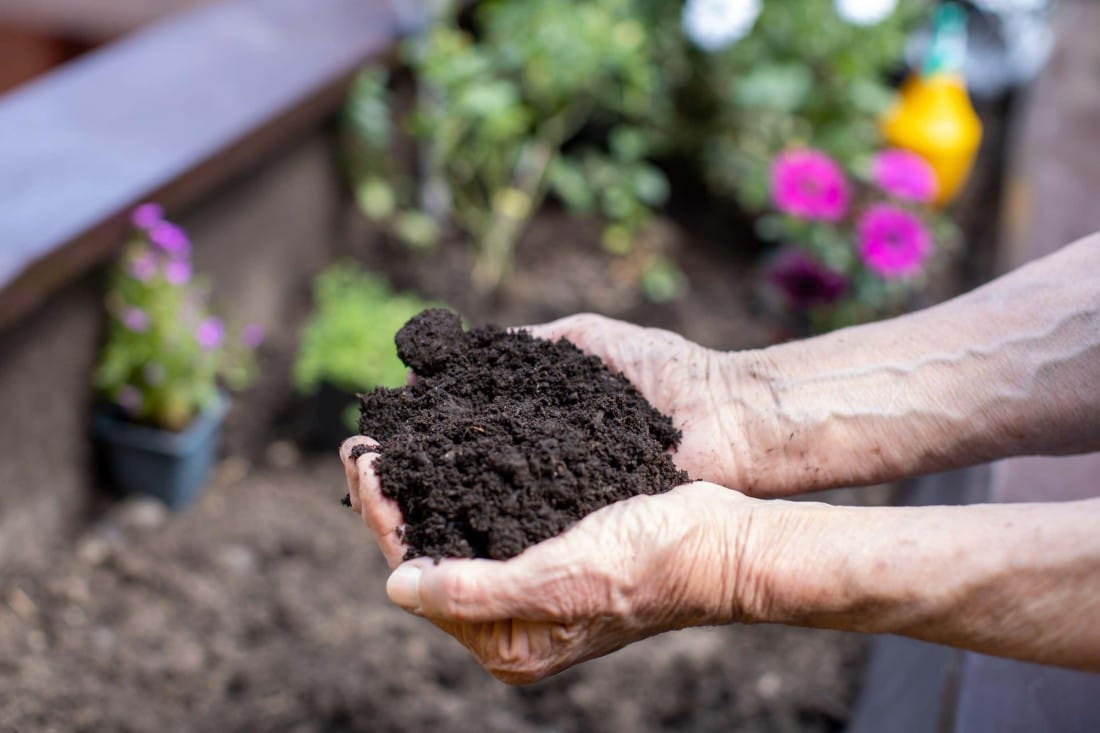 HAPPY HORMONE: M. vaccae absorbed from the soil mirrors the effect of antidepressants (Image: Alamy/PA)3. Plan your growing year
Look through a load of seed catalogues – Kathy says it’s infinitely more enjoyable if you use real brochures rather than online resources. “I like to browse and turn pages and dream about how many different types of pumpkin I can grow this year and feel inspired and look forward to it. I feel that’s a real act of hope and will get you excited.”
4. Get physical
Venturing outside and getting stuck into some physical tasks will help boost endorphins, says Kathy. “I do a lot of wheelbarrowing of compost. I’m not a digger – I’m a ‘no-dig’ person – but I also think that just to potter around, going out with a bucket and pulling a few weeds up, can be very therapeutic.”
5. Grow windowsill herbs
“Herbs are great to grow if you don’t have a garden because you can put them on everything you cook and suddenly there’s a little bit of your achievement – even if you put your homegrown basil on a microwave pizza,” says Kathy. “Now it’s not a ready meal, it’s a little bit of nature that you’ve tended and created and fed yourself with – and that is uplifting.”
Gardening for health books 📚
This article contains affiliate links and we may receive a commission on any sales we generate from it. Learn more.
Rough Patch: How A Year In The Garden Brought Me Back To Life by Kathy Slack costs £12.34 on Amazon in paperback. Includes lessons she learnt from the soil, along with recipes inspired by the land. Feel-Good Gardening by Claire Stares costs £12.34 at Bookshop.org. Simple tips, practical advice and inspiring ideas to help you reap the mental, physical and spiritual benefits found in nature. A Wilder Way: How Gardens Grow Us by Poppy Okotcha costs £15.39 on Amazon. The inspiring, mundane and magical moments that arise from tending a garden over the course of a year. RHS Gardening for Mindfulness costs £10 at Dunelm. The beautifully illustrated guide is designed to help you find peace in your patch, whether it’s a windowsill or a wildflower haven.
Prices correct at the time of publication.
MORE FOR GARDENERS
Comments are closed.