
February is whizzing by and before we know it, planting season will be upon us. Avid gardeners have been poring over seed catalogs, inventorying their home seed libraries and planning this year’s vegetable gardens.
It can be a daunting task here in the Yakima Valley with the weather being so conducive to growing vegetables and fruits. But have you ever noticed that a tomato or pepper plant will do really well one year, making you excited to grow it again, then be such a disappointment the next year, and even more so the following season?
Yes, it could be the heat, the smoke, the availability of water. But, more likely, it is because the same plant is always planted in the same location. Soil nutrients have been depleted. Pests and diseases have overwintered and are just waiting to feed off your new vegetable garden.
This is where crop rotation comes into play. Plants, particularly plant families, interact with the soil differently, taking nutrients, providing nutrients, aerating the soil. Tomatoes and peppers are heavy feeders and deplete the soil of nitrogen and phosphorous, while peas and beans return nutrients to the soil by producing nitrogen.
Plants within a family tend to attract the same pests and diseases and repeatedly planting a family in the same space invites pests and promotes disease. By changing the location of crop families, pests and diseases that attack the crops are hindered by the lack of a target. Crop rotation disrupts pest and disease cycles while helping the soil replenish its nutrients.
The recently updated PNW Gardener’s Handbook, the WSU Master Gardener’s textbook, is a great resource. It is a free download and includes four pages listing vegetable crops and the diseases they are susceptible to, while also including a page on crop families.
How does one go about getting started with crop rotation if they’ve never done it? Basically, the planning is three simple steps.
1) Make a list of what you grow.
Sign up for our Daily Headlines newsletter — delivered to your inbox every morning at 7 a.m.
Thanks! You’re all set.
Watch your inbox for Daily Headlines.
2) Divide the plants into families. This is key. Group plants according to nutritional needs and susceptibility to the same pests and diseases. It can be confusing at first, but there is plenty of help out in the World Wide Web.
A basic garden may consist of tomatoes, peppers, beans, cucumbers, squash, onions, garlic, zucchini and radishes. While there are nearly a dozen vegetable plant families, they can basically be categorized as legumes, rooting, fruiting and leafy crops.
You may also be familiar with names “solanaceae,” “cucurbits,” “brassicas” and “alliums.” Categorizing the above basic garden would be as follows: solonaceae (or nightshades) — tomatoes and peppers; cucurbits — cucumbers, squash, zucchini; brassicas — radish; legumes — beans, peas; alliums — onions, garlic.
3) Draw a map of your garden area. Large gardens are relatively easy for practicing crop rotation. The challenge belongs to the small home garden, but it is doable. Adding raised beds, or even containers like half-whiskey barrels, makes rotation more feasible.
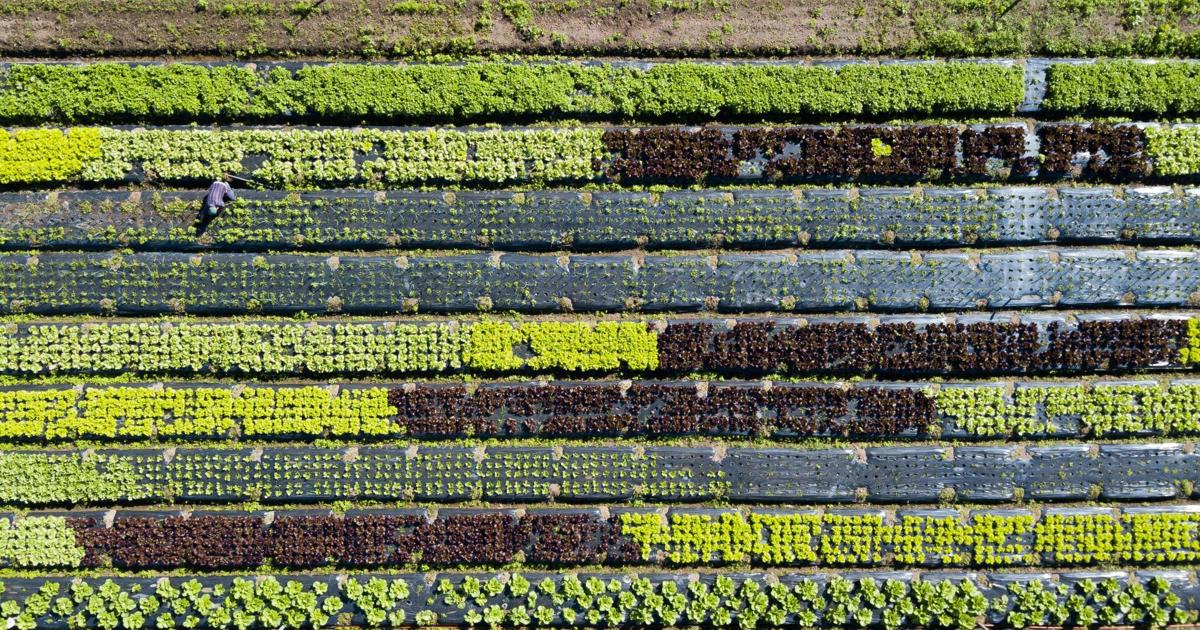
Plant all solanaceae plants in one space, cucurbits in another, brassicas in a third, legumes in a fourth, and the alliums in a fifth space. The next year, rotate each “family” one space. In the third year, rotate each again one space. In this case, each family would take five years to return to its original space.
Keep a record of your rotations, whether it is in a garden journal, on graph paper, 3-by-5-inch cards, or even seasonal photographs.
While there are several different methods for crop rotation, a simple approach is called the “Leaf, Root, Flower, Fruit” method. In any given space, follow this order. It provides soil nutrient replenishment while suppressing the pest population and keeping diseases at a minimum.
While crop rotation is a personal choice and can be quite restricted by the small home garden, it is a suggested tool for making your garden healthy and more productive. It is a cultural technique that helps a gardener manage pests and disease while also maintaining healthy soil. Choose a system that works for your garden and meets your goals.
Comments are closed.