
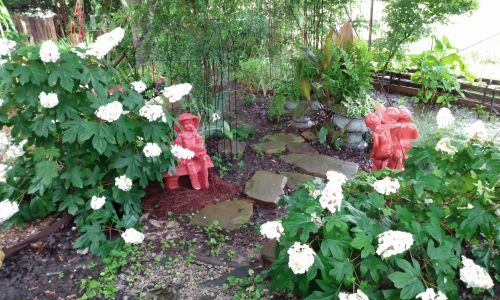
Calhoun County, AL – Two photographs from 2018 capture the humble beginnings of what is now a flourishing shade garden—an area that once held only two century-old maple trees. Through years of journaling and hands-on experience from 2018 to 2026, this shade gardening project has evolved into a thriving landscape filled with texture, structure, and seasonal beauty.
For those considering starting their own shade garden, the journey began with simple, economical steps. Fallen tree limbs collected from nearby woodlands became the first building materials. These limbs were stacked to create natural soil corrals, while shorter, sturdy branches were hammered vertically into the ground to secure them in place. Over time, the wood naturally decomposed, enriching the soil and forming a strong compost foundation that plant roots now weave through and strengthen.
An organic soil blend first created in 1998 was added to enrich the planting areas, providing a healthy base for the garden’s first investment plants. These included Albo and Blue Elegance hostas, lady ferns, Ruby Slipper hydrangeas, potted bamboo, coleus, and caladiums. Each spring, annual seeds such as Four o’Clocks were planted along garden borders, chosen specifically for their ability to reseed and return year after year.
To introduce vertical interest, two-foot-high yuccas were planted throughout the space. Although yuccas do not bloom in heavy shade, they grew to heights of nearly five feet, providing striking structure and texture. In contrast, a separate sun-filled garden area allows a towering twelve-foot island of blooming yuccas to thrive. Small yucca offshoots are carefully culled each year and transplanted throughout the shade garden, allowing for continued growth and expansion at little cost.
Perennial Wyoming canna rhizomes were also introduced for their rich bronze foliage, offering dramatic color contrast in shaded areas. While cannas similarly do not bloom in full shade, they contribute depth and visual diversity. Much of the plant material used throughout the project has been repurposed from sunny garden spaces, demonstrating how excess growth can be economically redirected to enhance new areas.
Creativity extended beyond plant choices. Iron cattle panels supported by rebar were installed as trellises, adding height and structure. Antique auctions yielded distinctive garden accents, including a Windsor bench, an Aztec 20-by-20 clay wildlife water bowl, and large mustard-colored pottery pieces used to anchor shrubs and create focal points.
Perhaps the most important lesson learned over the years is the need to monitor moisture levels. Shade gardens can retain excessive water, and without proper drainage, plants may develop mold and fail. Careful observation and yearly adjustments to plant selections—including new bulbs, rhizomes, and corms—ensure continued health and visual interest.
This evolving shade garden stands as a testament to imagination, patience, and resourcefulness. What began beneath two towering maples has grown into a layered, living landscape—proving that with creativity and thoughtful planning, even the shadiest spaces can flourish.
Betty Clark is a contributing writer. She has been an organic gardener since 1998. The signature flower she grows is Dahlias. She has a straw bale garden, a raised bed garden, and an in-ground garden. Both her surnames are from agricultural farming families (8 generations). Her hobbies include ancestry research, antiques, continued education classes, and workshops. She also has a background in marketing & promotions, including expos. To contact Betty Clark with gardening questions: bettyclark2151959@gmail.com
Comments are closed.