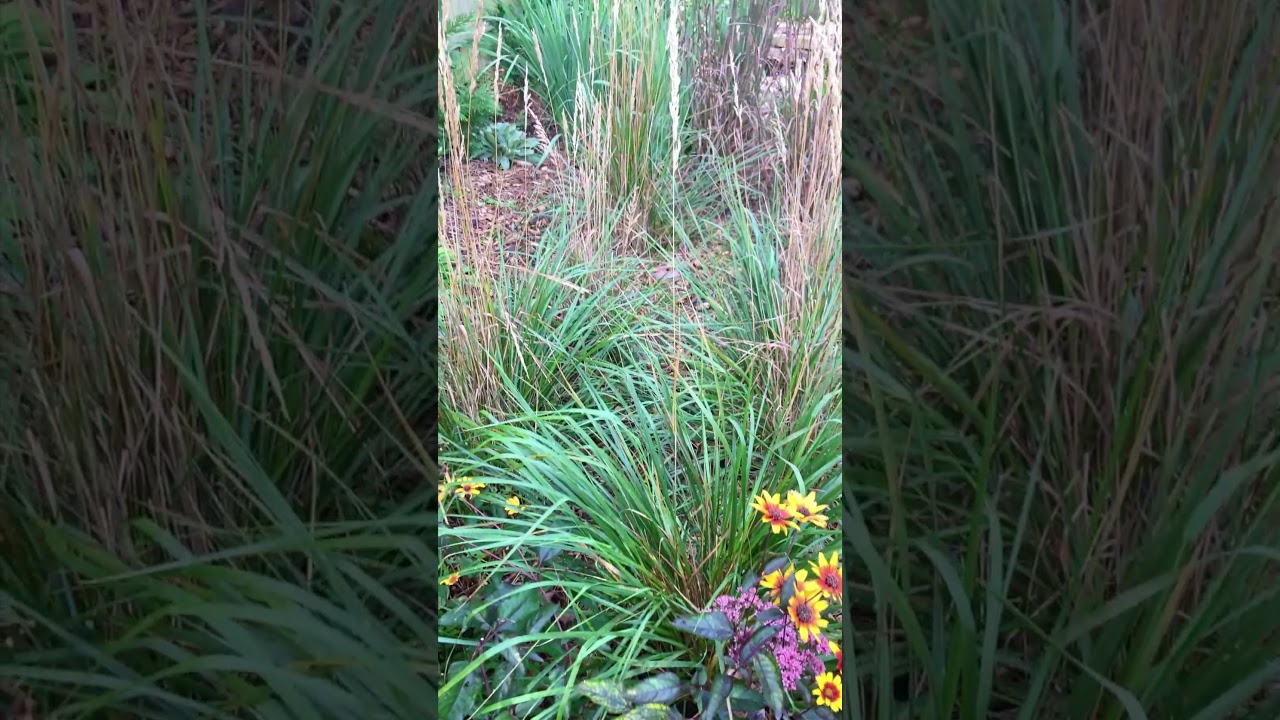
The ornamental and native grasses are tall and blooming in my garden. Grasses have become an integral part of my garden as structural elements for height and color, as well as habitat for wildlife. I have collected a variety of grasses including our prairie native little bluestem, Schizachyrium scoparium and its cultivated cousin, “Blue Heaven” which is less prone to flopping and has an upright habit with green-blue color in the Summer turning reddish hues in the Fall; Panicum virgitum “Blue Fountain”, a large switchgrass with steel-blue stems and imposing stature; Andopogon “Blackhawks”, a taller grass with pretty bluish-green leaves turning plum-red in the Fall; Calamagrostis “Karl Forster”, a landscaping favorite with tall green stems sporting conspicuous wheat-like inflorescences in late Summer into Fall; and Festuca “Blue Whiskers”, a cute compact grass with pale blue leaves and short height that makes a nice edging plant. All of the grasses prefer well-draining soil in mostly full sun. The large grasses need plenty of room to grow and are generally clump-forming. One cautionary note when planting grasses is to know their reproductive habits; my native little bluestem spreads vigorously by seed and will need monitoring to control its spread around the garden. Also grasses will need to be divided about every three years or so to prevent die-out from the center of the plant and keep them looking full and healthy.

Comments are closed.