


Solicitor explains how to resolve fence and 2 other common neighbour disputes (Image: Getty)
While many people live in harmony with those living in proximity, rows can sometimes break out over any number of issues. A dispute between neighbours refers to a conflict or disagreement that may happen over various issues, with the most common being over boundary lines, particularly when it comes to garden fences.
Boundary disputes can be incredibly frustrating and confusing for homeowners. The law regarding boundary disputes in the UK is not very clear, making it easy to feel overwhelmed by what may initially appear to be a straightforward issue. Luckily, solicitor Sophie Campbell-Adams of Britton and Time, who has worked in property law since 2016, has shared three simple ways to resolve these types of neighbour disputes.
Read more: Anyone with peace lilies urged to keep them away from common area in homes
Read more: Mary Berry shares ‘most important’ gardening task you need to do – expert agrees
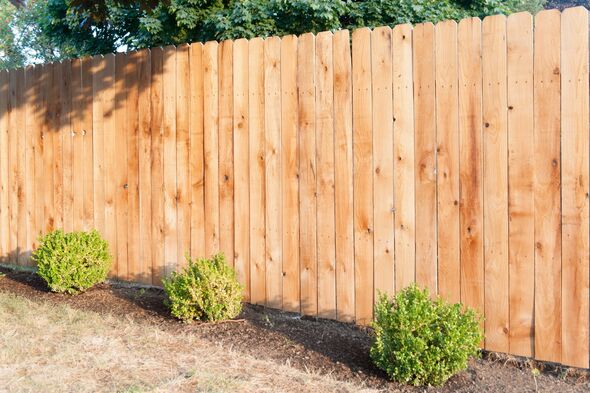
Fences are a massive cause of neighbour disputes (Image: Getty)
Sophie claimed that there are three main causes of boundary line neighbour disputes – fencing, trees and house extensions.
She said: “Damaged or rotting fences are a leading cause of neighbour and boundary disputes. When you buy a house with a garden, you’ll normally be responsible for some of the fences along the boundary.
“If these are damaged for whatever reason, it’s your responsibility to repair them and refusing to do so can lead to a dispute.”
If a tree you own drapes over a boundary and causes damage, or it falls during a storm, you may find yourself with a boundary dispute on your hands.
Likewise, if you remove a neighbour’s tree, accidentally or not, you may be “liable to replace the tree” with one of equal size and age.
Sophie pointed out that this “can cost thousands of pounds in some cases”, especially if the tree is something like a centuries-old English oak.
Boundary disputes can also arise during the construction of extensions if they block or narrow shared accessways, or encroach into a neighbour’s garden.
Sometimes, the size and shape of the extension can deviate from the originally granted plans, leading to loss of light and enjoyment of the surrounding properties.
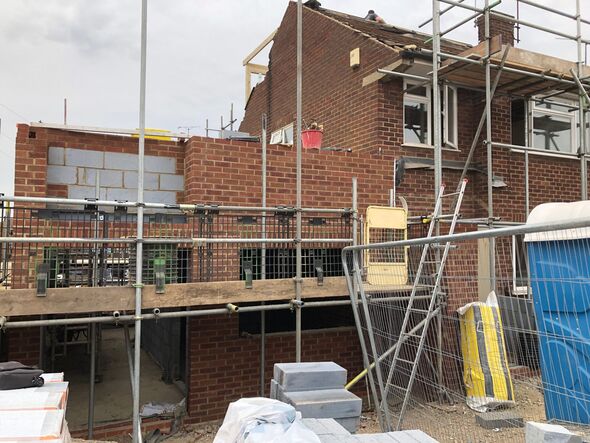
Boundary disputes can also arise during the construction of extensions (Image: Getty)
If you’re seriously considering resolving a boundary dispute, there are a good number of options available to you. Sohpie urged: “Don’t rush to court in the first instance without first consulting a solicitor, as you’ll likely end up spending more than you otherwise would have.”
How to resolve boundary disputes
1. Speak to your neighbour
Often, the easiest solutions can prove to be the most impactful. If you haven’t yet, have a chat with your neighbour to learn their perspective on the matter.
Even in the case of significant disagreements, without understanding your neighbour’s thoughts, you might struggle to find an appropriate resolution.
You have the option to approach this either formally or informally. Informal mediation could just mean reaching an agreement on a solution with your neighbour and creating a plan of action.
On the other hand, formal mediation requires the involvement of a third-party mediator who will facilitate your discussions in an effort to find a friendly resolution.
If you and your neighbour can’t agree on a solution, your only choice is to take the matter to court if you wish to enforce a remedy. However, keep in mind that this could be costly for both you and your neighbour.
Sohpie points out that even if you end up “winning” your case, your neighbour might respond in unexpected ways – and you will still have to live next to each other afterwards.
Comments are closed.