
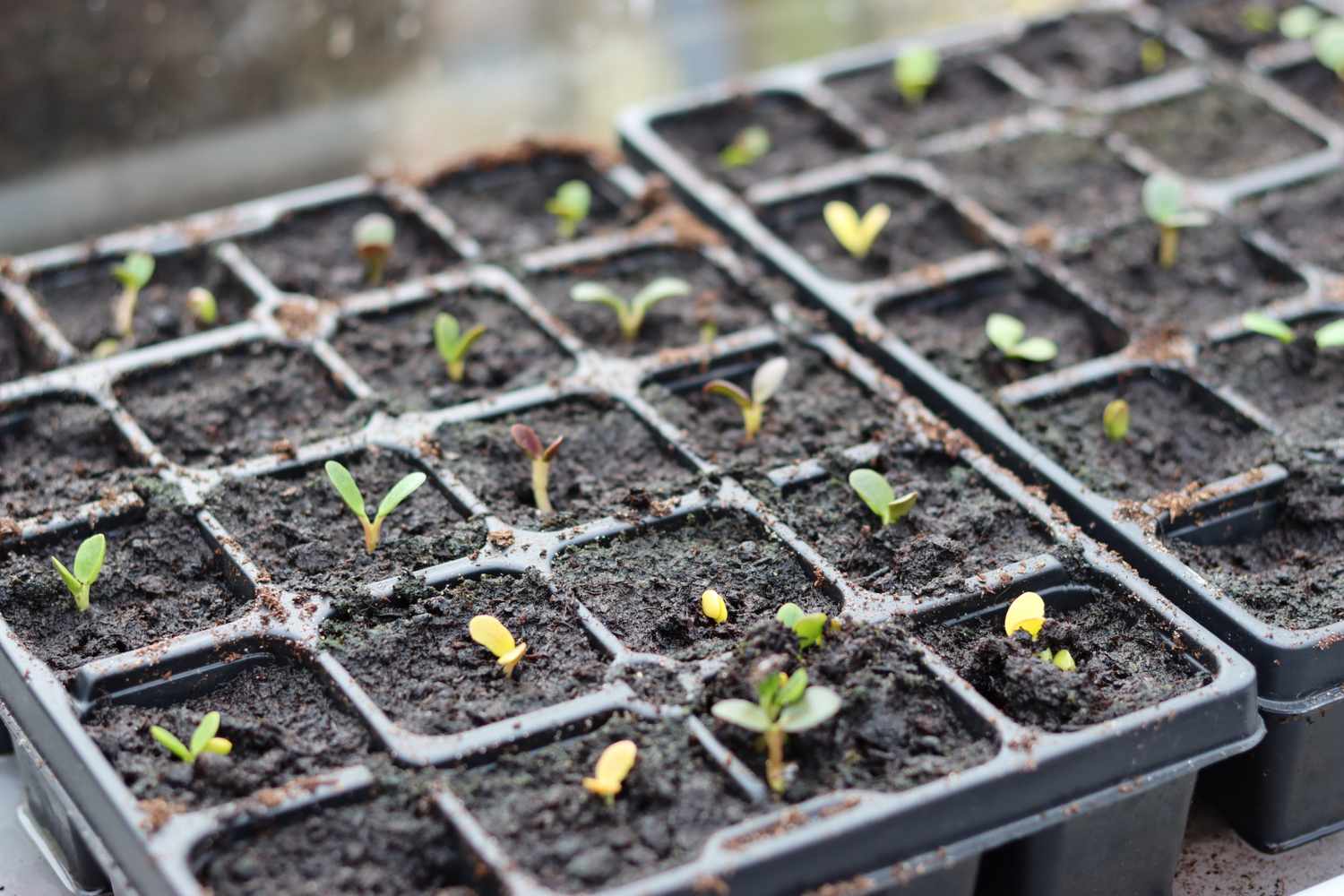
As daylight increases and a hint of spring fills the air, garden fever sets in, prompting people to start their seeds indoors before it’s the right time. While sowing seeds in winter is a smart way to get a head start on gardening season, doing so too early can stress your seedlings, rendering your efforts useless.
Understanding the last frost dates in your area, the needs of specific plants, and the optimal conditions for germination can make all the difference in cultivating a thriving garden. Ahead, garden experts explain what happens when you start seeds too early, along with helpful tips to ensure seedlings germinate and thrive.
What Happens When You Start Seeds Too Early
Starting seeds indoors is exciting, but doing so too early often backfires. Several factors contribute to this, including inadequate lighting, varying indoor temperatures, and plants outgrowing their pots. All of these issues can put stress on the seedlings, increasing the likelihood of transplant shock when the seedlings are eventually moved outside, says Emily Scott, owner of Scott Farm in Maine.
Premature Flowering or Bolting
Sometimes, a small seedling flowers before it has even developed its first set of true leaves, a phenomenon known as “stress flowering” or “bolting.” Scott explains that seedlings can flower prematurely when grown indoors as a survival mechanism. This typically happens when the environment is not ideal for the plant, triggering a fight-or-flight response that prompts it to flower and produce seeds before it dies.
Increased Susceptibility to Pests and Diseases
If a seedling remains in unfavorable conditions for too long, it compromises its natural defenses. This heightened susceptibility makes it easy for pests like aphids and diseases like damping-off to infect the seedlings, weakening or even killing them, says Scott.
Root Problems
Seedlings sometimes spend too much time in pots if they are started too early, particularly if outdoor temperatures are still unfavorable for delicate plants. This can lead to rootbound conditions, where the roots fill the pot, circle the interior, and become densely matted. Such environmental stress disrupts the roots’ ability to absorb nutrients and can lead to transplant shock. Rootbound plants have difficulty adjusting to their new garden environment because their roots become matted, says Scott.
Leggy Seedlings
If seedlings don’t get enough sunlight indoors, they will start to stretch toward the nearest light source, causing them to become leggy. Leggy seedlings are usually weaker and may lack the strength and health needed to transition outdoors successfully.
The Best Time to Start Seeds Indoors
The timing for starting your seeds can vary based on your growing zone and the specific crops you’re cultivating. Generally, the ideal time to start seeds indoors is about six to eight weeks before your last frost date, says Scott. This timeline helps ensure that your plants mature during the local growing season without becoming leggy, weak, or rootbound.
Generally, start seeds in late winter (February) for warmer zones, and early- to mid-spring (March or April) for colder zones. Be sure to check the seed packets, which often specify start dates based on growing zones. By starting your seeds at the right time, you can keep your seedlings in sync with their growth cycle and increase their chances of successful outdoor transplantation.
The Best Seeds to Sow Early
If you’re looking through your seed catalog and feel the urge to start planting, there’s some encouraging news. Certain seeds require a longer germination period, which means you can get a head start by sowing them indoors. With the right light and warmth, these seeds can flourish, even when you plant them early.
Warm-Season Crops
These crops take a while to mature. If you start them indoors early, they adapt well when transplanted outdoors once the weather is warm. It’s generally advisable to begin this process about six to 10 weeks before the last frost date in your area.
TomatoesPeppersEggplantCeleryThyme RosemaryOreganoTomatillo
Cool-Season Crops
These crops thrive in cooler conditions and are better suited to the mild spring temperatures than to the heat of summer. Some crops, such as onions, take a long time to reach maturity.
BroccoliOnionKaleCabbageBrussel sproutsParsleyChivesCauliflowerLettuceSpinach
Tips for Starting Seeds Indoors
Take these steps to keep your seeds in optimal conditions when starting them indoors.
Use a Humidity Dome
To ensure proper humidity, Eric Nieusma, organic and regenerative farmer, recommends using a humidity dome. “Humidity domes create a microclimate, capturing heat and humidity to help germinate seeds faster and at a higher rate,” he explains. To begin the planting process, first sow the seeds and water the soil. Next, cover the seedling tray with a humidity dome and close the vents almost completely.
Once the seedlings begin to emerge, open the vents to increase airflow and allow moisture to escape. Using a humidity sensor can be helpful; aim to maintain humidity levels between 60 and 70 percent. Be aware that you may need to remove the humidity dome entirely after germination to prevent damping off. If you live in a dry climate, mist the plants as needed after taking off the dome.
Use a Seedling Mat
Most seeds require temperatures of 65 to 75 degrees Fahrenheit to germinate. This warmth can be achieved by using a seedling heat mat. Place the mat on a flat, dry surface, place the seed tray on top, and set the temperature to 70 to 75 degrees Fahrenheit.
Implement Artificial Light
Implementing a full-spectrum LED or fluorescent grow light is a great idea when natural light isn’t plentiful, says Scott. Seedlings thrive with 14 to 16 hours of light per day, with the light positioned 2 to 3 inches away from the seedlings. As the seedlings grow, reposition the light to keep it at a safe distance.
Comments are closed.