
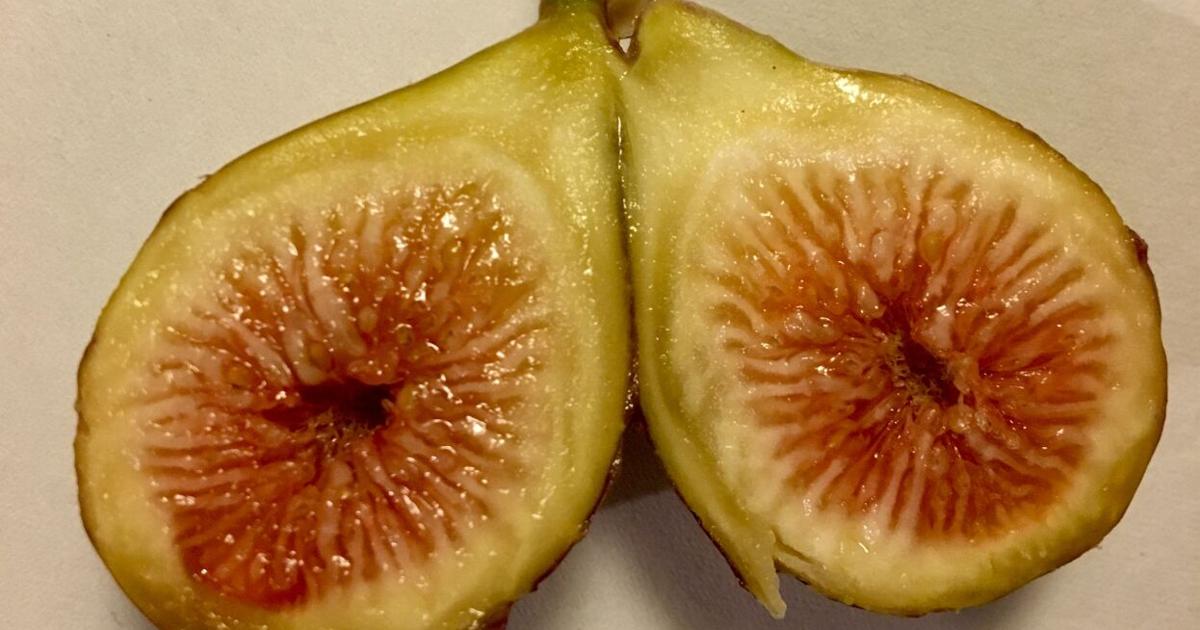
Hot buttered biscuits and homemade fig preserves. Need I say more? Figs are one of the most widely planted home fruit trees in Louisiana. They thrive with little effort and produce crops of juicy, sweet figs every July.
The fig, Ficus carica, is native to Asia Minor and is thought to be one of the earliest fruit trees cultivated by humans. It belongs to a group of plants that have milky sap, or latex, and includes the rubber tree (Ficus elastica) along with several other popular houseplants.
Do be aware that contact with fig tree sap can cause dermatitis in some people, so be careful when harvesting or pruning figs. For sensitive people, wear long sleeves and gloves, avoid getting sap on your skin and wash it off promptly if you do.
Lots of varieties
Numerous varieties of figs are available at area nurseries, and even more online. I imagine all would do well here. One of the most popular and reliable is Celeste, which produces small- to medium-size fruit that’s resistant to splitting and souring. The fruit is violet to brown with a light strawberry-colored pulp and is excellent for making preserves.
LSU Purple and LSU Gold are two popular varieties released by the LSU AgCenter. LSU Purple has medium-size dark purple fruit and good resistance to foliage diseases. Its tendency to produce two crops, a heavy main crop in July and a fall crop sometimes lasting into December, makes it popular.
LSU Gold produces a flavorful yellow fig with light red to pink pulp. Other varieties released by the LSU AgCenter that are recommended for planting include Tiger, Champagne and O’Rourke.
Florentine, also known as Kadota and Lemon Fig, produces large, green-yellow fruit, and sometimes follows up with a moderate crop in the fall.
Planting fig trees
Now through early March is a great time to purchase fig trees from local nurseries and plant them in the landscape. Figs will grow about 15 feet tall and wide. Keep this in mind when selecting a location.
Plant them in a sunny, well-drained location away from large trees with overhanging branches. Figs will not produce well unless they receive at least six hours of direct sun daily, and more is better.
To plant a fig tree, dig the hole as deep and twice as wide as the root ball of the tree. Remove the tree from the container and set it in the hole. Make sure the top of the root ball is level with or slightly above the surrounding soil.
Fill in around the root ball with same soil that was dug out to make the hole, and water thoroughly.
Fig trees ordinarily do not produce fruit reliably for the first three to five years after planting. Young trees may produce small, green figs but they tend to fall off without ripening.
You can train your fig into a large bushy shape with several trunks, or into a more typical tree shape with a single trunk.
Pruning and propagating
Pruning established figs is best done by late February. Figs bear their main crop on new growth produced during the spring and early summer. Pruning helps to maintain vigor, create the desired shape of the tree and control its size.
It is better to prune a fig a moderate amount every year or two than to let it get to the point where severe pruning is required.
Figs are easy to propagate from dormant, hardwood cuttings taken this month. Cut 10- to 12-inch pieces from the ends of the branches. Plant several cuttings together with the lower half of the cuttings inserted into a container of potting soil. Water the cuttings whenever the soil begins to dry and do not expose them to freezing temperatures.
When they begin to grow in spring, pot the cuttings up separately in gallon-size containers and put them in a sunny spot outside. Grow the young fig trees in containers until they are big enough to plant in the yard, usually the next year.
Trouble spots
The fig’s only common problems are two fungus diseases that attack the foliage. Thread blight causes problems early in the season, and fig rust causes leaf spotting and scorch in the late summer and fall.
Fig trees tolerate these diseases and will recover without treatment. Rake up fallen leaves and dispose of them to help minimize problems.
Occasional problems with white, fuzzy mealybugs can be controlled with light horticultural oil. Old trees may develop rot in the trunk and major branches. For this there is no treatment.
When the figs begin to ripen in early July, another problem almost always shows up. Birds love figs and eat holes in a lot of the fruit just as it ripens. The best defense is to cover your tree with bird netting available local nurseries.
If you would rather not use bird netting (birds may get caught in it), place aluminum pie pans, plastic owls, rubber snakes and other scarecrow objects in the tree once the fruit begins to ripen. Try to move the objects around every few days so the birds do not become accustomed to them.
Although figs can produce well here without fertilizer, it may boost production and the vigor of the trees. Figs don’t need anything special. Apply a general-purpose fertilizer following label directions in February or early March.
Newly planted figs will need to be watered their first summer as they become established. During dry spells in summer, water young trees weekly by letting a hose trickle water at the base of the trunk for 20 to 30 minutes.
Since fig trees have relatively shallow root systems, a 4-inch layer of mulch, such as leaves or pine straw, spread over the soil under the canopy of the trees is also highly recommended to keep the roots moist.
Comments are closed.