
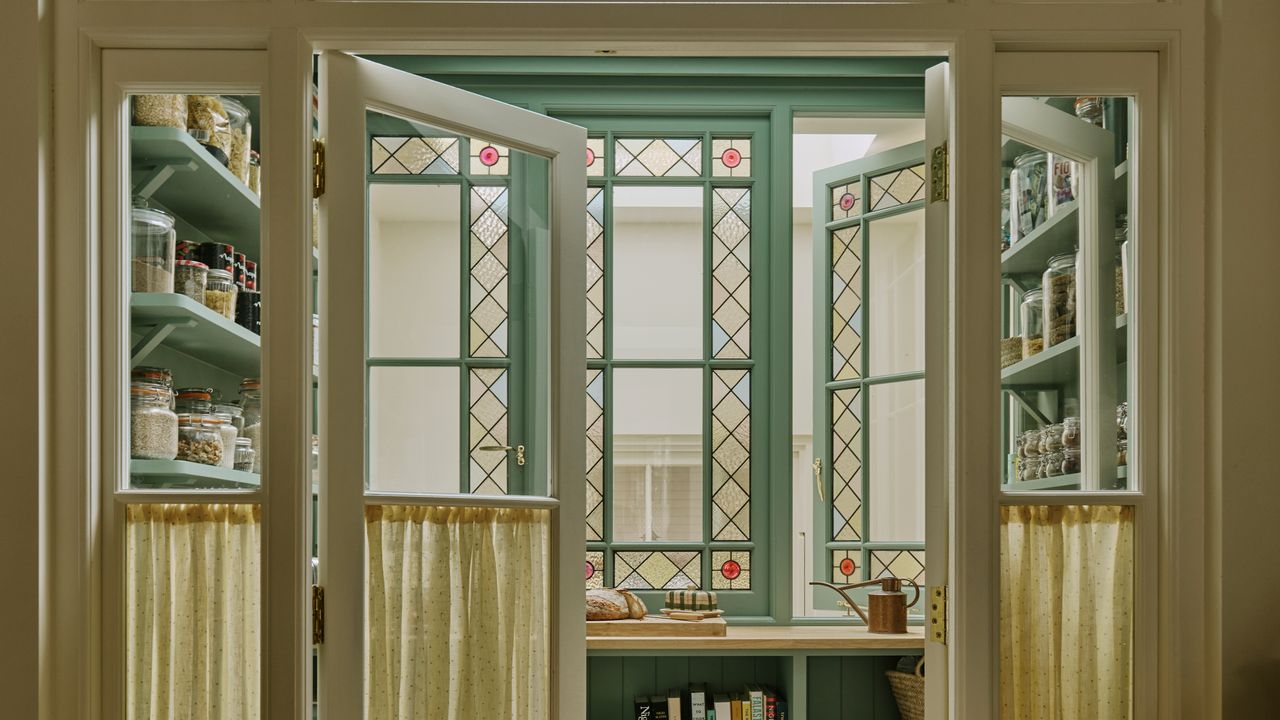
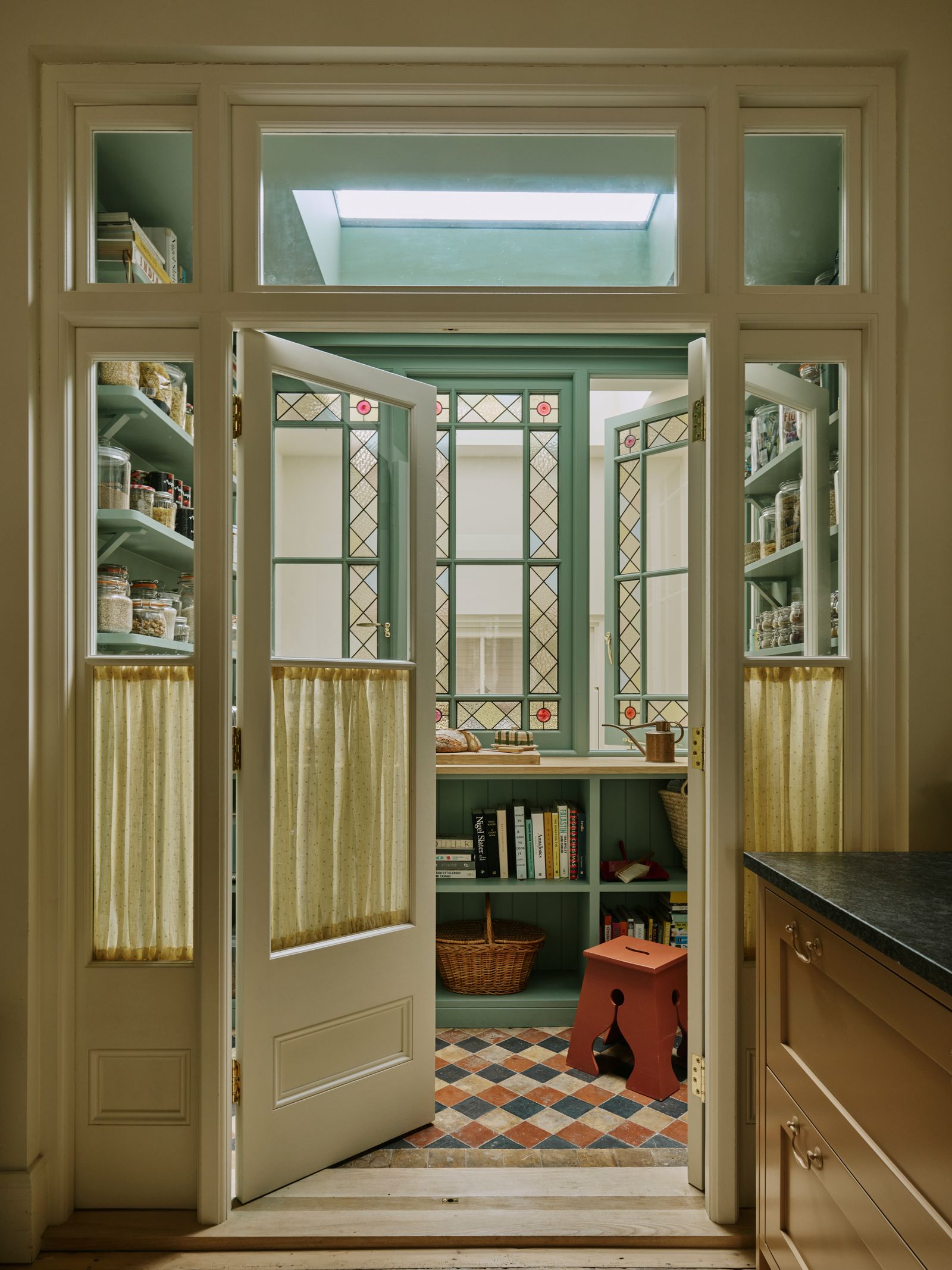
The original stained glass in this Victorian house in east London was carefully restored and went on to inspire Sophie Rowell of Côte de Folk’s decorative scheme throughout the rooms.
Christopher Horwood
After yet more ups and downs in the intervening century, recent decades have brought a renewed appreciation for stained glass, both antique and contemporary. Earlier this year, people voted in their droves for the Association of English Cathedrals’ competition that saw Carlisle Cathedral’s East Window named as the nation’s favourite. This renewed enthusiasm is also being reflected in our homes. Walk along almost any Victorian- or Edwardian-built street in London and you will see front door after front door inset with beautifully preserved stained glass panels. One example that caught our eye recently was the entrance to an Edwardian townhouse in Clapham (pictured top). ‘We repaired the woodwork and repainted the door in the “Mousson” by Argile, which is a colour we carried through onto the hall woodwork,’ says Laura. ‘It’s a clever colour that worked with both the red-brick exterior and the colours in the stained glass.’
When original Victorian or Edwardian stained glass is not in a good condition, things can be rather trickier as there are very few specialists with the skills to restore it. ‘My client heard lots of nos before finally finding someone willing to restore the stained glass windows throughout the house,’ says designer Sophie Rowell of her recent project in east London with architecture studio Flower Michelin. ‘It would have been far easier to replace them, but preserving them felt integral to the integrity to the home as a whole. The internal pantry window alone brings so much daily joy. We also took cues from the stained glass when developing the wider scheme, drawing on its colours and subtle check formations to inform other designs decisions throughout the house. It became a thread that quietly ties everything together.’
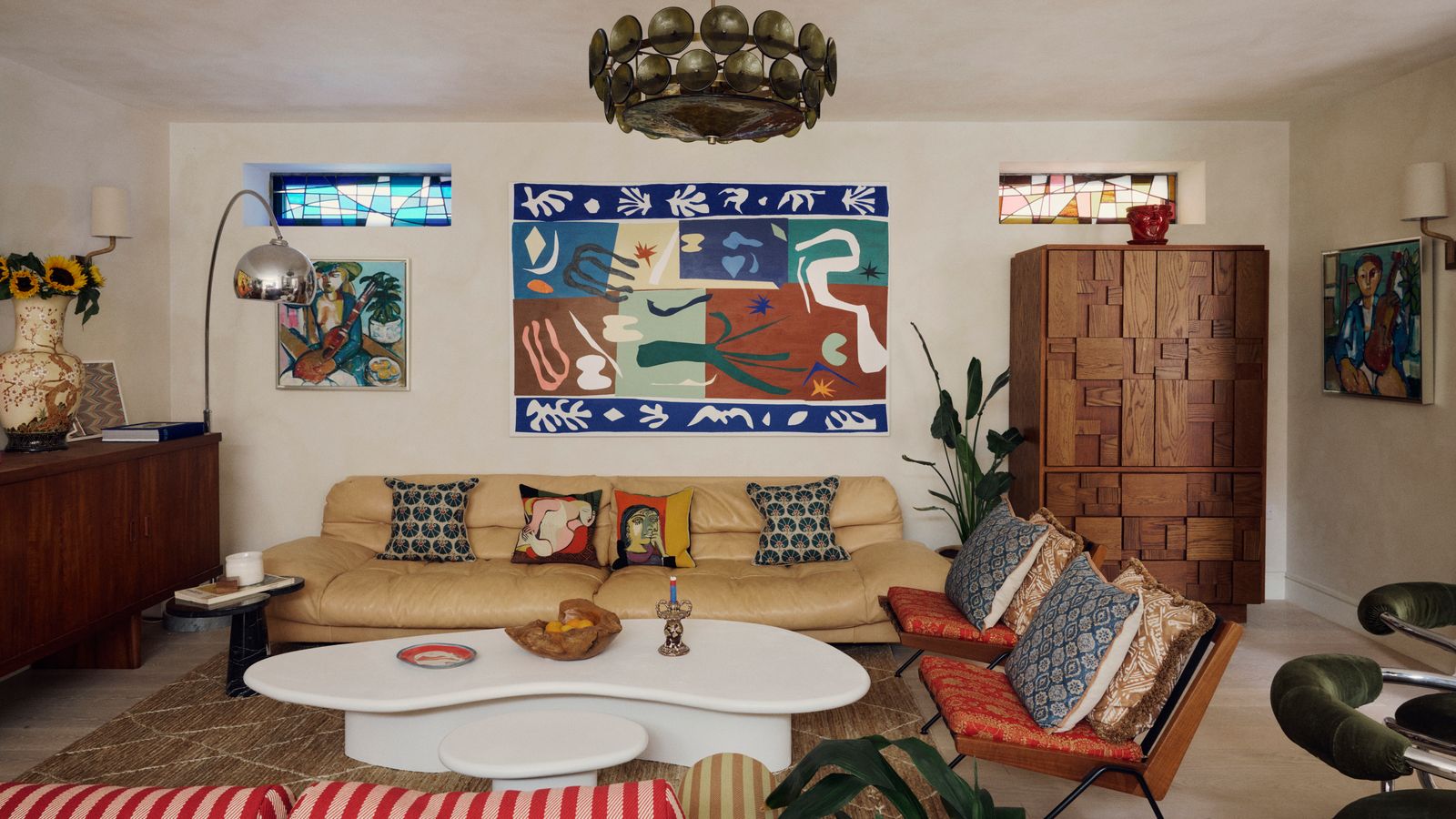
The back wall of Orlagh McCloskey’s living room is inset with stained glass windows based on a number of references and made by stained glass specialist Maya Glass Studio in Acton.
Mark Anthony Fox
The same is true of contemporary examples. ‘I love decorating with stained glass’, says Gemma McCloskey of Cúpla design studio, who recently transformed her sister Orlagh’s house with abstract panes of glass – one blue, one pink – in the darker corners of the sitting room. ‘It’s such a nice way to bring art into the architecture. Instead of leaving all of the decorative and playful elements to the textiles and accessories, I use stained glass to make the foundation as fun as it can be.’ The challenge for Gemma was marrying the modern architecture with a medieval art form. ‘Traditionally, stained glass is very ornate, detailed and decorative. More modern, fluid lines can help it to feel more contemporary,’ she advises. The added benefit is that, as the light changes throughout the day, the room is bathed in a kaleidoscope of colours, which, as Gemma points out, ‘adds intrigue and movement to the space’. The stained glass in Orlagh’s house is backed on the outside wall by a pane of plain glass, making it just as insulating as ordinary double glazing would be.
Comments are closed.