
I have been admiring orchids for some time and would like to try growing them at home, but I’m worried that orchids are difficult to grow. Can you please help me with some recommendations for growing orchids?
— Pete Keller, Oak Park
My interest in orchids grows each year as I watch the installation of the Garden’s Orchid Show. I get inspired when strolling through the completed show that features an incredible display of orchids. We keep a small orchid (I don’t know what kind it is) in a 2-inch pot by the kitchen sink below a south-facing window at home, so it gets bright light. Its flowers last for weeks.
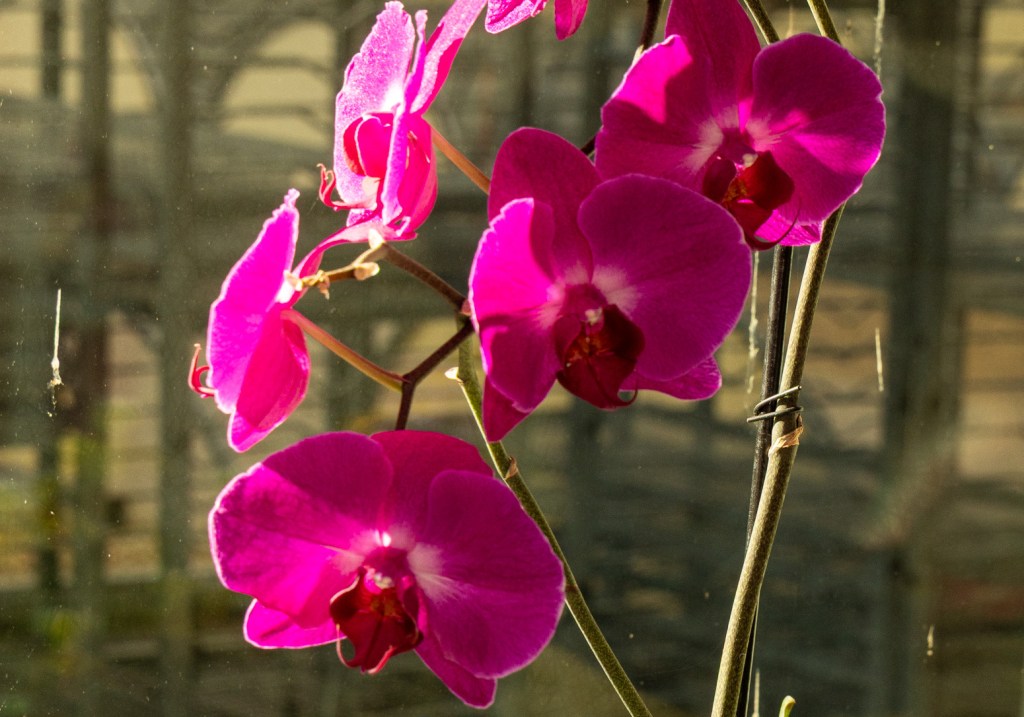
Moth orchids (Phalaenopsis) are among the easiest orchids to care for in a home and are readily available to purchase. This is a good orchid to start with. Moth orchids prefer a warm environment of 70 to 80 degrees Fahrenheit during the day and above 60 degrees at night, which is a good range for many homes. Moth orchids should not be kept at temperatures above 85 degrees or below 55 degrees. Phalaenopsis species and varieties do not require much light to grow well, and the best light for these plants is indirect. It can be bright, but should not be direct sunlight to prevent burning the leaves. An east-facing window is usually best, while the light from a west or south-facing window can work as long as it’s indirect. A north-facing window may not provide enough light, so move your plant to another location if it does not do well there.
Moth orchids are typically grown in a bark mixture that includes sphagnum moss or another medium to help retain water. A pure bark medium may dry out quickly, while a medium of pure sphagnum moss can hold water and may require careful monitoring to avoid overwatering. Repot them every two to three years in fresh growing medium. The best time to repot them is in spring or fall when you see new root growth. That way, the new roots can quickly adjust to the new potting medium, and you are less likely to damage the delicate root tips. Use a medium-grade orchid bark mix for plants in 5-inch pots and larger. Feed your moth orchid with a dilute, water-soluble fertilizer a couple times a month when you water it during the growing season. Stop fertilizing during the winter months.
Water your moth orchid early in the morning with rain or distilled water as the mix approaches dryness. It is best to avoid using water softened by a water softener. Overwatering your orchid is a more common issue than underwatering. The planting medium must be allowed to dry out slightly between waterings but should not be left dry for extended periods of time. In general, water an orchid planted in bark once or twice a week and less frequently for one planted in moss. Watering once every four to seven days for orchids growing in an orchid bark mix should suffice and the plants should never stand in water. Your home environment can affect the frequency of required watering.
Moth orchids may bloom two to three times each year, with flowers that can last more than two months once they have reached a mature size. On most Phalaenopsis orchids, the bloom spike will turn brown after the plant has finished bearing flowers on that spike. If a blooming spike does not turn brown all the way down, you can cut the spike above a node on the stem and allow the plant to rebloom again as a branch off the existing spike. This technique results in more blooms sooner but takes energy from the plant, which generally results in smaller blooms. It is best to consider this option for more established plants with large root systems. The other option is to always cut the flower spike off at the base when the blooms drop, which should result in a later and more spectacular bloom. This is a good technique for a younger plant or one that has less vigor.
There are exceptions to many rules in growing orchids, just like in general gardening. Experimenting with techniques is a great way to learn. Some Phalaenopsis should not have their bloom spikes cut. The Phalaenopsis orchids that have violacea, amboinensis, or cornu-cervi in their parentage usually bear only a few blooms at the end of a spike and will bloom sequentially on the same spike for a long time. The primary reason to cut these spikes back is if the plant has gotten too big or looks unkempt.
For more plant advice, contact the Plant Information Service at the Chicago Botanic Garden at plantinfo@chicagobotanic.org. Tim Johnson is senior director of horticulture at the Chicago Botanic Garden.
Comments are closed.