
The long awaited and eagerly anticipated seed catalogs have begun arriving in mailboxes, tempting veteran and newbie gardeners to begin planning for the upcoming spring garden season.
So many choices, so many beautiful new cultivars, so much color! But there are some things we can do now, both to prepare the garden for spring and to decide what exactly we want to order or plan to purchase for planting this year.
We can think back to what worked and what didn’t work in the garden last year. Did you keep a garden journal? If you did, now would be the time to refer back to it before placing an impulse-buy order.
If you didn’t keep a journal, you might want to think about including one in your plans for the upcoming gardening season. It will allow you to record weather, what plants grew well, bloomed well, produced well, etc., and also over time will allow you to track trends in weather, temperature and sun and shade areas in your garden.
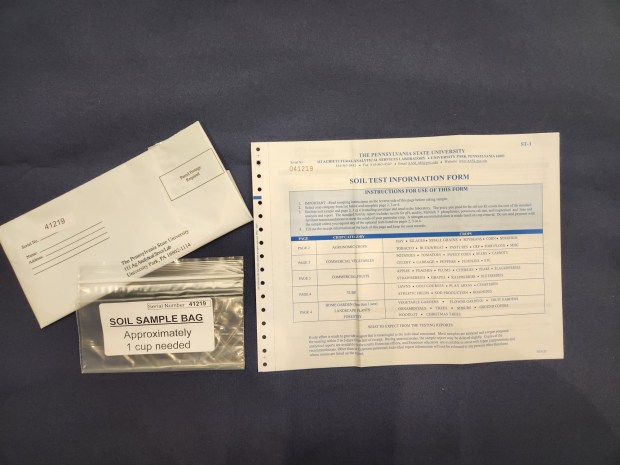 A soil test is a great first step in planning and planting a garden. (Dee Dee Kerscher)
It can’t be said often enough that a soil test is a great first step in planning and planting a garden. If you didn’t do one last fall, plan to do one this spring before planting. Soil can be gathered as soon as it thaws enough to scoop some up, allow it to dry and send it in for advice on what needs to be added to your soil to grow whatever plants you’re thinking you want to grow.
It helps to know what you’re planning to plant in the tested area before you send in your sample (i.e., mixed vegetables, turfgrass, blueberries, etc.). Soil test kits can be purchased for $10 at your local Penn State Extension office. Results usually are back in about 10 days to two weeks, enabling you to get started amending your soil according to recommendations well before time for spring planting.
While you’re awaiting warmer weather, but wanting to get outside, take a walk around and pick up sticks and twigs that may have fallen into your lawn and garden, in preparation for the first spring mowing of your lawn.
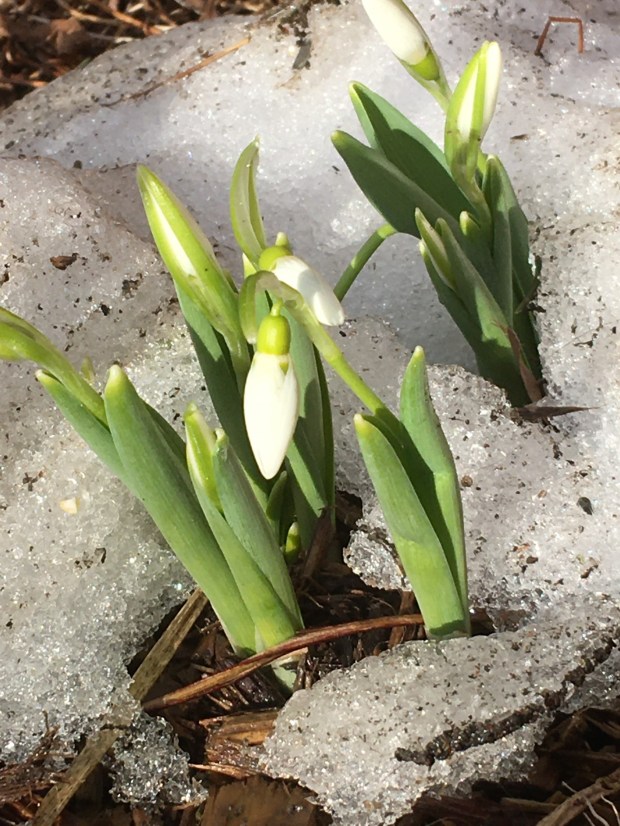 Early snowdrops bloom in 2024. (Dawn Ziegenfus Knepp)
No matter how well you may have cleaned up the garden in fall, there are probably leaves in and around your perennial beds, in corners between patios and the house or garage and covering beds where the earliest ephemerals like snowdrops, winter aconites, crocus and glory-of-the-snow will begin showing their little green shoots when weather warms just a bit and days get longer.
Depending on when you begin to clean the leaves and debris away from ephemerals, they may have already started showing and care needs to be taken to not accidentally damage the tender little shoots of those earliest bloomers. Remember that many of these begin blooming as early as February if the weather is right and in the warmer areas of your landscape.
If by chance we have an unseasonably warm few days, some of those ephemerals may begin growing more than they should for the time of year. Most are very hardy and can withstand the cold temperatures that may come after that warm period and growth spurt. The tips of some leaves may show a bit of damage but for the most part, the blooms can withstand unexpectedly cold nights without sustaining damage.
A snowy winter may have meant plowing was done, either on the road in front of your house or in your driveway, and plowing unfortunately often means torn up turfgrass along the street or your driveway, and/or small stones and anti-skid materials left behind on turf when the snow and ice melts. Repairing those torn up areas or raking stones out of the yard can be done as soon as snow and ice is gone and you can get outside in spring.
Be careful with that first strenuous exercise in spring so as to not injure yourself by working too hard with muscles that haven’t been used in months for that kind of hard physically taxing work. Don’t overdo it, and it’s probably a good idea to check with your doctor to see if that sort of strenuous exercise is ok for you if you’re unaccustomed to it or have been injured or have had a health condition in the past. It might also be a good idea to ask about some stretching exercises before getting into all that hard work of spring.
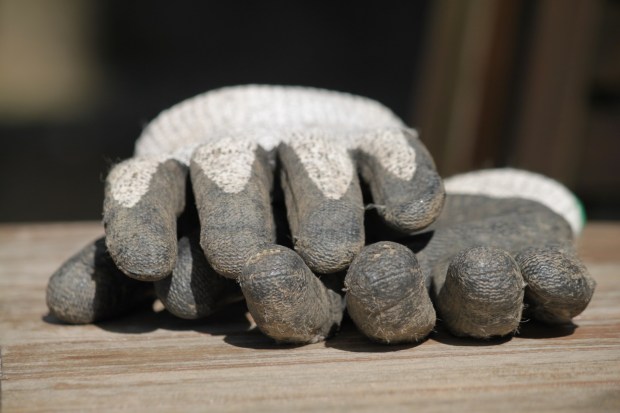 Gardening gloves can prevent blisters while raking and doing yard clean-up. (PXHere)
Speaking of self-care, some new gloves might be in order to prevent blisters while doing that much needed raking and yard clean-up. Those gloves will also be useful if you want to gently remove leaves by hand picking them from among the plants, a good idea to minimize damage to plants if there is more growth than expected when you remove leaves and other debris from areas where the earliest ephemerals are growing.
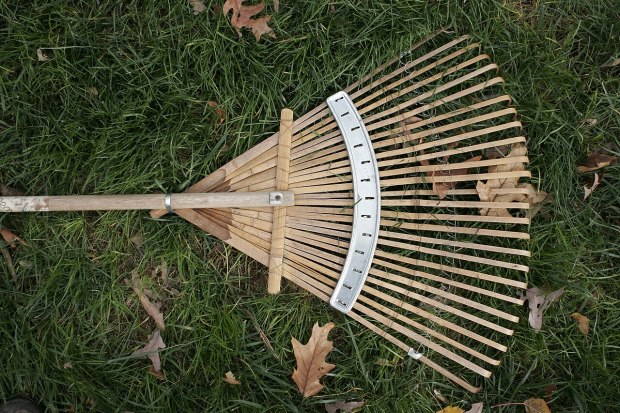 If you need a new rake, now is the time to buy one. (Wikimedia Commons)
A quick check of your garden tools can be done now also. Do you need a new rake? Are your pruners still sharp and working effectively? Now is the time to replace anything you might need, before you do need it, and to sharpen or have a professional sharpen your tools before the spring rush.
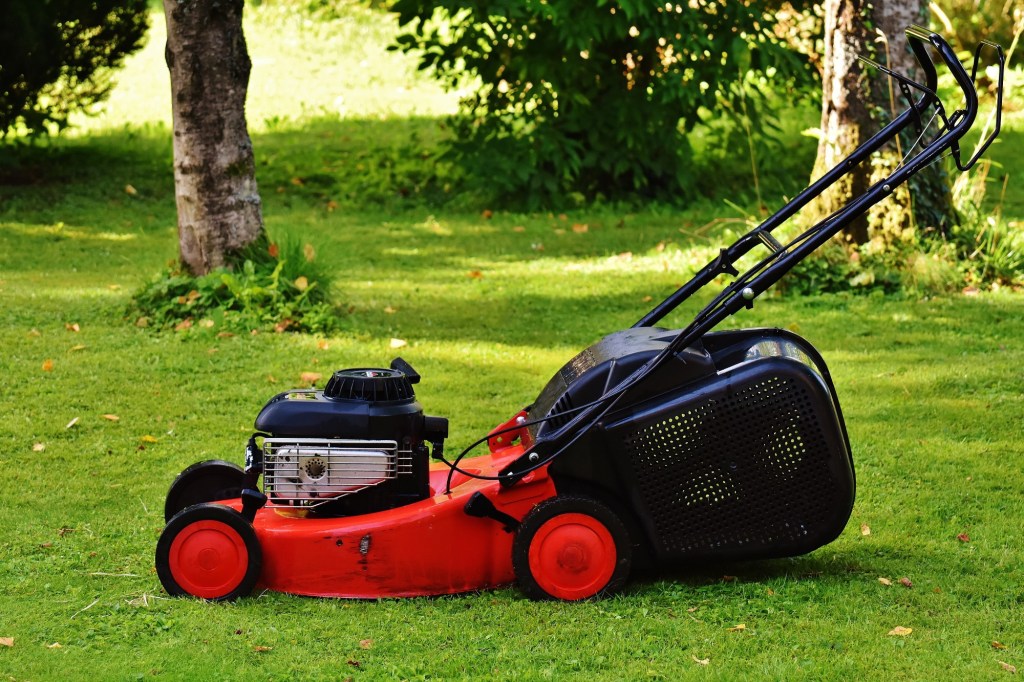
Do your mower blades need to be sharpened? Again, now is the time to consult a professional to sharpen them before that rush in the weeks right before mowing season. If your mower blades have seen better days, an alternative would be to purchase a new set of blades, use the old ones on the mower that first time you mow in case you hit hidden rocks or branches, then switch the old ones out for the new ones. At least that way you’re damaging old blades, not the newly sharpened or newly purchased ones.
An early unseasonably warm day in spring is a perfect time to get out there and do some early season weeding. Chickweed and other early sprouting weeds can be controlled much more easily by pulling them in early spring than if you wait until they’re well established, well rooted and spreading throughout your garden areas.
Once weather warms enough to actually begin gardening in earnest, make sure the soil isn’t too wet before working it. Soil that is too wet will compact, making it harder to work with, and compacted soil is not healthy for plants. If you take some in your hand and squeeze it, no water should squeeze out, and the clump you made should easily break apart.
It’s so tempting to start planting those early seeds on that first sunny warm spring day … you know, those packets that say you can plant “as soon as soil can be worked in spring.” But soil temperature matters, too, so try to hold off planting until the soil warms a bit. In some cases, planting too early can mean seeds will rot in the ground before sprouting.
For now there is plenty to do in the garden without succumbing to the temptation to actually start planting before it’s truly time to do so. More information on cleaning up the garden, planning and planting a garden can be found at the Penn State Extension Office. Cntact the Penn State Extension Master Gardeners of Berks County at berksmg@psu.edu or phone the office at 610-378-1327.
Dawn Ziegenfus Knepp is a Penn State Extension Master Gardener volunteer.
Comments are closed.