
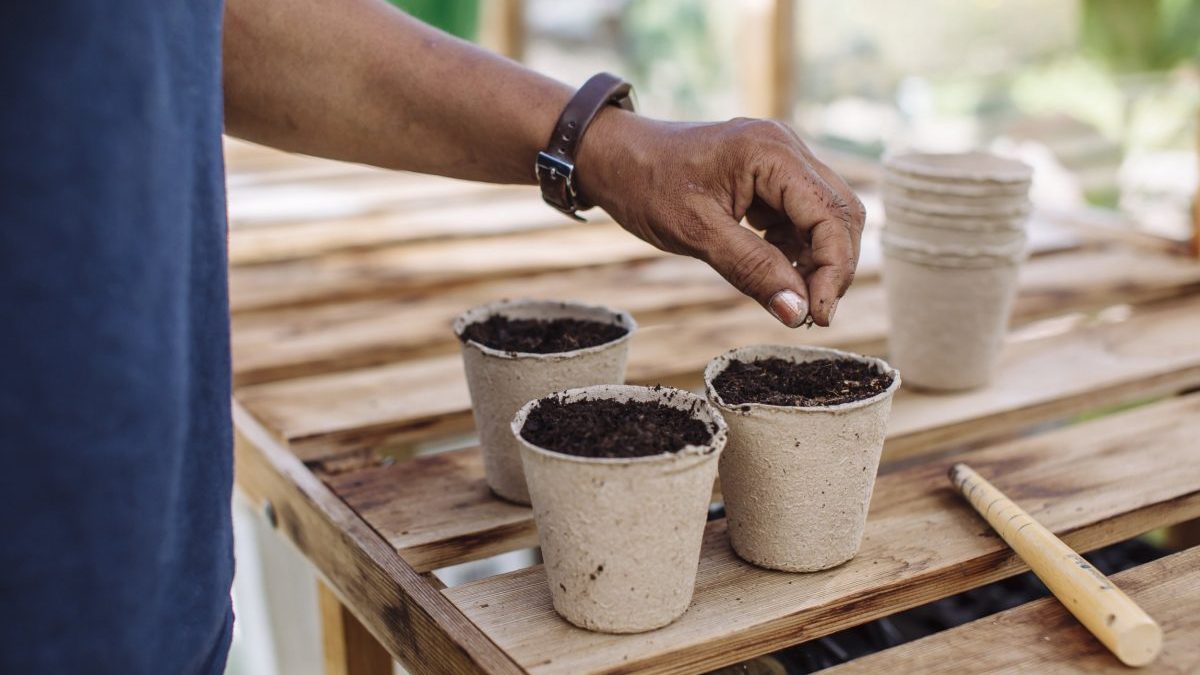
Starting seeds indoors gets the gardening season under way, even if only a window sill is available. Most flowers sown in February or March will flower by mid-July, while April sowing will delay blooms until August or even September.
Quick-growing vegetables such as lettuces will mature in June instead of July.
Fill shallow pots, seed trays or module cells with a peat-free potting compost labelled as suitable for seeds. Some composts don’t mention seed-sowing on the packaging, so good results are less certain.
New FeatureIn ShortQuick Stories. Same trusted journalism.
Gently firm the compost with the bottom of a similar container or a pot tamper tool and sprinkle seeds evenly on the surface. Cover with a fine layer of sieved compost, unless the packet instructions advise they need light to germinate, in which case leave them uncovered. Gentle overhead watering, using a fine rose on a watering can to lightly wet the potting compost, finishes the process. Seeds won’t germinate unless they are damp.
Sown seeds also need warmth to germinate, which can be provided by background heat in the house or the sun’s heat in a greenhouse. But ideally use a heated propagator or heat mat, set to about 20°C for rapid healthy emergence. Cold, wet conditions will lead to losses from rotting.
Once seedlings emerge, light is essential. If light is lacking, as it often is in a propagator or on a window sill, the seeds become “drawn” – too tall and weedy – which won’t make the best plants.
Place seedlings in as much light as possible. It is too cold outdoors, but even an unheated greenhouse or coldframe can be used for very hardy plants such as brassicas, calendula (pot marigolds) and broad beans, perhaps covering at night with fleece. Warmer window sills, conservatories and heated greenhouses are necessary for tender plants such as busy lizzies and tomatoes.
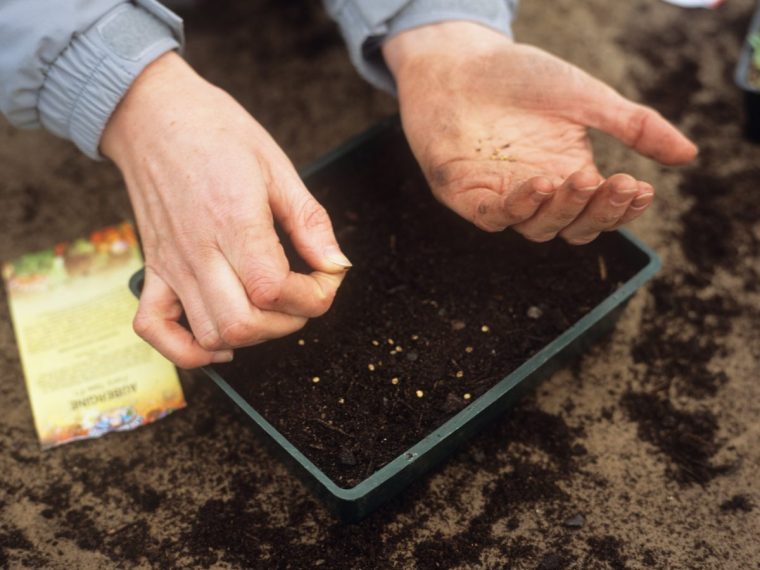 Keep seedlings indoors (Photo: Tim Sandall)
How many plants you can raise is usually restricted by how much well-lit warm space is available for them to grow until the risk of frost has passed. To make the best use of space, choose plants that benefit from an early start or that you need to have as early as possible.
Some plants such as antirrhinums and tender climbers such as cobaea and black-eyed Susan (thunbergia) grow particularly slowly and an early start is very worthwhile, while others including cosmos and zinnia grow fast and sowing can be delayed until mid-spring.
Big-seeded courgettes, runner beans and sunflowers produce large seedlings and grow fast, soon filling up available space, so leave sowing until mid-April.
Aubergines, chilli and peppers, all small-seeded, grow slowly at first and an early start means the cropping begins in August rather than September.
Commercial nurseries often use artificial light to supplement daylight and gardeners can do the same using the many domestic plant lighting options available. LED lights are particularly energy-efficient, but all artificial lighting adds to the electricity bill.
Your next read

Light can be deceptive, as intensity falls off very quickly with distance from the source, so position the lights as close as possible to the seedlings, raising them as seedlings grow. Lights may lead to more rapid drying of the compost, so be ready to water more frequently.
Most seedlings, such as cauliflowers and lettuces, take about six weeks to make transplants; others, including aubergines and peppers, take longer – typically 10 weeks.
Some plants have short flowering periods – sunflowers and calabrese, for example – and for a continuous supply, more must be sown every three weeks. Later sowings will be much less challenging than the earliest.
Comments are closed.