
Local News
Dave Billings turns a retired Bmibaby aircraft into an underground bunker, blending family history, engineering ambition, and YouTube fame beneath his Hilton home.
6 min read
Key Points
Engineer Dave Billings purchased and is burying a Boeing 737-500 fuselage in his Derbyshire garden to create a fallout bunker integrated with his underground tunnels.
Billings documents his engineering projects on his YouTube channel Tornado Dave, which has over 276,000 subscribers as of 2026, growing by about 10,000 monthly.
The aircraft, built in 1993 and retired after Bmibaby ceased operations, was bought for £4,000 and features preserved elements like the toilet and kitchen area.
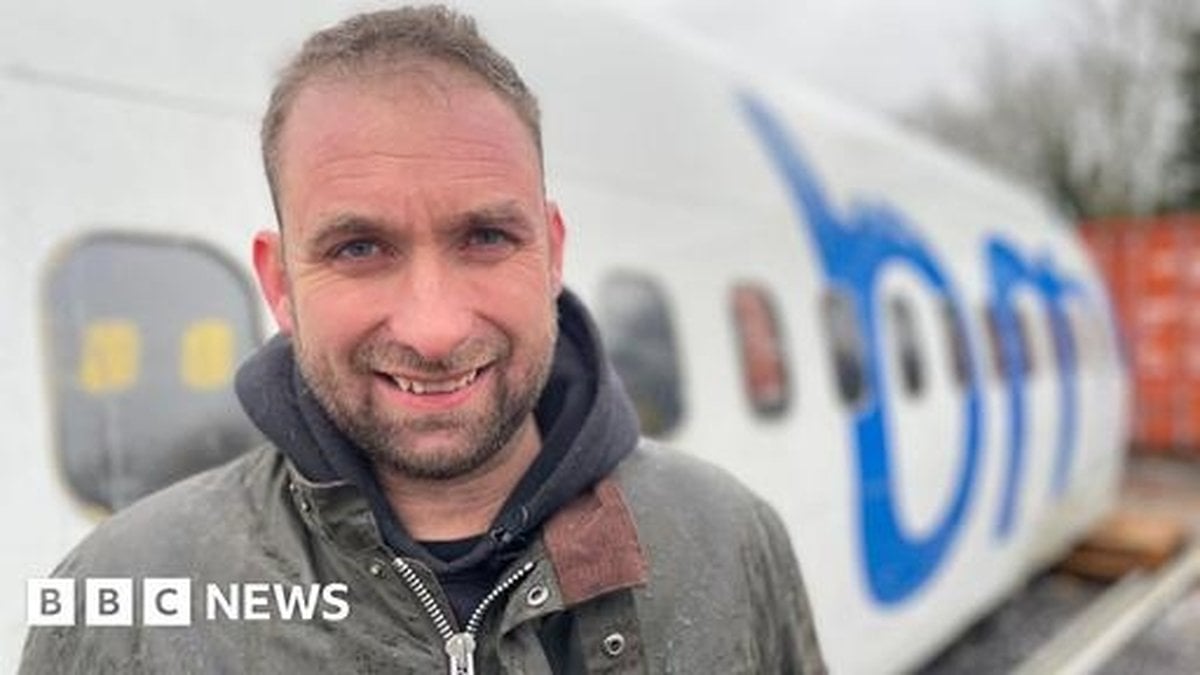
On a quiet street in Hilton, Derbyshire, an unlikely engineering marvel is taking shape beneath the surface. Dave Billings, a 44-year-old engineer and content creator, has embarked on a project that’s turning heads both online and in his neighborhood: he’s burying a section of a Boeing 737-500 aircraft in his back garden, transforming it into what he calls his “fallout bunker.” According to BBC reporting, the idea began with a chance encounter on Facebook Marketplace, where Billings spotted the redundant fuselage for sale and instantly knew he had to have it.
Billings is no stranger to ambitious undertakings. Over the past few years, he’s painstakingly constructed a network of underground rooms and tunnels beneath his property, documenting every step on his rapidly growing YouTube channel, Tornado Dave. With more than 276,000 subscribers as of 2026, and an average of 10,000 new followers each month, Billings has turned his passion for engineering and adventure into a phenomenon. “I would have been happy had I reached a hundred thousand but it’s jumped right up and I now get around ten thousand new subscribers a month,” he told BBC.
The aircraft in question, a former Bmibaby Boeing 737-500 with the call sign G-BVKB, has a storied history. Built in 1993 and making its maiden flight for British Midland in 1994, the plane spent nearly two decades ferrying passengers from East Midlands Airport to sunny destinations like Alicante, Faro, and Malaga. In 2009, it was even christened “Pudsey Baby” as part of BBC Children in Need. But after Bmibaby ceased operations in 2012 due to heavy financial losses, the aircraft was retired and eventually scrapped at Bruntingthorpe airfield in Leicestershire in 2013.
Billings purchased the bare fuselage shell for £4,000, with a vision to integrate it into his existing underground labyrinth. But this isn’t just a whimsical flight of fancy—the project is rooted in both family and history. His seven-year-old son, an avid aeroplane enthusiast, was the driving force behind the purchase. “He was the main reason I bought this and when I first showed him the picture he asked why I hadn’t bought it already,” Billings recounted. “I then suddenly realised I could bury it in my garden to make a cool space.” The prospect of using the bunker for a birthday party certainly added to the excitement.
Of course, not everyone in the Billings household was immediately on board. His wife, Beth, was initially skeptical. “When she first saw it, she asked me why I was buying a pile of junk but once I bought it she was OK about it,” Billings said with a laugh. It’s the kind of domestic negotiation that will sound familiar to many DIY enthusiasts.
Billings’ home and business premises sit on the site of a former US Army military camp from World War Two. The land once hosted around fifteen Nissen huts and a well dug by troops for water—a feature Billings has cleverly incorporated into his underground network. “When I was younger I remember there being around fifteen Nissen huts on the site, in addition to the well the troops dug for water, a feature I have made the most of,” he told BBC. The tunnel connecting his family home to the existing bunker was dug by hand, a feat Billings accomplished at the rate of about a foot a day using a battery-powered drill. “It was hard work but well worth it,” he reflected.
Billings’ engineering ambitions don’t stop at simply burying the aircraft. He’s keen to preserve distinctive features of the fuselage, such as the toilet and kitchen area at the back, while exposing the rugged aluminium framework beneath the plastic interior. “I want to keep the toilet and kitchen area at the back as it is,” he explained. “But I want to show the rugged aluminium framework that lies beneath the plastic interior.” It’s a nod to the aircraft’s industrial beauty, as well as a practical consideration for the bunker’s future use.
To visualize the integration of the aircraft into his subterranean world, Billings used a 3-D printer to create a scale model. The plan is for the fuselage to connect to an existing underground room, accessible via the old wartime well or a narrow tunnel leading from his home. He’s even thinking about the details that will make the experience authentic: “I’m hoping to get one of the rubber seal things you get on walkways at airports to make it as realistic as possible,” he said. And for a touch of eccentric British flair, he plans to add an extra entrance using a vertical lift accessed by an old phone box.
Billings’ journey into YouTube stardom began after working on the television programme Guy’s Garage, where presenter and former motorcycle racer Guy Martin drove one of Billings’ modified Land Rovers. Inspired by the experience, Billings launched his own channel in 2021, sharing his underground adventures and inventive projects with a growing global audience. Hundreds of thousands have tuned in to watch the progress of his tunnel and bunker projects, marveling at both his technical skills and his determination.
The story of the Bmibaby fuselage is also a reminder of the shifting fortunes of regional airlines in the UK. Bmibaby, which operated out of airports like East Midlands, Manchester, and Cardiff, was forced to close in 2012 after sustaining heavy losses. Some of its aircraft found new homes with other operators, but others, like G-BVKB, ended up in scrapyards—until, in this case, a creative mind gave one a second life underground.
As for what’s next, Billings hints that the aircraft bunker may be his last major subterranean project, though he’s quick to add, “But I do have other big ideas, so watch this space.” For now, he’s focused on securing planning permission and meticulously planning the installation. If all goes well, the once-skyfaring fuselage will soon serve as a unique family retreat, a testament to ingenuity, nostalgia, and the enduring appeal of turning dreams—however outlandish—into reality.
In a world where engineering challenges often feel remote or corporate, Billings’ project is a reminder that innovation can flourish in the most unexpected places—sometimes, right beneath our feet.
Sources
Comments are closed.