
There’s nothing as satisfying as growing your own veg but the quantity of produce tends to fluctuate by season. While late summer and early autumn can provide more runner beans, tomatoes, lettuce, courgettes that you could ever need, winter crops are less bountiful.
If you’re after a year-round harvest, a little planning can ensure your veggie patch is utilised to the max. “So obviously, spring, summer and autumn are great times… but there’s less choice in the winter,” says Lucy Hutchings, co-founder of heirloom seed company She Grows Veg.
“So make sure you plan ahead. You have to sow some varieties a lot sooner than a lot of people think.” While you might currently be thinking about spring planting, now is a great time to pencil in when you’ll need to sow for harvests during the colder months.
READ MORESummer sowing
Brassicas: As an aid memoire, the main sowing time for winter crops is during strawberry season, around June or July. “You can sow all kinds of brassicas – cabbages, kales, cauliflowers. These are all super hardy, great for sowing for winter veg,” says Hutchings.
Root veg: Come August, it’s time to sow root vegetables, like beetroot and carrots, for winter harvests. “They tend to be cold hardy and will swell nicely even as the weather’s cooling down,” she adds.
Asian greens: These leafy vegetables can be planted from summer through to early autumn. “They thrive through the colder months, giving you that fresh, green food that you want when there’s not a lot else around. So things like pak choi can be added to the list.” says the seed expert.

Salad leaves: Frost-tolerant lettuces and hardy mizuna can be sown in late summer for harvests come late winter. Chicory is worth considering too, as it really comes into its element once the temperature drops, says Hutchings.
She adds: “It looks like a boring green lettuce most of the summer, but once the frost hits it, it brings out colour in the leaves, which go really dark purple. So when you haven’t got flowers or anything else in the garden, use vegetables to give you that flash of colour.”
Autumn sowing
Sow broad beans and peas from September through to November for an early crop the following year. They can also be sown in early spring for a summertime yield.
Seasonal protection
You don’t necessarily need to cover your veg in winter, but it depends how your bed’s positioned and which part of the country you’re in. ” If you’re in a smaller, sheltered garden, you probably don’t need to use any protection,” says Hutchings.
Summer protection: “Brassicas require protection in summer because everything wants to eat them. In summer you’ll need to put some fine netting over them, something that’s fine enough to keep butterflies out, because cabbage whites in particular will sniff them out in no time,” she says.
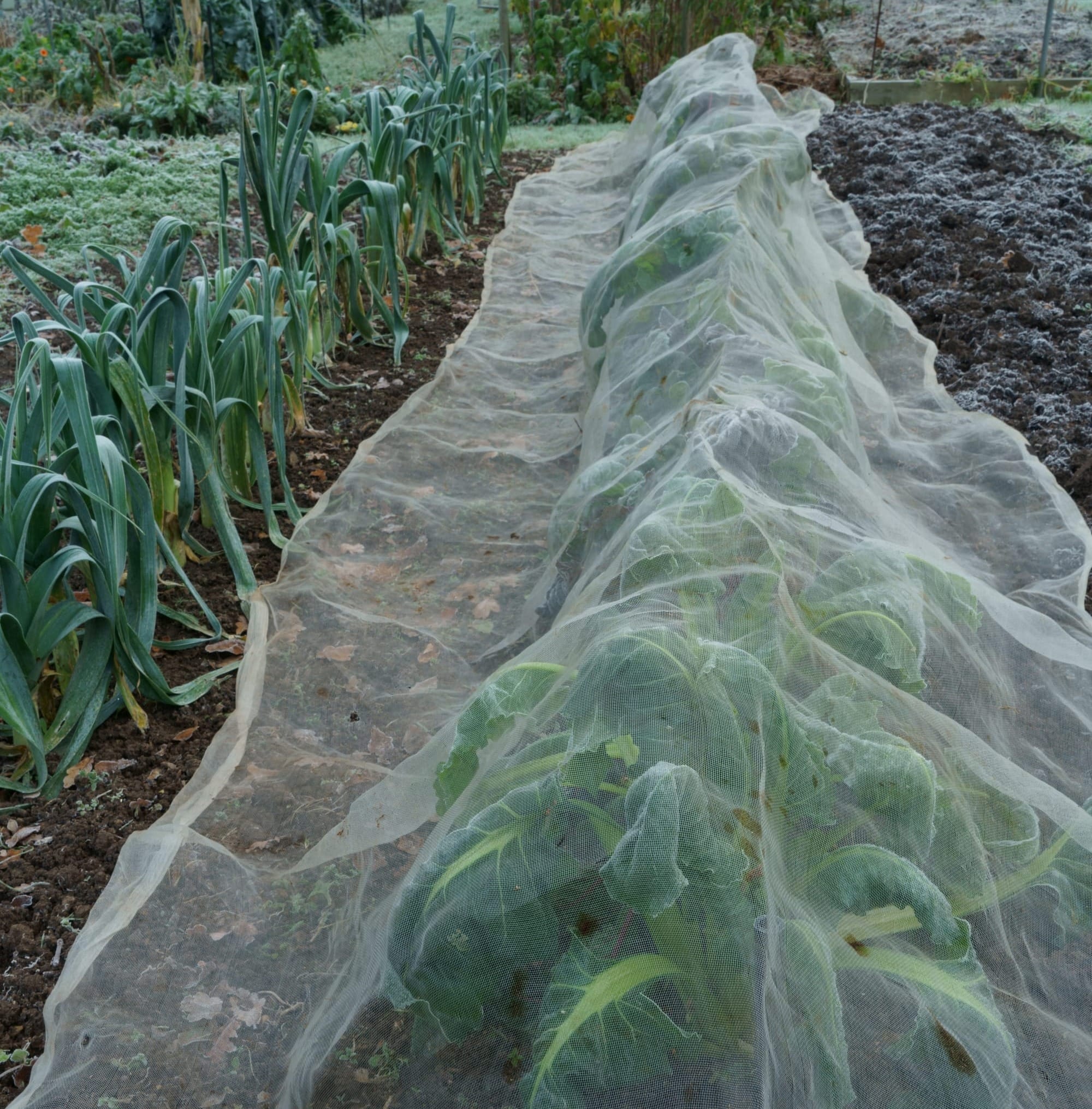 FROST PROTECTION: Cover tender young plants with horticultural fleece (Image: PA)
Winter protection: “In winter, especially if you have a garden that gets harder frosts and is maybe more northerly or exposed, you want to protect some of the leafy crops,” says Hutchings, namely winter salad leaves and Asian greens.
“Cover them with fleece. If you have cloches or polytunnels, that’s great, but if you don’t want to invest in something like that, then simply laying some horticultural fleece over the top and weighing it down with a couple of bricks or stones will do the trick,” she says. Alternatively, sow in a greenhouse or polytunnel.
Store some veg
“When you’re choosing the crops that you’re going to grow through summer, add into that some things that are going to provide you with food that you can store through winter,” says Hutchings. This can include veg for chutney-making and preserving, but also things that are simple to store, like beans.
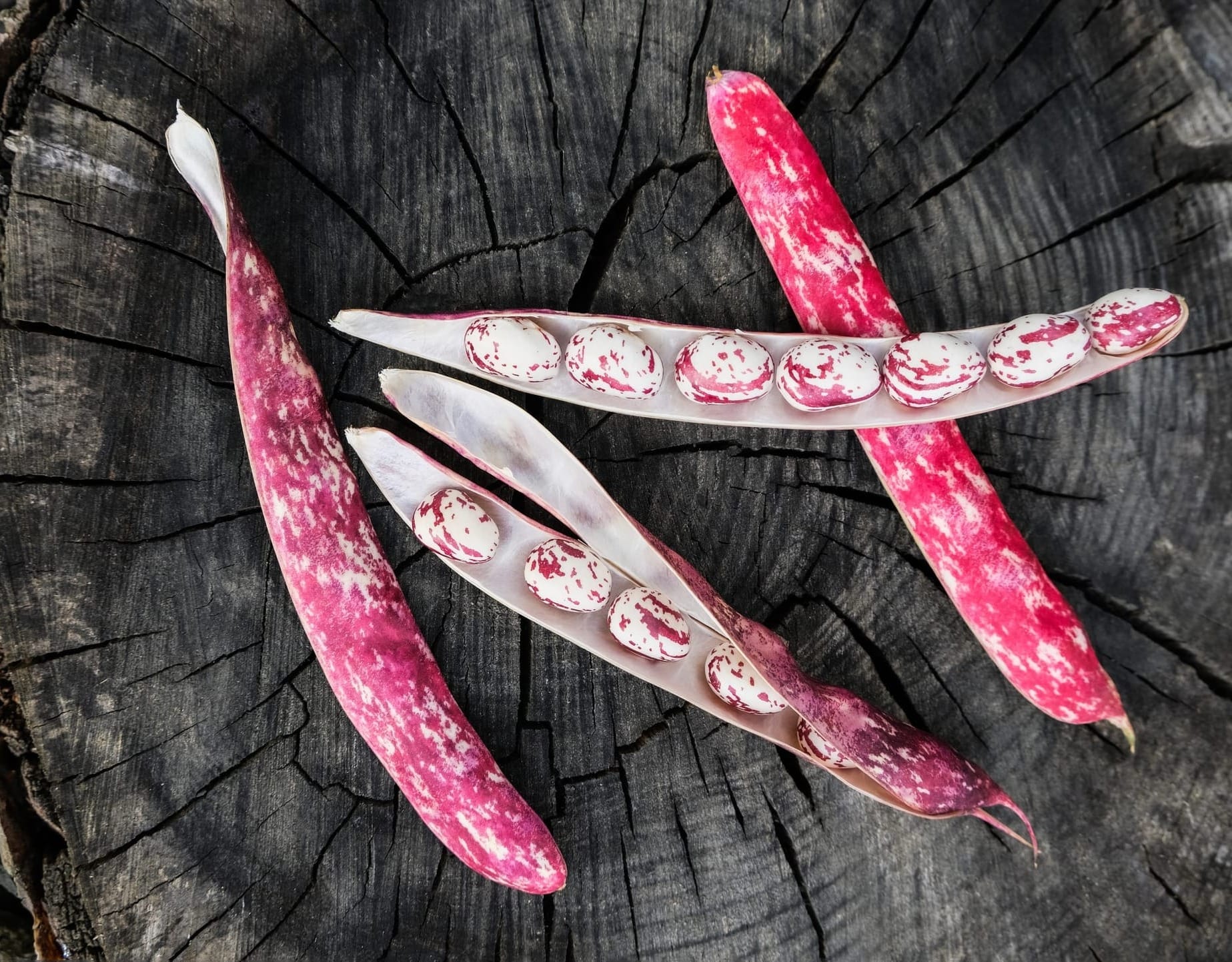 DRIED BEANS: Borlotti beans have a creamy texture and sweet, nutty flavour (Image: She Grows Veg/PA)
“When you’re choosing your French beans, add a variety that’s really good for drying, or there are lots of types that are like dual-purpose crops. You can have fantastic fresh green beans and when you’ve had enough of them, leave them on the plant, and then the remaining ones can be dried and stored in a glass jar over winter.”
She recommends the borlotti bean ‘Firetongue’ and the runner bean ‘Czar’, which if left on the plant produce plump butter beans. “Make sure the beans you are storing are really dry. I like them to semi-dry on the plant, so you leave the pods on the plant,” says Hutchings.
“You can see the beans are swelling inside the pods, then I harvest them and then shell them.” Spread them across a baking tray in an airing cupboard or somewhere with good ventilation for two to three weeks, then store them in an airtight glass jar and they should keep for years, she says.
MORE FOR GARDENERS
Comments are closed.