
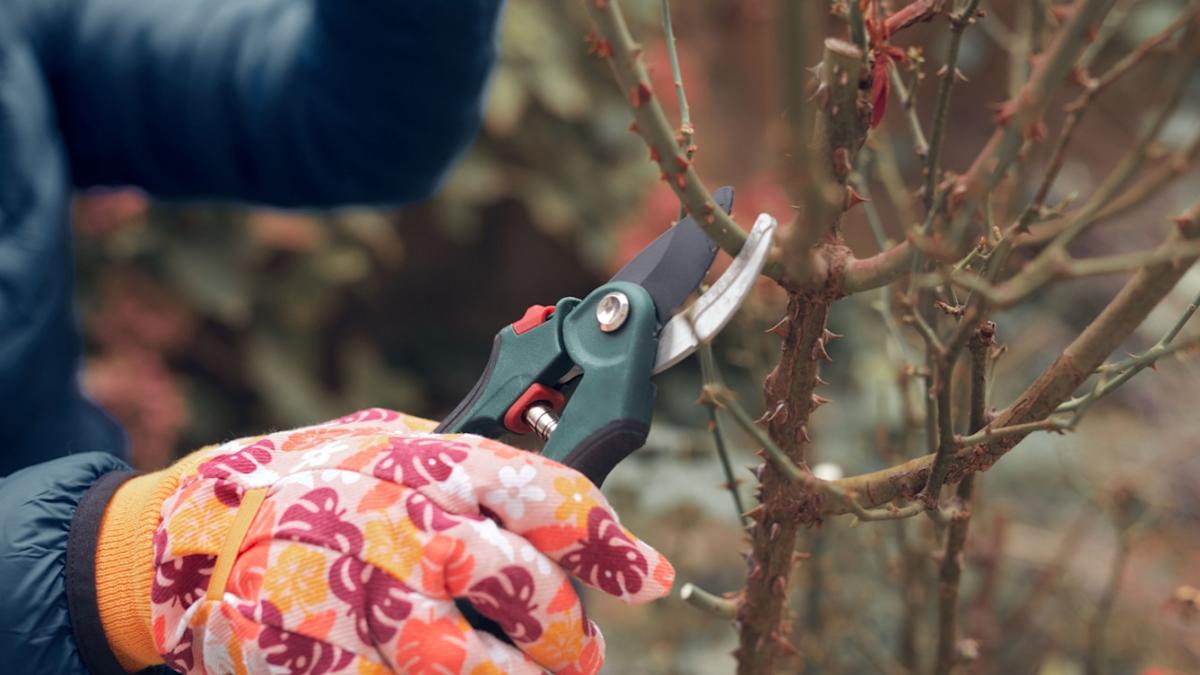
February may still feel like winter, but in the garden, it’s quietly one of the most important months of the year. While plants are dormant and leafless, you have a rare opportunity to shape, strengthen, and refresh them before spring growth begins.
In fact, many experts, like Melissa Strauss at Epic Gardening, agree that late winter is ideal for pruning because “this is their dormant period, and they experience less stress when you trim them during this time.”
So, if you’ve been wondering which plants you should be pruning this February, this is your moment to get ahead of the season.
1. Roses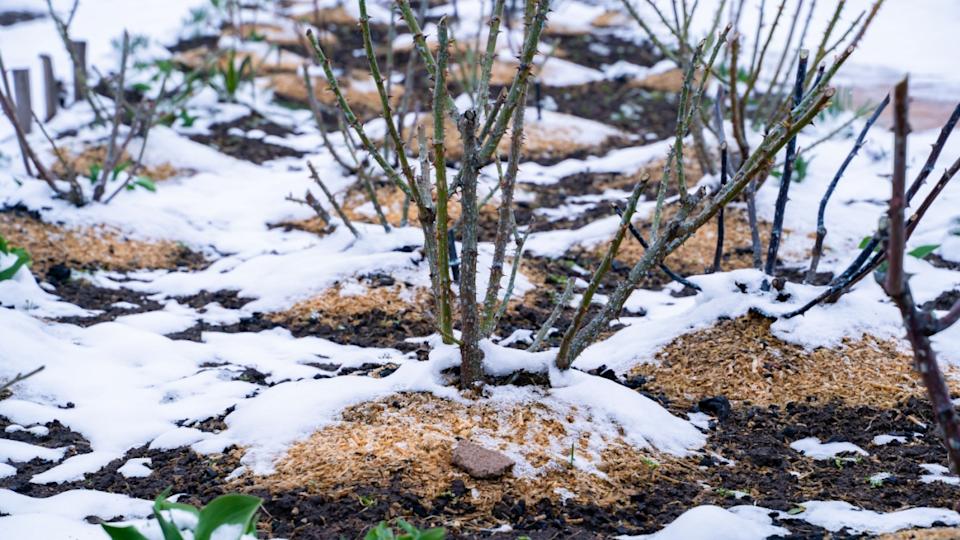
Image Credit: Shutterstock.
Roses are among the most important plants you should be pruning in February. By now, most varieties are fully dormant, making it easier to inspect their structure and remove any problematic growth.
Focus first on what many rosarians call the “3 D’s”: dead, diseased, and damaged canes, according to Mickey Gast of Rural Sprout. Then, thin out crossing branches and reduce longer stems by one-third to one-half. Always cut at a 45-degree angle just above an outward-facing bud to encourage open, airy growth.
Winter trimming encourages healthy new growth in the spring and improves airflow, which reduces fungal disease in roses. Just be sure to avoid pruning on days when hard frost is forecast.
2. Apple and Pear Trees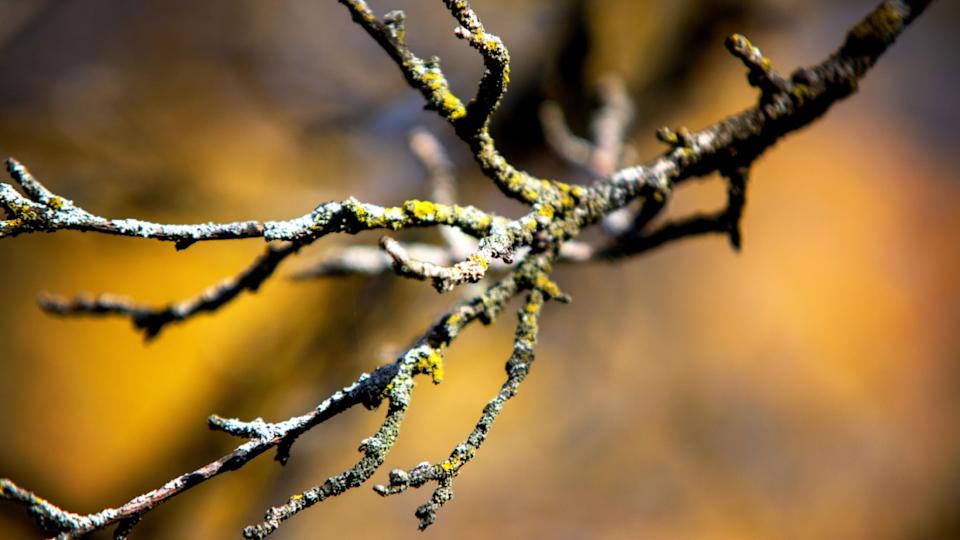
Image Credit: Shutterstock.
If you grow fruit trees, February is prime time for pruning apples and pears. These trees benefit from winter shaping because they haven’t yet begun pushing sap into new growth.
Pruning now helps to conserve energy and encourages a stronger harvest later. Remove dead wood first, then thin the interior to allow better light penetration and air circulation. Maintain an open, goblet-like structure for balanced growth.
Importantly, apples and pears are exceptions among fruit trees for winter pruning. Do not prune stone fruits like cherries, peaches, or plums in winter due to the risk of silverleaf disease entering through fresh cuts.
3. Panicle and Smooth Hydrangeas
Image Credit: Shutterstock.
Not all hydrangeas should be pruned in February, but panicle (Hydrangea paniculata) and smooth hydrangeas (Hydrangea arborescens) are perfect candidates because they bloom on new wood.
That means that trimming now won’t sacrifice this year’s flowers. Lightly shape panicle hydrangeas by cutting back to healthy buds. Smooth hydrangeas can handle more aggressive pruning, sometimes allowing you to cut back the plant close to the ground to encourage vigorous summer blooms.
Fair warning: Be careful not to prune bigleaf or oakleaf hydrangeas now. These varieties bloom on old wood, and you’ll remove this year’s flowers if you cut them too early.
4. Wisteria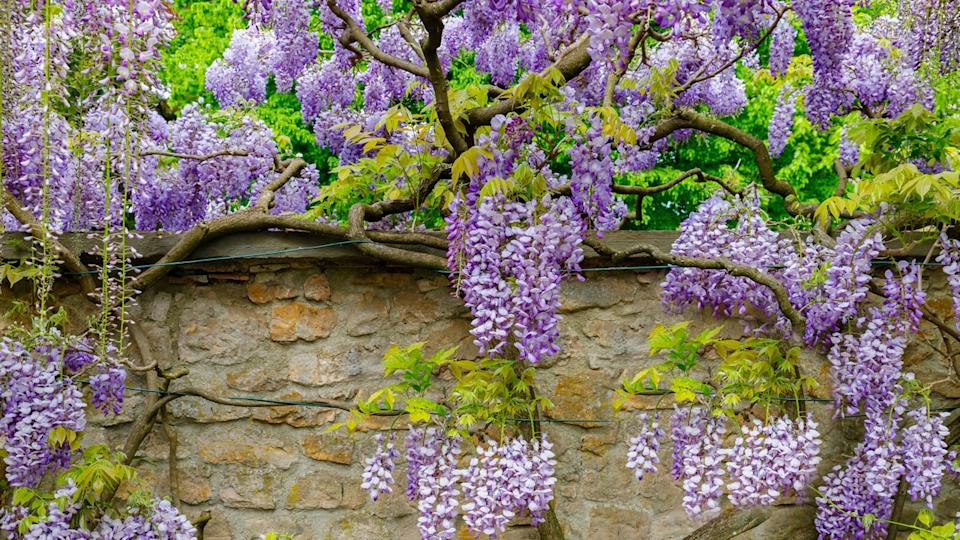
Image Credit: Shutterstock.
If you have wisteria climbing over an arbor or fence, February is your chance to bring it under control through pruning.
Because the vine is leafless this time of year (not flowering like the image above), you can clearly see its structure. Wisteria produces flowers on wood that was produced the previous growing season (or 1- year-old wood), so you’ll want to “trim each shoot of flowering wood (last year’s growth) to 6-12 inches. You’ll want to avoid cutting into 2-year-old wood, as this stimulates excessive vegetative growth that interferes with flowering,” according to Utah State University. This redirects energy into flower production rather than excessive leaf growth.
Don’t be shy; wisteria tolerates hard pruning well and responds with stronger blooms.
5. Boxwood and Evergreen Hedges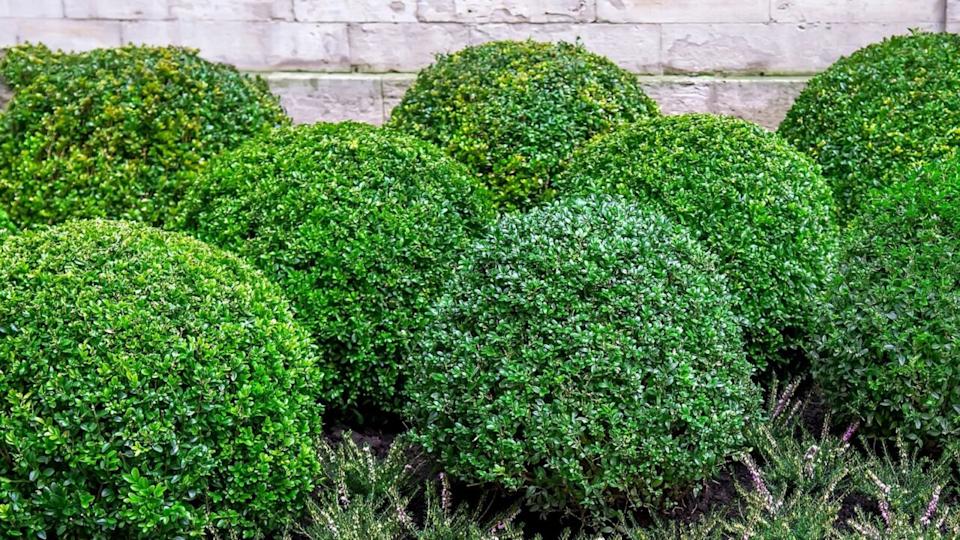
Image Credit: Depositphotos.com.
February is also ideal for shaping evergreen shrubs like boxwood before spring growth begins.
Heavy pruning in late winter prevents tender new growth from emerging too early and being damaged by cold snaps. Start by removing dead or damaged branches, then thin the interior slightly to improve airflow and reduce disease risk.
Finish by shaping the exterior, keeping the top slightly narrower than the base so sunlight can reach lower branches. Boxwoods are resilient and respond well to structured shaping when done during dormancy.
6. Fall-Fruiting Raspberries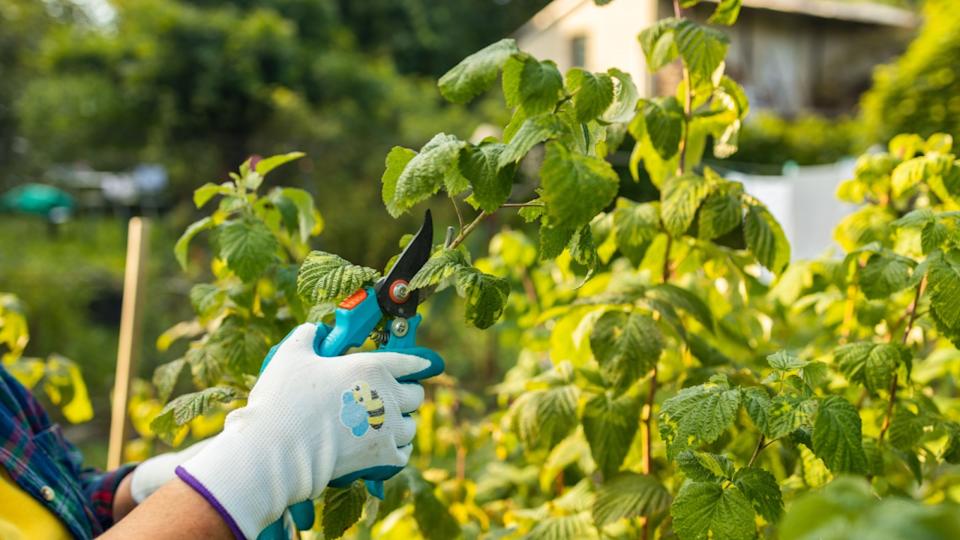
Image Credit: Shutterstock.
If your raspberries produce fruit in late summer or early fall, they’re fall-bearing varieties, and February is the time to cut them back.
Once you’re sure they’re not double-bearing types, you can cut all canes down (they likely won’t have green leaves anymore, like the image) to ground level before new shoots emerge. This simplifies maintenance and leads to strong, productive new growth in the coming season.
Some gardeners leave canes standing through winter for wildlife habitat and bird forage, but by late February, it’s time to clear them away and make room for fresh growth.
7. Ornamental Grasses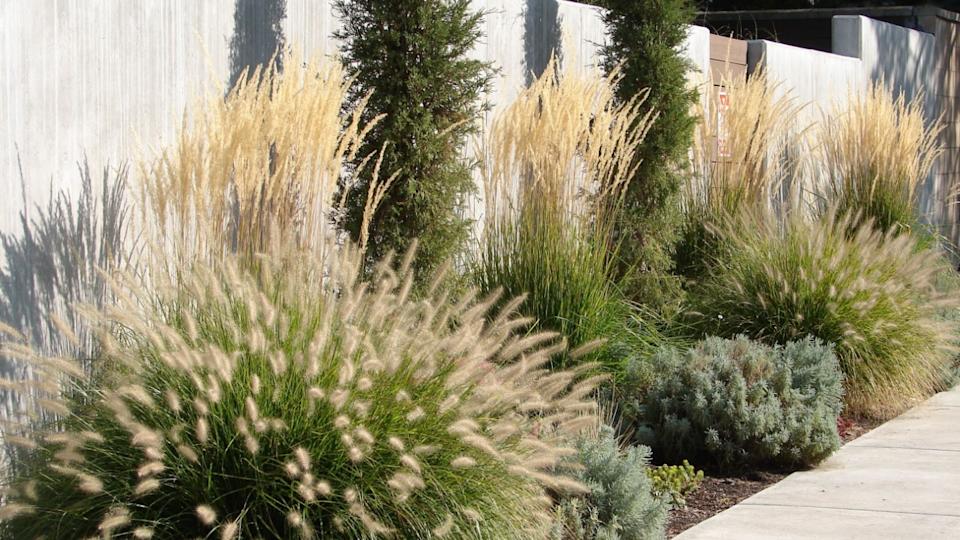
Image Credit: Shutterstock.
Ornamental grasses provide beautiful winter texture and shelter for wildlife, but they need to be cut back before spring.
Late February is ideal. Prune clumps down to a few inches above the ground to allow new blades to emerge cleanly. Waiting too long can make it harder to avoid damaging fresh shoots.
Clearing away old foliage also reduces the chance of overwintering pests and diseases carrying into the new season.
8. Hardy Hibiscus and Other Perennials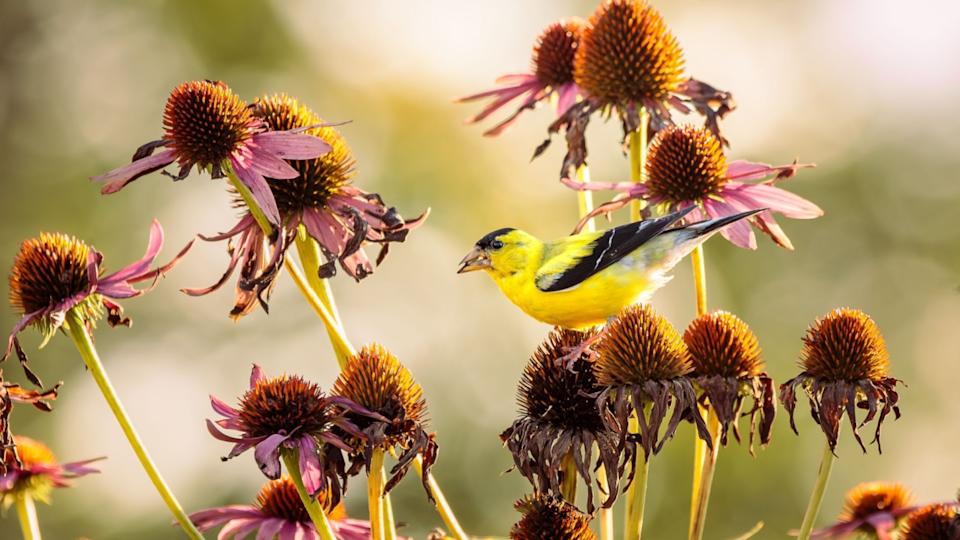
Image Credit: Shutterstock.com.
Certain perennials that die back fully in winter, like hardy hibiscus, bee balm, and coneflowers, can be cut down now if you didn’t tidy them in the fall.
Removing old stems prevents fungal issues and allows new growth to emerge without obstruction. Cut back to a few inches above soil level, and always sanitize tools between plants to prevent spreading disease.
A Few Important February Pruning Rules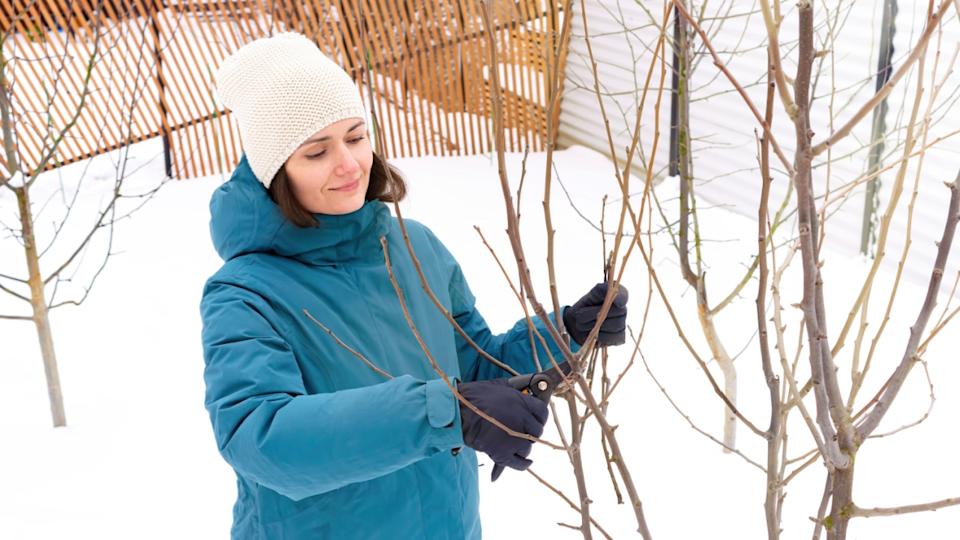
Image Credit: Shutterstock.
Before you head outside with your shears, consider the following guidelines for pruning success:
Prune on a dry, frost-free day.
Use sharp, clean tools to prevent the spread of disease.
Avoid removing more than one-third of a plant at once unless it’s a species known to tolerate hard pruning.
Never prune shrubs that bloom on old wood in February.
February pruning isn’t about making everything look perfect; it’s about setting the stage for healthy, vigorous spring growth.
With a few thoughtful cuts and garden tidying now, you’ll enable your landscape plants to begin the growing season with stronger structure, better blooms, and a garden that feels refreshed before it even begins to leaf out.
Comments are closed.