
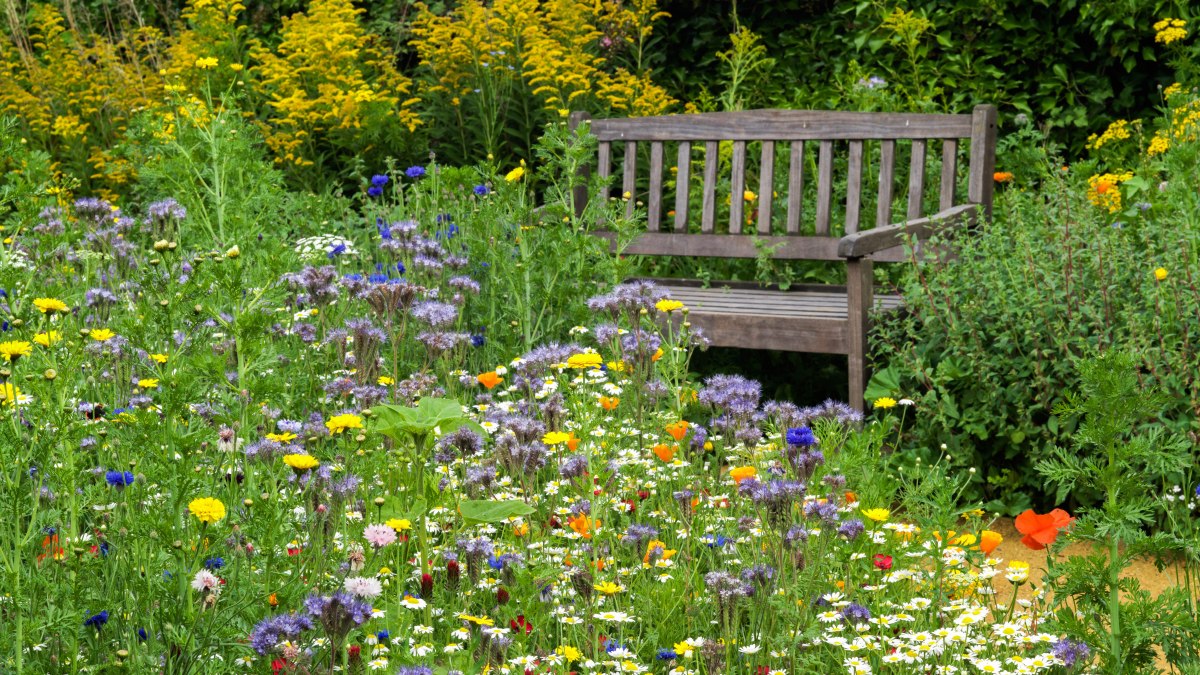
There is a long tradition in gardening of coming up with things that are aimed at all of us doing less gardening. The RHS used to tell us to double-dig and now it has embraced no-dig. There’s No Mow May (June, July and August too for some). And there’s “chop and drop”, which sounds like a karate move but is actually just leaving the prunings where they land.
I call this trend “ungardening” because, in one of my regular trawls through second-hand bookshops, I found a volume from 1963 called Flower Growing for Ungardeners, written by a woman with the wonderful name of Ethelind Fearon. She begins: “What is an ungardener, anyway? Obviously one who instinctively dodges gardening.”
• This is a quintessentially English garden — but for how long?
It’s a bit of a ruse, of course, because what follows are pages full of tips that sort the essential gardening tasks from the inessential. Fearon, who has been called “the doyenne of the lazy approach”, popped into my mind because this week I have interviewed the gardening coach and podcaster Andrew O’Brien, whose book To Stand and Stare: How to Garden While Doing Next to Nothing is out in paperback.
The first question had to be: what do you mean by doing next to nothing? After all, you cannot do next to nothing and have a fabulous flower border. “If you were expecting to lie in a hammock then you will be badly disappointed,” he admits. “What I am really talking about is getting rid of that feeling of work.”

“You don’t need to be a nerd to have gorgeous roses,” Ann Treneman says
ALAMY
Is this all about ditching the “jobs to do” list? “Well, I love making a list myself,” he says. “Every item on my list has a little history behind it. But when you get someone else’s list of gardening tasks, it’s just a list. It adds to the massive roster of things to do that you are basically going to beat yourself up with in a couple of days because you haven’t done them.”
O’Brien’s version of “ungardening” is to help us to find our own personal “halfway house” when it comes to jobs. He gives the example of one of his gardening clients who was so confused by a doorstopper book on how to prune roses that she stopped pruning them altogether. “I told her that it was a great book but this is like deep levels of nerdery. That’s fantastic but you may not want to go there yet.”
You don’t need to be a nerd to have gorgeous roses. Basic pruning techniques — cutting out the three Ds of dead, diseased and damaged stems and creating a pleasing shape — will get you a long way. At the other end of the spectrum, O’Brien notes that the Rose Society of Great Britain did an experiment in the Nineties where they pruned their ornamental roses with a hedgecutter, thus cutting out (literally) all nerdery and fussing. The roses did flower beautifully for years but eventually became choked.
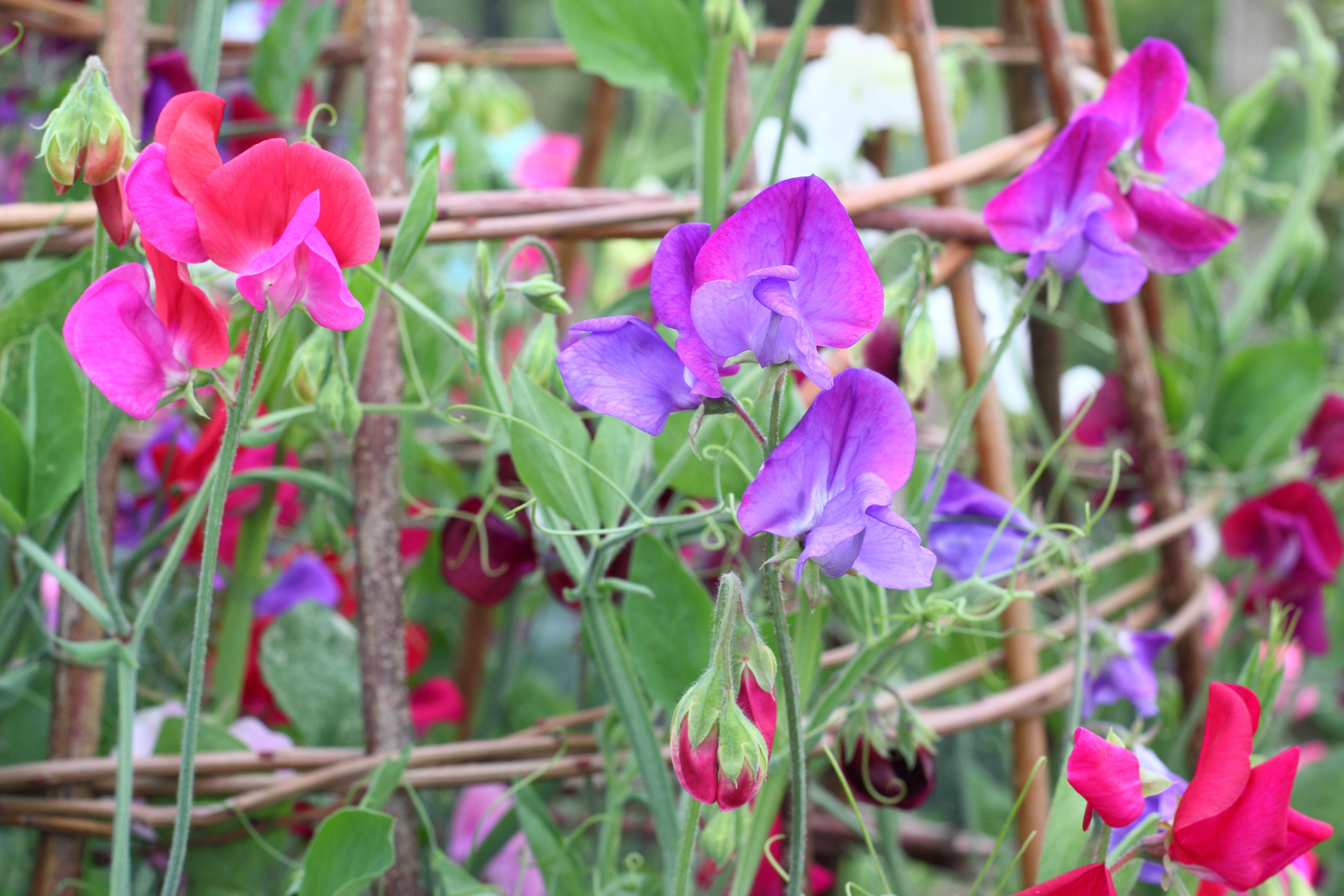
In his new book, Andrew O’Brien reveals the secrets of fuss-free sweet pea growing
ALAMY
“I like people to work out for themselves and not be told by lists, not be dictated to by Great Aunt Nelly or the neighbours, what their level of garden ‘finish’ is,” O’Brien says. This now would be called a “mindful” approach but I think more along the lines of Fearon and see it as a way to create a personal “secret slacker” charter. He laughs at that.
What are his own personal slacker tendencies? “I don’t necessarily weed very thoroughly deep inside beds,” he says. “I’ll keep the edges done and that tricks the eye that there is a kind of order.”
And? “I don’t mow the lawn very much at all. I think I mowed it twice last year.” Did it look OK, though? “No, it looked a bloody mess. If you are a lawn aficionado you’d have a nightmare. If you are excited by moths and wildflowers you’ll love it.”
• Read more from Ann Treneman
The idea is to create more time for gardeners to stand and stare — or even, perhaps, sit and snooze. Other areas where O’Brien has binned the nerdery include fussing over sweet pea seeds. “I’ve never nicked a sweet pea or soaked it overnight and I get almost 100 per cent germination rate every time,” he says. He tries to be relaxed about traditional foes such as blackfly, saying that if you can bear to wait a few weeks the ladybird cavalry will also arrive.
My slacker tendencies include leaving my vegetables to bolt because I like the flowers. I find deadheading to be dull-heading and hardly ever do it. We discuss my high-maintenance wisteria that is pruned twice a year.
“But do you really need the February cut?” he asks. I feel myself bristle. Of course I need the February cut. I can’t slack on my wisteria.
To Stand and Stare: How to Garden While Doing Next to Nothing by Andrew O’Brien (Dorling Kindersley, £10.99)
What’s on
Kew’s 30th Orchid Festival at the Princess of Wales Conservatory. The annual extravaganza of opulence and colour is inspired by China this year. Now on until March 8.
Comments are closed.