
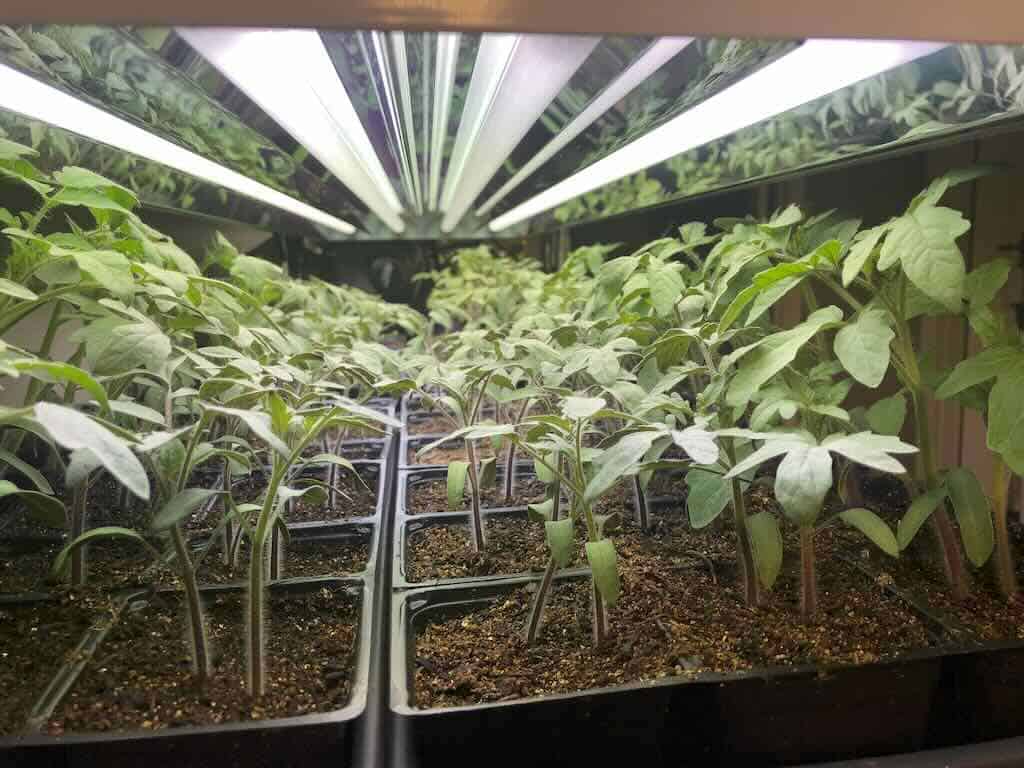
 WHEN GROWING from seed, the list of decisions starts with what turns out to be the simplest question of all: which variety of bean or tomato or zinnia to order. But then things get more complicated, questions like figuring out when to start what, and whether any of your choices need any special pre-treatment or particular conditions to germinate—including what germinating medium to use.
We’ve all heard the recommendation to use less peat, the standard for seed starting until relatively recently, when this non-renewable resource has been under scrutiny. But what peat substitutes work and don’t? That’s just one of the many questions that today’s guest, Joe Lamp’l answers on social media and in the “Master Seed Starting” online course he offers about his favorite topic, growing from seed, and it’s one we explored together.
Joe is host of the popular “Joe Gardener” podcast and creator of a suite of online gardening courses. Or perhaps you know him from his former Emmy-winning public television program, “Growing a Greener World.” Joe gardens in the Atlanta area, and I don’t know any other home gardener who starts more seeds each season. He’s also the author of “The Vegetable Gardening Book: Your Complete Guide to Growing an Edible Organic Garden from Seed to Harvest” (affiliate link).
Plus: Comment in the box near the bottom of the page to enter to win a copy of his book.
And: For a limited time, Joe is offering A Way to Garden readers access to his “Master Seed Starting” course at a $100 discount; learn more about the course and use the code SEED100 at this link.
Read along as you listen to the Feb. 23, 2026 edition of my public-radio show and podcast using the player below. You can subscribe to all future editions on Apple Podcasts (iTunes) or Spotify (and browse my archive of podcasts here).
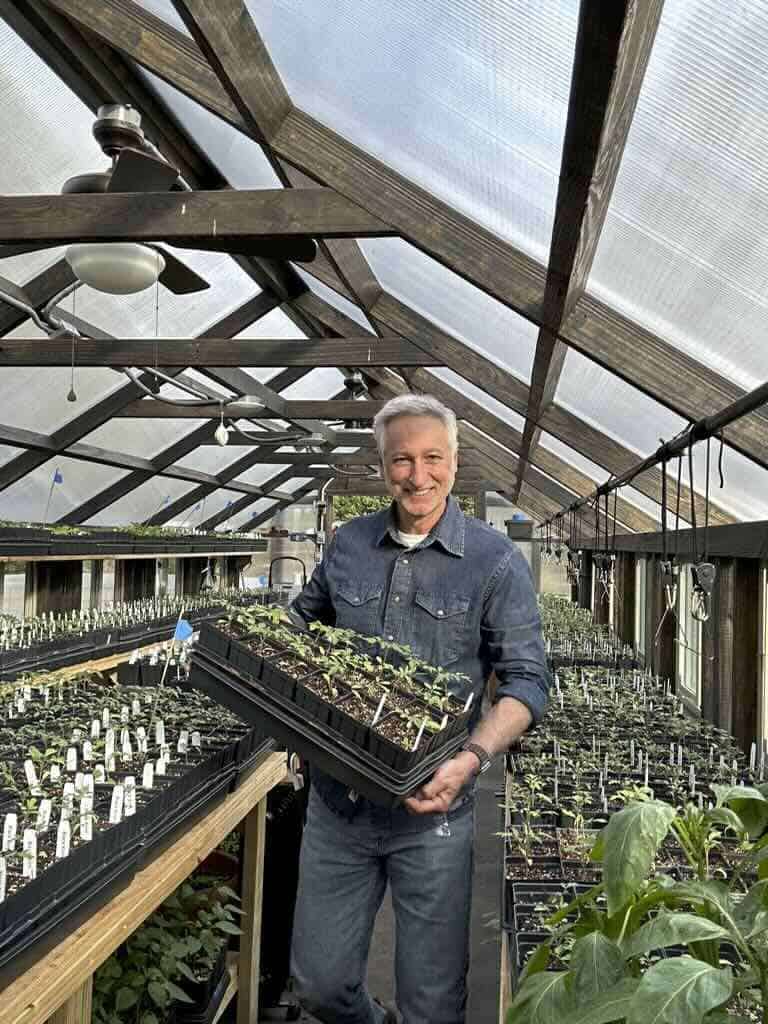 best germination mixes, with joe lamp’l
Download file | Play in new window | Duration: 00:27:04
Subscribe: Apple Podcasts | Spotify
Margaret Roach: Hello there, old friend. How are you?
Joe Lamp’l: I am good, Margaret; I’m just fine and I’m excited to be talking to you. Thanks for the opportunity.
Margaret: You don’t like seeds or anything though, right? And you don’t start any, right?
Joe: [Laughter.] I love seeds so much. It may be my favorite thing of all related to gardening.
Margaret: Yeah, and the pictures you in that greenhouse, I mean, it’s like 4 billion seeds- [laughter].
Joe: Five billion, but who’s counting?
Margaret: Oh, right, O.K. Yeah. Do you still use the basement grow room [below], too, or just now it’s all in the greenhouse?
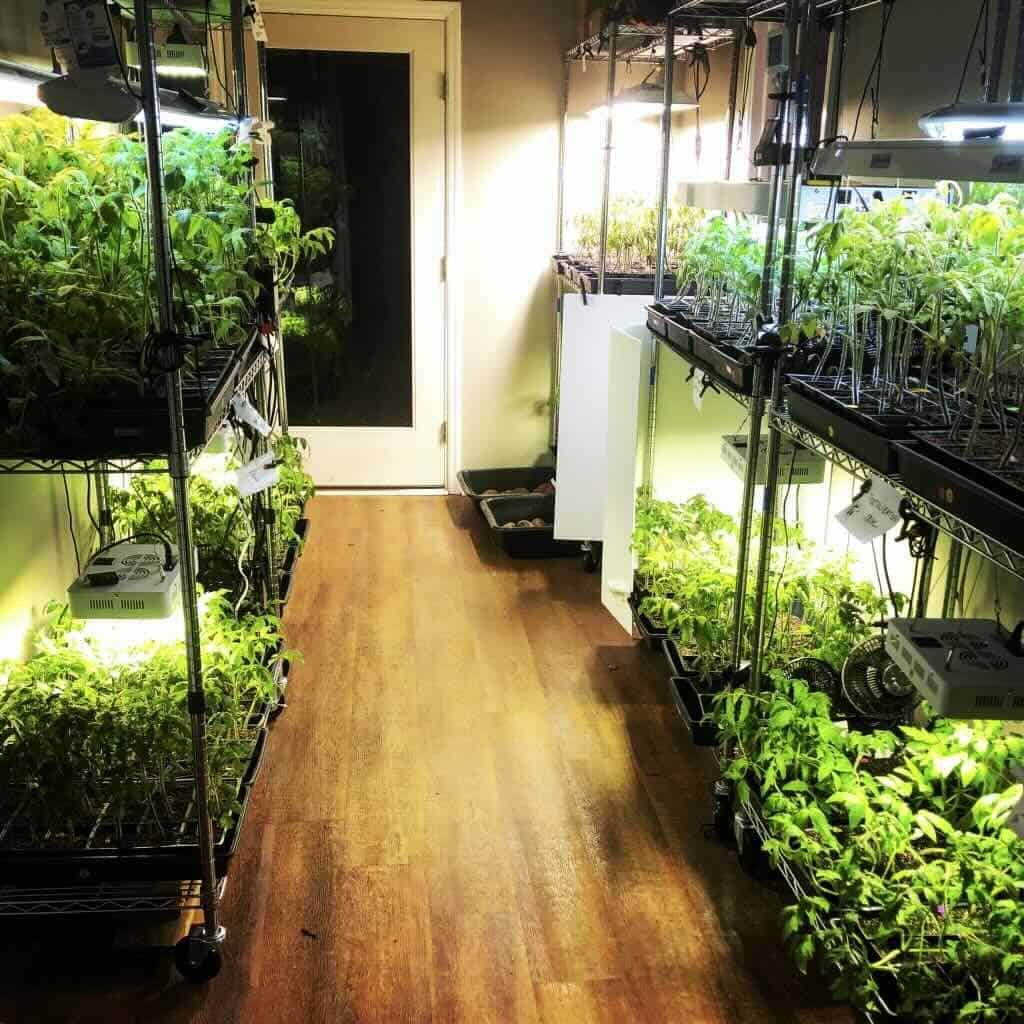 Joe: I do. I use that for the germination phase. So when I’m sowing my seeds, because I’m usually doing that in January and February, and actually sometimes even in December. Like this year: It’s crazy cold outside, even down here in Atlanta. So I need more of a controlled environment, because the greenhouse can get very cold at night. It’s very hot in the day. So I have safety with the seed-starting room, and I’ve been doing it for so many years, it’s hard to break that habit.
Margaret: So it’s an aspect of gardening, seed starting is, that has a lot of questions and decisions, as I mentioned in the introduction, including growing medium and which one is best. And there’s so many considerations and more, of course in recent years about the subject than ever. I suspect your students in your course, which is I believe starting soon… What’s the course called?
Joe: “Master Seed Starting.”
Margaret: “Master Seed Starting.” I expect they want to know what to use. I bet that’s a question that comes up.
Joe: Yes. And not only that, the nuances of it, because I have a very curious group of students. And I love it, and they’re nerdy and geeky, which is even better. So they’re going deep-dive on those questions. But yes, there are many at this time of year especially.
Margaret: And I’ll give information about the course. I was always taught that a seed-starting medium, that it should not be a potting soil, it should be a germinating mix, which meant that it was soilless, and that it was a pretty fine texture, but certain qualities that it had, but especially that it was not potting soil. There was a difference between germinating mix and potting soil. So what are your sort of guidelines [laughter]? And then let’s go into the “peat or no peat.”
Joe: Yes, indeed, absolutely. That’s a great question to start off though, because I get that one from time to time. And unlike garden soil—I’m glad you use that example—seed media is really designed to be low-nutrient, sterile or near sterile actually, and highly porous, and a properly designed seed-starting medium that’s engineered by professionals.
It’s really designed for roughly four things: Aeration is the first one, moisture retention is the other one. Structural stability; you want the roots to be able to hold together without compaction. And then biological neutrality, because you want to limit the pathogen pressure. And compared to garden soil, that introduces a whole lot of things into the mix that aren’t or shouldn’t be included in seed-starting mix.
Margaret: So those are some of the qualities. And then of course, as I said in the introduction, also in recent years, we’ve been made aware of the environmental issues around peat harvesting. It’s a non-renewable resource, and many gardeners have sought to reduce their peat usage. I mean, interestingly, in the United Kingdom, the government set timetables for banning peat in horticultural products, and besides taking peat products off the garden shelves, the garden center shelves on a schedule, it also accelerated that impetus; the government pressure accelerated product research and development about alternatives. So people there, gardeners there got more products that were farther along in the research process as alternatives right away, I feel like we’re still tinkering.
Joe: Yeah, we’re a long way from getting to where the U.K. is with their lack of use of peat, which is fine. And I love watching “Gardener’s World,” and there’s not a show that goes by where they don’t mention peat free compost, however they say compost.
Margaret: Compost.
Joe: Compost, yeah. I still can’t say it, nor can I say coir, and how I have been pronouncing it “coir,” but it’s supposed to be at least two syllables, coir. I don’t know.
Margaret: I don’t know either.
Joe: So just give me some grace there. But that seems to be the fallback, and I’d love to talk about that as we progress through this conversation.
Margaret: Yeah. Well, I don’t know whether we want to start with what we use. I mean, have you totally said, oh, I’m never using any peat again or, I mean, I’m going to confess first in case there’s any shyness about that: I’ve always used, it’s from Johnny’s Selected Seeds, its 512 Mix. It’s a germinating mix. It is peat-based; it has other ingredients. It has mature compost and perlite and fish meal and seaweed meal. I’m just used to it. And that’s one of the things that I think is really important, is “used to it.” I understand how it feels, how it handles water. Do you know what I mean? I know it [laughter]. It’s like when you’re baking, and if you change ingredients when you’re baking-
Joe: Margaret, I so know what you mean. And I am in the same camp as you, and I readily admit I am trying my best to move away from peat moss to something more alternative and sustainable and that has less environmental impact. So I’m working on it, but at the same time, at the scale that I’m growing seedlings, and many of them are for our seedling sale with my daughter every spring, there’s 3,500 or 4,500 seedlings that we’re growing out, and I never have enough time. So I’m always racing the clock, and I default back to what I’ve been using for years, just as you said: the consistency, the predictability, the uniformity of what I use is Pro-Mix BX, which is a commercial grade, peat-based seed-starting and propagation mix that has roughly 70 percent peat moss in it, and then some perlite and some wood fines, maybe 25 or 30 percent. So there’s a good bit of other amendments into it, but the bulk of it is peat moss. And there’s coir and there’s Pitt Moss, and there’s not a lot of competitors out there that I’ve found yet that I’m happy enough with to fully convert to.
Margaret: Right. And one thing I’ll say is I use so much less germinating mix (I germinate things on a much smaller scale than you do) than I do say potting mix for my big containers outside. With those, I have been very much more aggressive to move toward… Well, there’s a lot of products that have a bark base or a wood base, so to speak, and have compost in them and things like that. I found that transition a lot easier with my potting mixes than with the seed-starting mixes.
And even a leading expert in this subject, a professor at North Carolina State University, I talked to him a couple of years ago, when this was sort of really all getting to be louder and louder, the issue about peat. Brian Jackson’s his name, and he basically said, “Go slowly,” even though he’s an expert and he is doing all this research and so forth, as is his industry. Go slowly because you can’t just say, “Oh, I’m going to go from using this for all these years to using 100 percent coir,” or whatever and necessarily have good results.
Joe: In the potting mix, you have so many more options that you can put into it. Plus you’re putting in established plants that aren’t babies coming out of seeds. And so there’s that hardening-off phase where you just can’t really subject your seeds to so many unknowns, and you’ve got to have that sterility base and the fine texture, and it has to do all those things as far as retaining moisture and releasing enough of it. Then you have to think about the pH. And so it limits your options significantly, which is why we’re back to just a handful of acceptable choices.
Margaret: Now, you said Pitt Moss before, and people may have thought said peat moss, but Pitt Moss is a brand of alternative germinating medium that’s made from recycled paper products?
Joe: Yeah, it’s basically recycled paper. It’s post-consumer cellulose, cardboard and paper waste that’s been upcycled. It’s been cleaned and pulped and engineered into a peat alternative. And they’ll even tell you that the intention is really not to make it 100 percent replaceable with peat, because they recognize it’s got a different texture, it’s got a different mechanical cohesion factor that helps it bind together if that’s what you’re looking for, and some other things that make it more of a compliment than a replacement. And the complement may be 30 to 50 percent of the total.
And when you use it that way, and you get used to the nuances of using it, I think it does a great job of holding moisture; you’ve almost got to be careful about it, but once you dial that in, and I have done this, it is amazing. In fact, I recall one year when I was really testing it, the best trays of seeds and seedlings that I had came out of the Pitt Moss formula. And so have I changed entirely to use 30 percent of that in my mix? No, I haven’t, because as I mentioned earlier, I get time-crunched and then I have to default back to what I know I don’t have to think about, and then it ends up my other mix.
Margaret: Right. And that’s basically what Dr. Jackson at North Carolina State said. He said try using your familiar thing and gradually adding a little bit of something different. So like the Pitt Moss or whatever. And coir is one of the ingredients that a lot of people have also tried doing that with.
Now I’m just going to sound like an old whatever, which I am [laughter], by the way, about 127 years old, but don’t I sound good for 127? But coir isn’t exactly environmentally groovy in my mind, either. It comes from other places in the world; it has to get shipped all over the place. It used a tremendous amount of water to clean the saline, the salt out of it, to desalinate it. And it’s a complicated thing in its own right. I mean, if I lived near a bunch of coconut trees, do you know what I mean? That would be one thing, but this is a whole other. So I have my own issues with that, and that’s not the solution I really want. So I like that you’re saying that you’ve been trying the Pitt Moss, and that you’ve at least been able to add a percentage of it with good result.
Joe: Yes. And back to the coir, you said it very well. I’m still working on it.
Margaret: [Laughter.] Stick with me, baby.
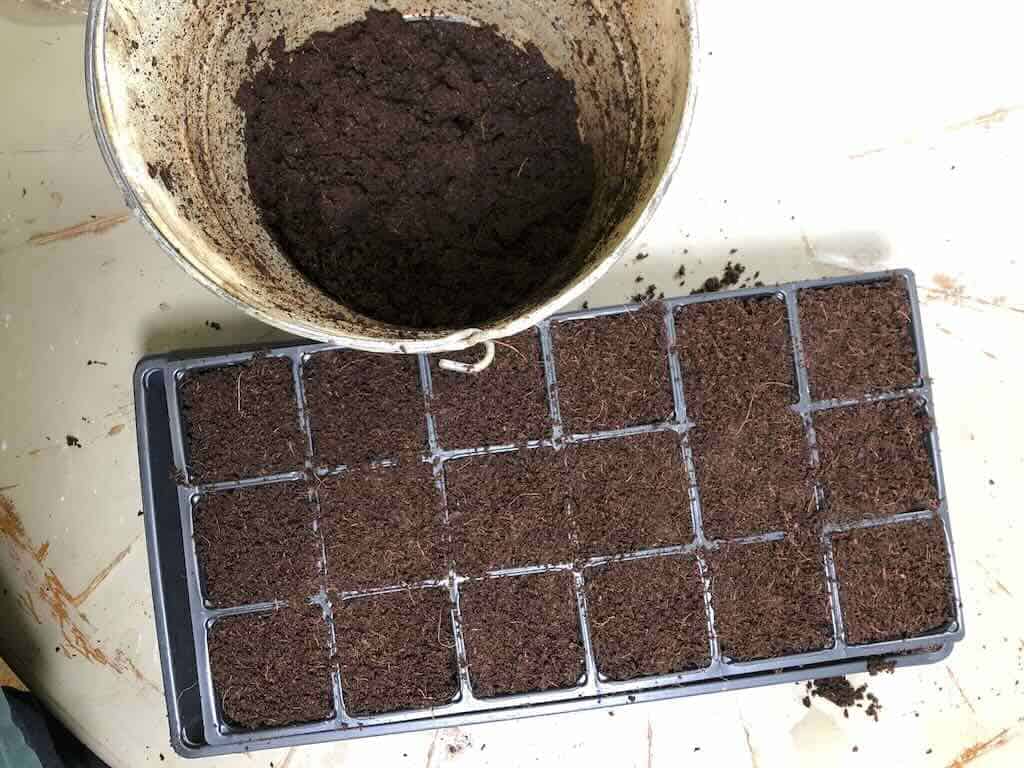 Joe: So back to the coconut husk. Can I just call it that? [Above, coir from a brick, after hyrdating.]
Margaret: Yeah.
Joe: In principle, it can be an excellent propagation medium. But here’s the other thing about it, Margaret, you mentioned the environmental issues with it, and they do. It has a whole other set of issues we need to think about in concert with whether or not it’s a good alternative. But raw coir, unprocessed coir often or usually contains residual salts.
Margaret: Yes.
Joe: And potassium and nutrient imbalances are thrown out by it. And that can hinder the germination and the seedling growth. And what happens all the time, and I know this over years of having nursed my students through this process when they’re trying to use that alternative of coconut husk, and they have really dismal results using it straight.
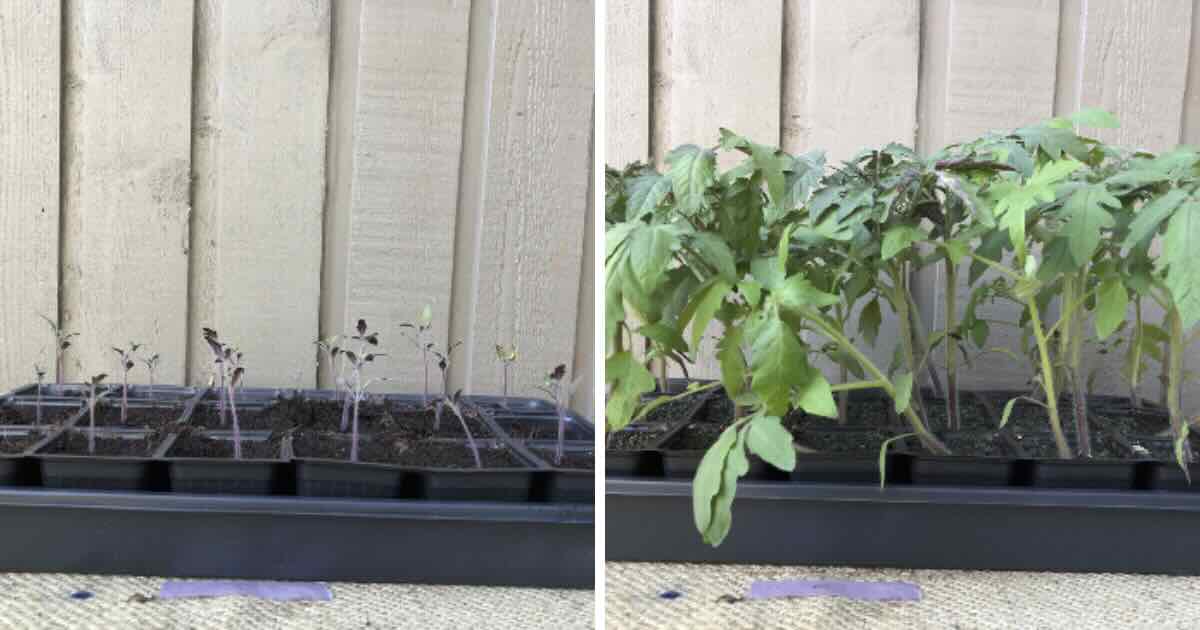
So they go to the Home Depot or Lowe’s and they buy the coir brick or the bag of it, and they plant straight into it. And they like me when I did side-by-side side comparisons, it’s unbelievable how stunted and stagnant and stalled the seedlings are after they barely germinate. And the side-by-side comparison shows four different seed mediums. One was coir and the others, it was the normal stuff. And I say, “In this picture, how old do you think the one on the left is?” which is the coir, compared to the other ones. And so on the other ones, they’ll say, “Oh, I don’t know. Those look like about four to six weeks old.” And the one on the left, they say, “That’s four days, five days.” [Photos below.]
They were started on the exact same day and they were all five weeks old.
So that’s the issue. But what happens is people don’t know that it needs to have a buffering period. So we hear about the salts and so forever people would say, “O.K, I just need to get the salt out of it.” And there’s very few companies that go to the extra trouble and expense to process or buffer out the chemically bound salts. So there’s one thing where they grow, you’ve already talked about that, think of Gilligan’s Island-
 Margaret: They wash it, right?
Joe: Yeah, they rinse it. But the chemical binding of the ions and salt, think of the coir fiber as a magnet that’s negatively charged. And the salt ions are very attracted to that because opposites attract. So they chemically bind to the fiber, and so rinsing doesn’t release the bound ions. They’re still adhering.
So when it comes to us unprocessed, and we just hydrate the brick and we plant into it, and we experience what I just talked about, they’re thinking, “Well, what just happened?” And then they say, “Well, I’ll fix that. I’ll make a new batch and I’ll rinse it all out.” So they put it out in a bucket or a hose or something like that. Well, guess what? That doesn’t do it either, because maybe you wash off the external bits of salt, but the bound pieces are still there, the bound ions.
And so you have to buffer it. And buffering is a step. It’s very fixable, and we can all do it at home with basically a tablespoon of Calcium nitrate in a bucket of water soaked overnight, and then another rinse. And that will basically replace the salt with the Calcium nitrate and give the media what it needs, and gets rid of what is hindering the growth.
But that’s the issue that people don’t know to do. And no one really talks about it; I should have been talking about it before now, and I have a little bit. But we need to really bring that home because if we’re looking for an alternative and we want to try coir, then unless you’re buying it already processed, and like I said, very few companies do that, you need to do that if you’re expecting to be successful. And what makes me mad about it though, is the companies that don’t process it, don’t say anything about it. And then unfortunately, the new gardeners and the people that are trying this for the first time get very disenchanted with it, and so I don’t want that to be a negative thing and have them think that they can’t start seeds, and it wasn’t even their fault and they didn’t even know it.
Margaret: And again, I’m just going to underscore, and… It comes from halfway around the world, nowhere near you, used a lot of resources where it was produced and rinsed initially, etc., and then has to get shipped all around the world. So it’s a tricky resource in itself. Which is why I love the idea of if it can work for 30 percent or something of my medium to use something like Pitt Moss, or who knows what’s coming next, which is a recycled product of a more local nature. I kind of am loving the idea of that.
Joe: Absolutely.
Margaret: So that’s what I’m looking for. If I’m going to change, I want to change something that performs, of course, but also doesn’t have environmental havoc attached to it [laughter].
Joe: So on that note, there’s a few other ones, and I like you really like the Pitt Moss, and I applaud them for trying to come up with a solution to not only upcycle waste that’s destined for the landfill, but put it into a product where we can grow plants. Nothing wrong with that.
And again, they’re not really pushing it as a 100 percent replacement, but leaf mold is another one that we could do. And we’re all familiar now with leave the leaves. And so I think twice before I used leaves for anything, but I talked to David Mizejewski of the National Wildlife Federation not too long ago, confessing my guilt about using any shredded leaves in my garden, and he made me feel a little bit better about it. If I’m only using a little bit of the total, then that’s O.K.
But anyway, leaf mold, like with the U.K. and Monty Don, he does lot of that in his mix, along with some homemade compost [laughter; mimics a British accent] and I can’t say it, oh my goodness. But yeah, that is an option. And maybe some wood fiber, if you can get bark fines that are finely ground, that would help with drainage. And it takes up some of this space that we’re trying to not use as much peat moss for.
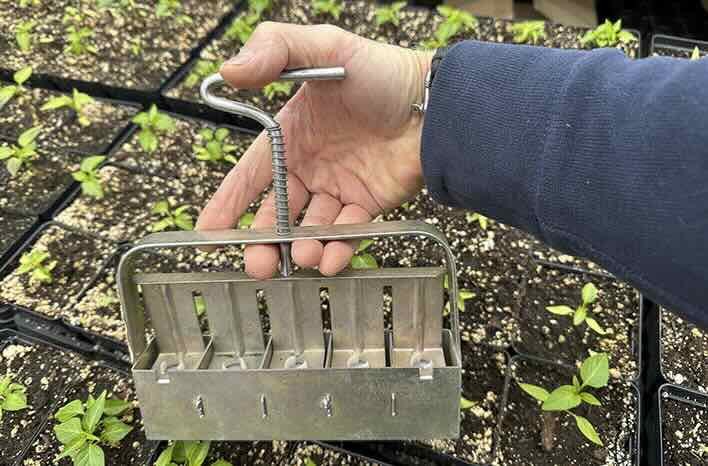 Margaret: Right. So one other thing I want to definitely ask you about is you do a lot of soil blocking, not growing in cells only or flats only, but soil blocking. And so the other thing about a medium is if we’re going to soil block, if that’s our goal, some mediums don’t… even some traditional peat-based ones don’t hold together as well as others for blocking, right? I mean, that’s the other thing. You have to sort of do a trial run, I think, to make sure that the medium you choose is going to hold up in blocks.
Joe: You do. Peat moss actually has pretty good cohesion.
Margaret: So that’s going to be, that is something that gives you a little bit more of a guarantee.
Joe: It does, and it’s better than coir. But what makes anything that you use to make soil blocks, you need to have consistency and you need strong fiber. And when you introduce bulkier material into it, that breaks up the cohesion and nothing is going to hold together as good. So what you’re trying to do is eliminate the bulky things. So rather than perlite, you would use maybe vermiculite; you could use perlite, but vermiculite is more compressible and it holds moisture better and it helps bind the moisture. And so that may be another discussion completely.
Margaret: No, I was just curious if there was any warnings or whatever about that, because I know I just saw you recently did a video about soil blocking, and how you’re an advocate of it. I think,
Joe: Yeah, I’m very much an advocate because in addition to trying to reduce my use of peat, I’m trying to reduce my use of plastic, single-use plastic. And it’s great for space saving and not having to have all these containers stacked up. I try to reuse everything, even if it’s not intended to be long-term use, I try to make it that. But I love the idea of just a clean, low-profile, minimalist ability to grow that many seedlings without a lot of plastic laying around.
Margaret: And I mean, what other things, when you do the course, what are some of the other sort of hot topics or the ones where you feel like the most teaching needs to be done where people get into the most trouble [laughter]?
Joe: Lighting and watering, absolutely.
Margaret: Yes.
Joe: Yeah, lighting and watering every time, and watering, it’s funny, watering, it seems so basic and there’s nothing technical about it, but it seems to trump the lighting questions because people are struggling with the watering more. And I understand why. Even with soil blocks, and as long as I’ve been gardening as many pros as there are related to soil blocks, they tend to dry out pretty quickly.
They retain a lot of moisture, they absorb it quickly, but before you know it, between a germination heat mat underneath it and grow lights above it, they can dry out rapidly. And so you need to be on top of that. So if you’re a traveler (thankfully I’m not as much anymore) that would be one that would be tricky.
But watering, it’s either they’re watering too much or they’re not watering enough. And I always default back to my favorite way to know whether you have the right amount of water. And that is for the seed tray that you’re assessing, if you can just get a sense of what it weighs when it has the medium in it, but it hasn’t been watered yet, weigh it or feel it. Both would be best. And then you hydrate the medium and sow your seeds or whatever your order is for that. Now you have field capacity, because you’ve put sufficient water into the medium to fully hydrate it, to the point that the excess water through gravity has vacated the cell tray. So now what’s left is like a sponge that you’ve squeezed, but there’s still plenty of water in it. All the excesses run out. So now you know what the field-capacity weight is, or the fully saturated weight that still has oxygen in the pore space, which is critical.
So now you know the two extremes: the fully saturated, the fully dry. And so now all you need to do is kind of gauge what does the middle part feel like when it’s right in between those two, and that’s your sweet spot. That’s what you’re really going for.
So your muscle memory will kick in and let you get a sense of, even though it may look dry on the top (oftentimes when the grow light is overhead, it dries out the surface), but that’s not to say that what’s beneath it is dry. Also, that could be perfectly fine. So you may assume it needs water, and then you give it a good drink, and now you’ve over-watered it. And we’re trying to avoid that. So by weight, you can really dial in whether or not you need to add water or just leave it alone.
Margaret: Yeah. Well, that’s true. So watering, but what you were just describing is of how I do with my houseplants, I kind of pick up one corner of the pot. I’m like, “Oh, it’s still got moisture in there. Wait.” Yeah. Yeah. O.K. What are you sowing now? Just quick, what?
Joe: Well, I’ve already done my peppers. I started those December 27th, the hot peppers. And then I followed up with my sweet peppers. And so those are done, and most of them have germinated and they’re in the greenhouse. Tomorrow I start the first of my probably 3,500 tomato seedlings, starting with the slicers.
I’ve learned over the years that I’ve been doing this, I need to wait to sow my cherry tomatoes because they grow so much faster. Two weeks before the sale date, which is usually April 1st, I’m looking at them going, “You need to stop growing. You’re too big already.” And so now I’m going to wait two weeks this time for the first time, I’m going to modify my seed-starting schedule by being selective on what I start ahead of that.
Margaret: Well, Joe Lamp’l, it’s always good to talk to you and especially about your favorite subject. I’m going to give information about the course, the “Master Seed Starting” course, and thank you for all the sage advice. And we can practice how to say “coir” together, O.K? We’ll have a separate session for that.
Joe: O.K.
(All photos courtesy of Joe Lamp’l.)
enter to win a copy of ‘the vegetable garden book’
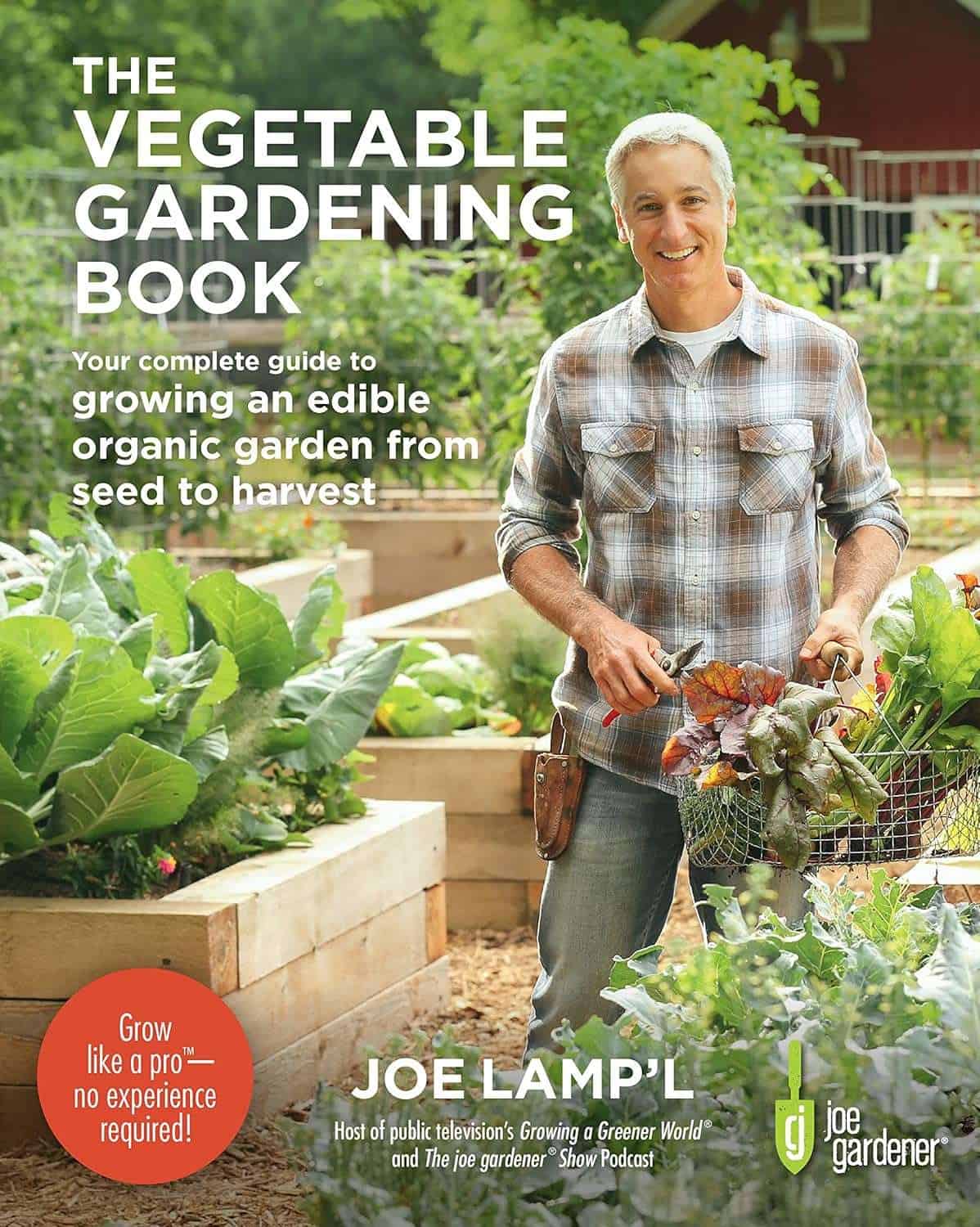 I’LL BUY A COPY of Joe Lamp’l’s book, “The Vegetable Gardening Book: Your Complete Guide to Growing an Edible Organic Garden from Seed to Harvest” for one lucky reader. All you have to do to enter is answer this question in the comments box below:
Do you grow some seedlings from scratch, and if so, what germinating medium do you prefer?
No answer, or feeling shy? Just say something like “count me in” and I will, but a reply is even better. I’ll pick a random winner after entries close at midnight Tuesday, March 2, 2026. Good luck to all.
(Disclosure: As an Amazon Associate I earn from qualifying purchases.)
prefer the podcast version of the show?
 MY WEEKLY public-radio show, rated a “top-5 garden podcast” by “The Guardian” newspaper in the UK, began its 16th year in March 2025. It’s produced at Robin Hood Radio, the smallest NPR station in the nation. Listen locally in the Hudson Valley (NY)-Berkshires (MA)-Litchfield Hills (CT) Mondays at 8:30 AM Eastern, rerun at 8:30 Saturdays. Or play the Feb. 23, 2026 show using the player near the top of this transcript. You can subscribe to all future editions on iTunes/Apple Podcasts or Spotify (and browse my archive of podcasts here).
Comments are closed.