
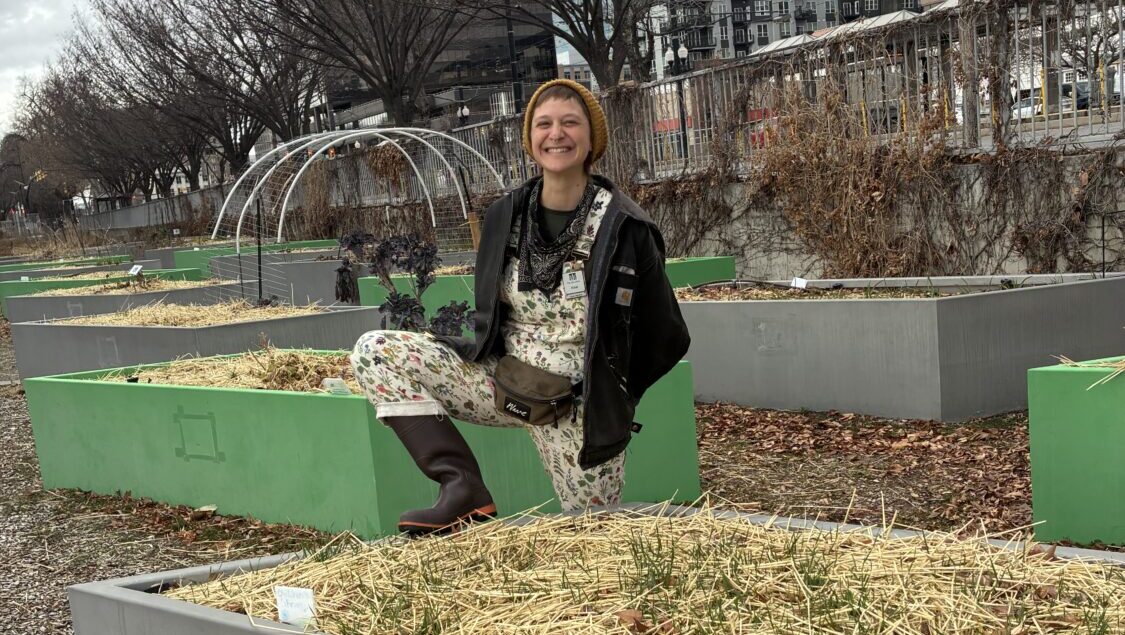
SALT LAKE CITY — This month, gardeners are looking forward to spring, with several opportunities to apply for a community plot and grants to get their own garden growing.
Sunday is the last day Salt Lake City residents can apply to get their own garden plot at the Salt lake City Library, and there is still a week left to apply for Salt Lake City’s Community Food Microgrant Program giving residents the ability to buy new seeds.
Planting a garden can build resilience, develop sustainability and support community. Salt Lake City Library wants to support that.
“The beauty of growing food from your local soils extends so far beyond just the act of feeding yourself,” said Garden Associate and Seed Librarian Rikki Longino. “But also just relating to the people that are around you that have kind of witnessed the food growing alongside you and that you can then share with.”
Longino said working in a community garden and planting a seed can build a better understanding of community.
“Thinking of the land as part of community,” Longino said. “When you put a seed in the ground, that seed is then going to interact with all the soil microbes and all the nutrients that become available and the air and the water. And then it grows up in this community of plants around it. And I think there’s something about visually seeing how those plants grow, and how happy they are, and how happy it can make you to work in a garden and to give your labor to the land that it’s just so much more rewarding to eat the food.”
Each plot at the library is 4 feet by 8 feet, which makes the plots tall enough for a person in a wheelchair to access and work in them.
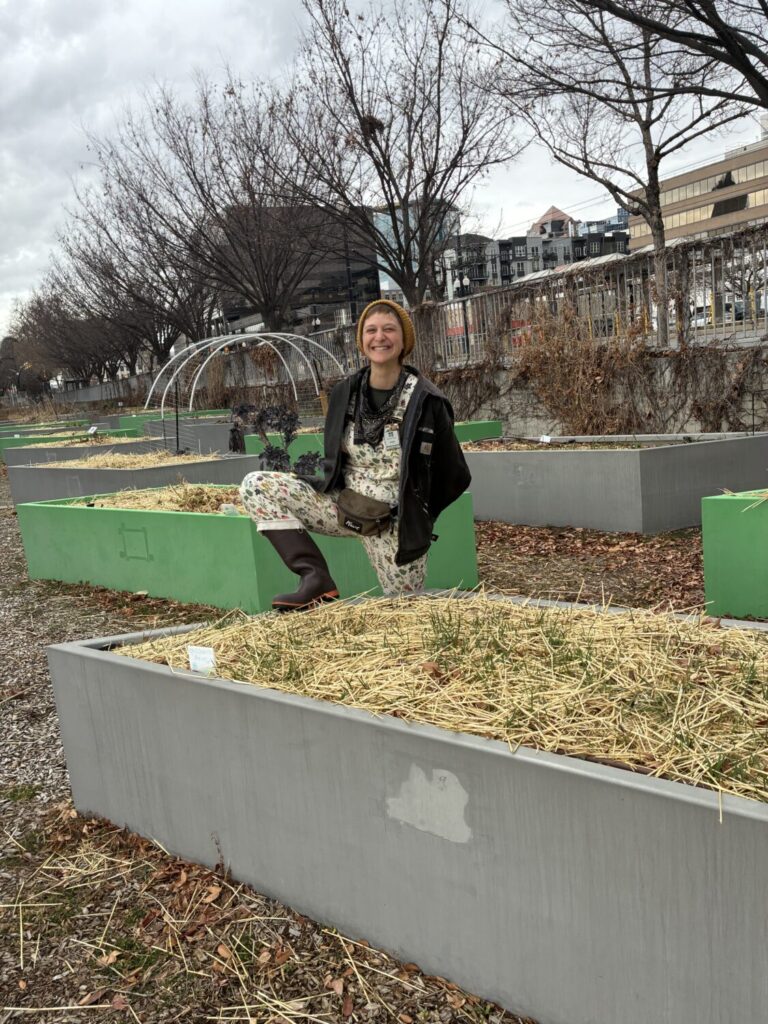
Garden Associate and Seed Librarian Rikki Longino stands in a plot at the Salt Lake City Library. (Bryanna Willis, KSL)
Other ways to support a garden
Salt Lake City is also doing what it can to support people who don’t need a community plot, but are still looking at the expenses to start their own garden. Sustainability Deputy Director Sophia Nicholas said the Community Food Microgrant Program’s $250 microgrants can be used for any purpose going towards growing food.
“That can include things like maybe starting your own garden or buying seeds or taking educational classes,” Nicholas said. “It could even include things like getting involved with backyard beekeeping or chickens, backyard chickens.”
Nicholas said the microgrant program came as a result of the city working with people who have had their own experiences with food hardship.
“(They would) advise us on what we as Salt Lake City could do to do a better job of helping people not only access enough food, but to access healthy food, fresh food, food that was culturally appropriate to what they’d maybe grown up with, or that was dignified,” Nicholas said.
Building access to food can look like donating to a food bank, but Nicholas said the foods there are not always the type of food people can, or would want to eat.
“When we’re talking about building a strong food system, we want to think about giving people the choice to have access to the type of food that is both appropriate to their dietary needs, as well as food that they enjoy and that they’ve perhaps grown up with,” Nicholas said.
When a person grows their own garden, it can also give them the opportunity to learn about different cultures and people.
Nicholas spoke about a group called the Urban Pepper Project that is using its microgrant to grow peppers from the Americas, which are not usually seen in local Utah stores.
“There’s a food resiliency component to learning about the diversity of different types of food that you can grow,” Nicholas said. “As well as a cultural awareness of the many types of healthy food that we have right here in our backyard.”
An archive of seeds
Gardening can also act as a way to keep an archive, Longino said. That might be why a person can check out seeds from a small filing cabinet on the first flood of the library.
“I also think about seeds as stories,” said Longino. “There’s something about these little living record keepers who have all of their ancestral memories and all of their heritage stored like within their little kernels. And when you take a seed and you decide to plant it and it grows into something, it’s like telling you its story. And there’s this whole archive that it contains that just comes to life in front of your eyes. And if you decide to be a steward of that life, then you can save those seeds and grow them again, share them and kind of perpetuate life.”
Longino said the community can use the seed library by filling out a checkout form and request which seeds are wanted. Those seeds can then be grown, seeds from the food can be harvested and then brought back to the library.
“Every year that you’re growing these seeds out and saving them, you’re kind of contributing to the adaptation of the seeds to our climate, our community, our soil, our water scarcity or abundance, “Longino said. “And that’s kind of helping us become less reliant on these big commercial systems that aren’t necessarily tailored to our unique bioregion or neighborhoods.”
Application for the Salt Lake City Library plots close Sunday, Feb. 22 and applications for the cities microgrants are due on March 2.
Other garden stories:
It’s better to wait to have garden success
We want to hear from you.
Have a story idea or tip? Send it to the KSL NewsRadio team here.


Comments are closed.