
Alan Gray
More on lilies!
Growing lilies in containers is satisfying. When your plants finish flowering take off their seed capsules so your plants don’t waste energy. Of course, you might like to save some seed for your own use, in that case leave a single capsule, there will be more seed inside one than you’ll ever need. Keep up your feeding regime until the foliage starts to turn yellow and once the stems are sear, cut them back to around 30 cms and stand in a sheltered place for the winter.
As the days lengthen in February, we redress the containers that we are keeping, we tip the whole root ball out onto a tarpaulin. Placed on its side, we gently prise the top layer of old soil and roots from just above the tops of the bulbs, taking care not to damage their snouts. Pop the root ball back into the same container and prepare some new topsoil as you did before. Use a 50/50 mix of the compost of your choice. We use sheep’s wool compost and gathered mole hills from the garden and this time we add a little extra goodness such as pelleted chicken manure.
Grown like this, lilies can remain in the same container for two years.
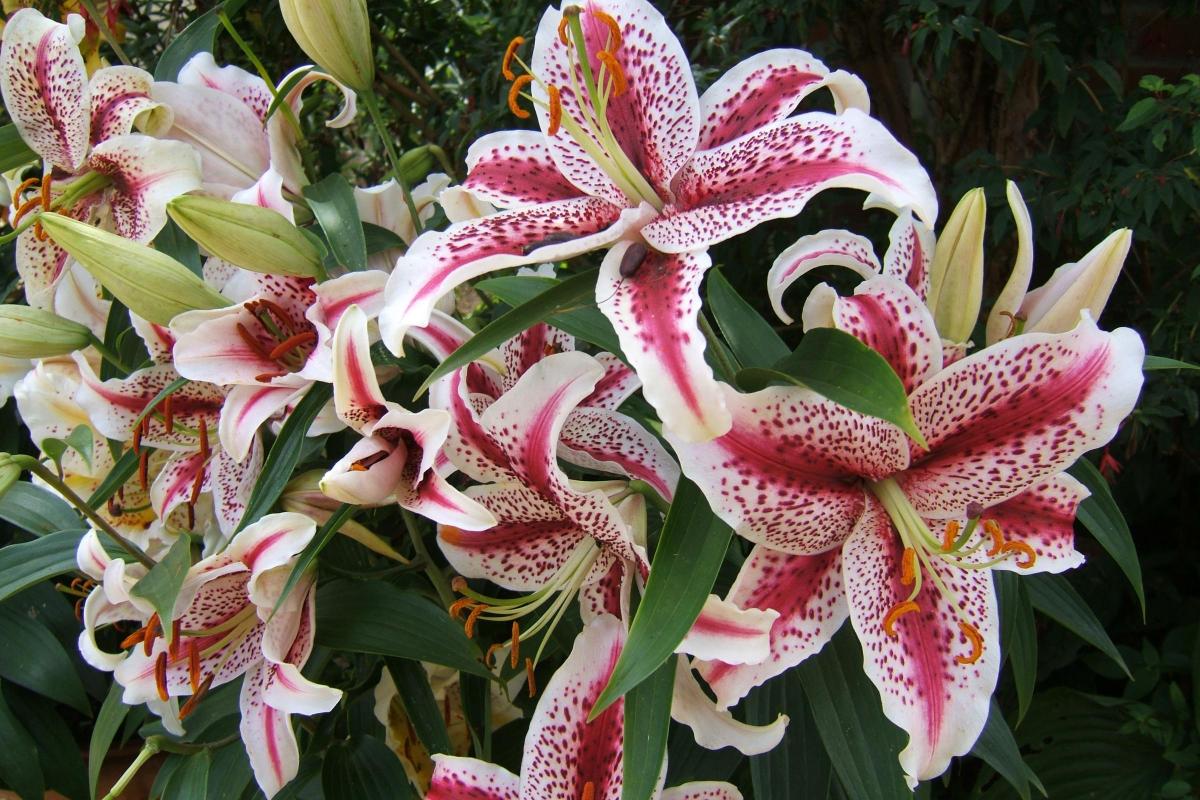
Our favourite lilies for container work are fragrant trumpet lilies such as L. Regale which has secured a place in the heart of gardeners countrywide. Sweetly scented with white flowers, it blooms in July, the peak season for trumpet varieties. Oriental lilies are the ones that plant breeders have been concentrating on in recent years. We have seen many new colours coming along with ever larger flowers and taller plants as they mature. You could be spoilt for choice, enjoy!
Norfolk School of Gardening
It’s time to think about sustainable gardening
Ah February! Cruel and kind in equal measure (so far). There have been more hard frosty mornings this week, but by noon we have been able to sit in the sun to eat lunch, with warm sun on our faces. And the Daphne we wrote about last week has been providing welcome early food for foraging bee flies and honeybees.
We are looking forward to our first Pruning Shrubs & Roses course at Bixley in a couple of weeks. It will be the perfect time to learn how to give roses and winter flowering shrubs a prune to maximise flowers and keep the plants healthy. Let us know if you would like a place on this very popular course.
Back in the classroom we have been talking about the challenging conditions of last summer and how they made us reconsider the way we garden and what we plant. In fact, we felt it was time to look in depth at how we can garden more sustainably, starting with a good look at our soil. This was the theme of the first part of a four-day Gardening More Sustainably course (the second part, in March, will look at water), and it was also an important focus on our new Sustainable Cutting Garden course. Without healthy soil much of our effort as gardeners is wasted. We started with a look at what our soil is like – how much sand, silt or clay it contains and how acidic or alkaline it is. We went on to consider how to improve and protect this precious resource. We are running the Sustainable Cutting Garden course again on April 18.
Courses with some availability in the coming weeks:
Basic Slab Laying: February 15
Pruning Shrubs & Roses: February 22
Planting for Year-Round Interest: March 1
Staking and Supporting Plants: March 15
Border Design: March 16 and 23
Gardening More Sustainably Part 2: March 28
Plant of the Week
Helleborus foetidus (stinking hellebore) only lives up to its name if crushed. Otherwise, it is a really rather architectural, easy-going evergreen with dark green foliage and pale clusters of nodding, bell-shaped, lime-green flowers rimmed with purple that last from January to April. It is a native plant and very happy in a shady border or woodland garden, or beneath deciduous shrubs, where its evergreen foliage can be shown off in autumn and winter before it comes into flower. In the right conditions it will gently self-seed and spread.
Contact us via norfolkschoolofgardening.co.uk or follow us on Instagram or Facebook.
Dear Martyn,
While I am an animal lover, I really have an issue with cats using my garden as a toilet. What can I do to keep them off my garden?
A Jackson Wymondham
Dear reader,
Cats are much-loved pets but can use gardens as toilets and predate on wildlife. In gardens with cats you will notice holes scraped in flower and vegetable beds to bury excrement but sometimes it is deposited on lawns or paths. It should not be confused with fox dung which often contains berries and left in prominent positions.
Problems are often most severe in high-density housing areas. Cats roam freely through gardens and are too agile to be excluded by fencing or netting. However netting may be effective in keeping cats away from small areas within the garden. Flower borders densely planted with perennials are less appealing as toilet areas, as there is no bare soil.
Keep seed rows well watered as cats dislike wet soil, preferring loose, dry earth and mulch. Use one or more of the cat deterrents on the market. repellents that are supposed to offend the cat’s sense of smell or taste: pepper powder (Bayer Pepper Dust), plant oils (Vitax Scent-Off), aluminium ammonium sulphate (Cat-a-Pult, Growing Success Cat Repellent, Vitax Stay Off) and methyl-nonyl-ketone (Vapet Get Off).
Such repellents can be washed off by rain, often give only short-term protection and need frequent re-application. Remove any cat excrement before use. A cat repellent plant, plectranthus ornatus sold under the names of ‘Scaredy Cat’ or Coleus canina, is available. The foliage produces an unpleasant smell. This plant needs frost protection in winter. As with repellent substances some animals appear to ignore the smell. Electronic scaring devices that produce a sound that may cause cats to move on causing harm to animals. These can be purchased in garden centres, or mail order.
Jobs for this week
Prepare the soil for seed sowing, lightly fork over bare ground remove any weeds, rake level and wait for spring.
Make a plan of what you are going to sow in which areas and when that seed should be sown, indoors or outdoors. This goes for flower seeds as well as vegetables.
Keep off soil that has been cultivated to avoid compaction which can lead to waterlogging and challenging growing conditions. Mark out paths or use planks to walk on.
Comments are closed.