
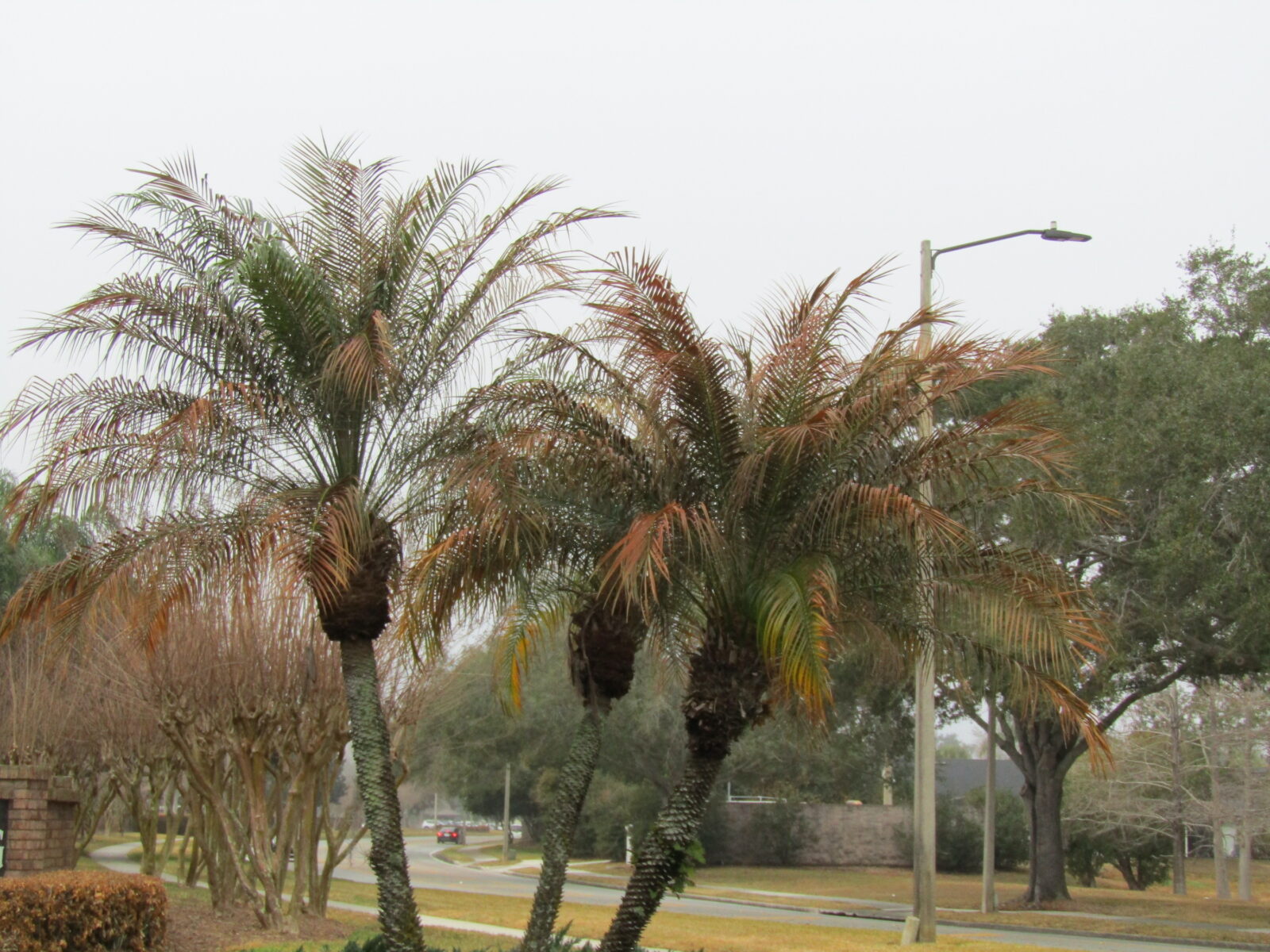
It’s been a frigid winter all across the South, but the Sunshine State in particular has felt the effects. February has brought temperatures as low as the twenties to Central Florida—and the cold has lingered long enough to cause serious damage to the flora in yards and gardens. “We get a freeze every five to ten years,” says Tom MacCubbin, a retired horticulture consultant, also known as the plant doctor, with the University of Florida. “But the last one I saw that was this severe was back in the mid-eighties.”
Not all plants have suffered equally, of course. Non-tropical natives like oaks, magnolias, yaupon holly, and azaleas aren’t much bothered. But tropical species, both native and ornamental, took a hit. These include crotons, dwarf umbrella plants, firebush, peace lillies, Clusia shrubs, and fruit trees like mangoes and avocados. The palms vary, and it’s hard to immediately tell the scale of damage because palm buds sit high up on the trunk. “If the bud made it through, no matter what the foliage looks like, the palm is probably going to survive,” MacCubbin says.
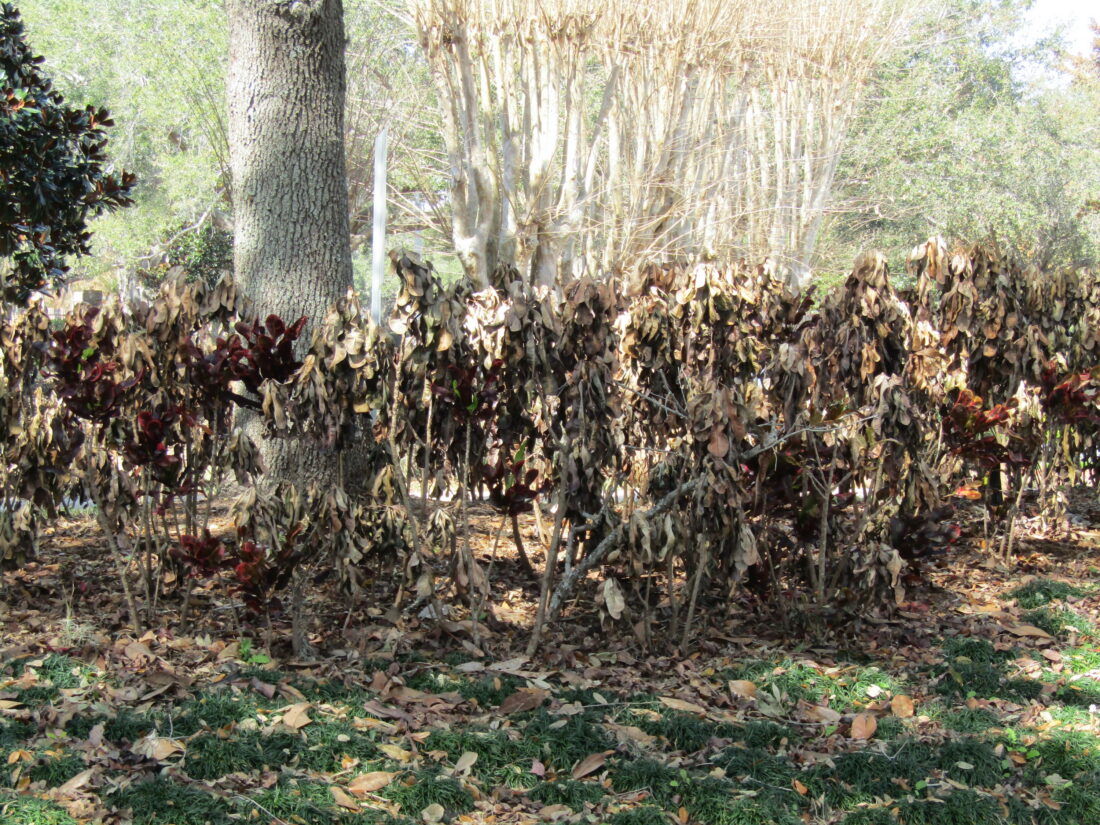
Photo: Tom MacCubbin
Crotons that are likely dead to the ground.
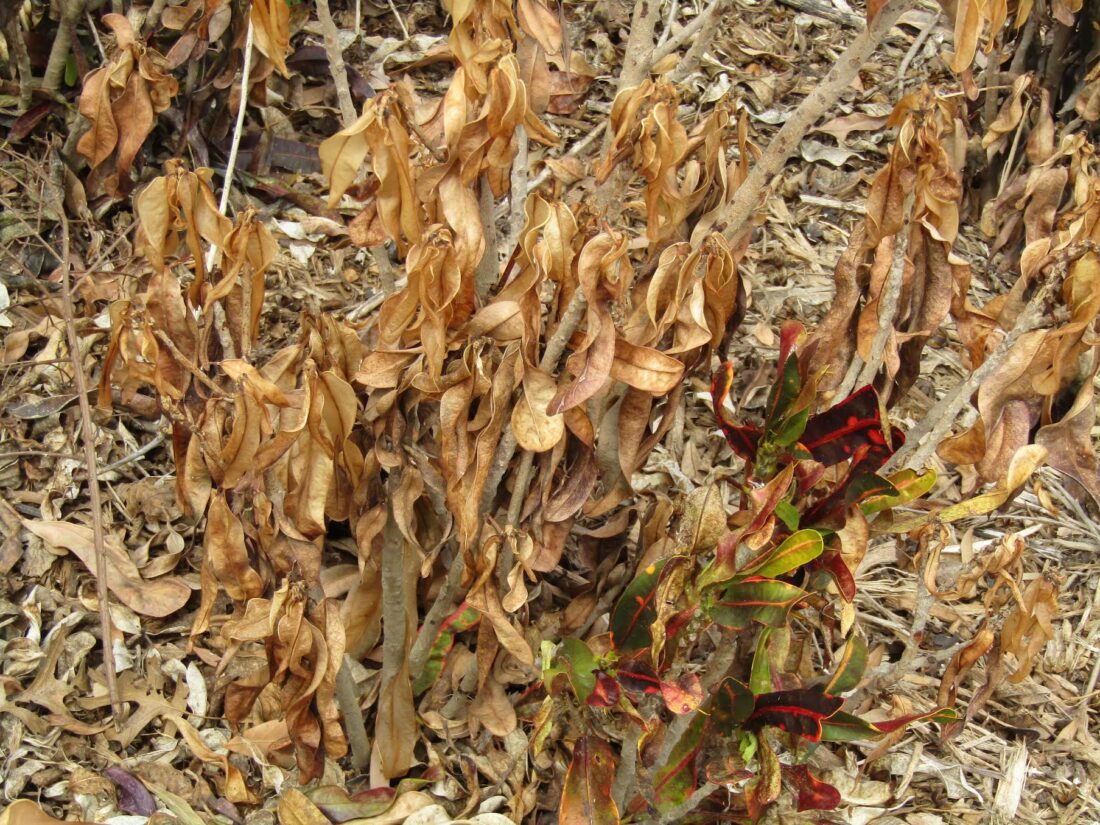
Photo: Tom MacCubbin
Crotons in more a protected area that still retain some live stems at base and should recover.
When it comes to crops, the Florida Department of Agriculture’s early assessments show that the freeze may cost over $1 billion in losses for the state’s growers, including citrus. Backyard citrus growers are reckoning with damage, too. Though orange and mandarin trees can often hang on through temperatures in the twenties, lemon and lime trees are more sensitive.
A key determinant of a plant’s fate is its specific microclimate. “It’s the old real-estate theme of location, location, location,” MacCubbin explains. “There are some plants that are cold sensitive that are protected under trees that have survived very well, but if they’re out in the open, they’re definitely burnt back.” (He managed to save his own sensitive plants, like bromeliads, by covering them with a tarp.)
What to Do After a Freeze
Because it’s not always clear whether a plant is dead or just damaged, “the best thing to do right now is not to get too excited about pruning back,” he advises. After all, in the event of another freeze, the dead debris can provide a little insulation for a plant. “But after a couple of weeks of warm temperatures, you’re pretty much going to know what’s going on.” You can prune back dead stems, even all the way to the ground, and get ready to wait if you don’t want to give up and replant; it could take months for anything to reemerge. Citrus trees don’t require much pruning in general, and patience is best—at the very least, wait until springtime.
But if you just have to know now, try this method on trees and shrubs: “You scrape the limbs gently and scrape down the trunk with a knife. If you still see green there, then there’s pretty good hope that they’re going to survive. If they’re brown going down the limbs and the trunks, that’s dead.”
No matter what, take heart. “As you drive through, it looks devastating, there’s no doubt about it,” MacCubbin says. “But this is Florida for you.” There are years of warm winters when the tropical plants thrive, and then there are years when they freeze to the ground. “But if you give it time, many of the plants that were damaged are going to come back. It might be from the lower stems or from the ground, but they’re going to come back.”
Lindsey Liles joined Garden & Gun in 2020 after completing a master’s in literature in Scotland and a Fulbright grant in Brazil. The Arkansas native is G&G’s digital reporter, covering all aspects of the South, and she especially enjoys putting her biology background to use by writing about wildlife and conservation. She lives on Johns Island, South Carolina.
Comments are closed.