Huw Richards: A Different Way to Use Compost in 2026 (& Eliminate Compost Anxiety)
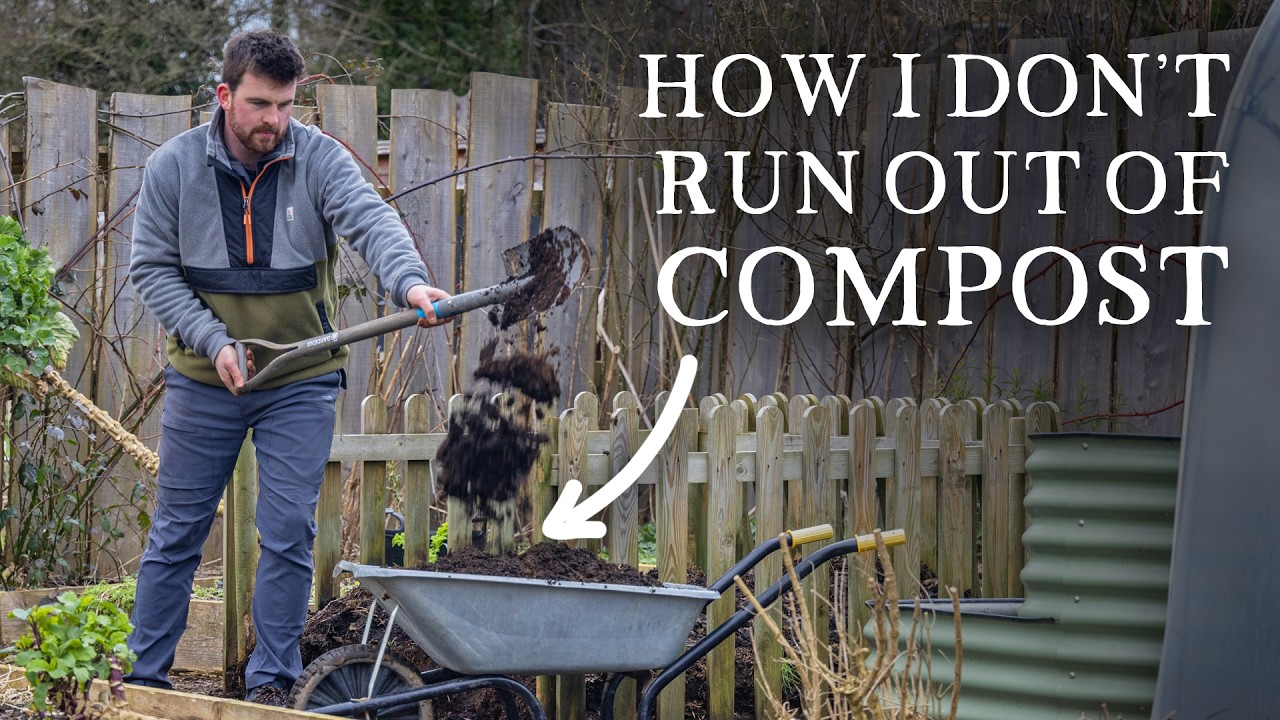
Here’s how I have changed my approach to using compost in the garden as a precision tool rather than a blanket solution. Grab your copy of How to Grow Food: https://geni.us/HowToGrowFood
You can just admit that you have no good source of compost nearby. No shame in having to economize.
Yes, compost is precious, and I can buy about 10 tons of the stuff for 200 bucks. I am going to do that, help the municipal tree service guys out because they are literally drowing in that "precious" ressource that is a waste to them. And I am going to achieve massively better soil and crops than you are with your "precision" application which is really just a lack of compost.
This has been really helpful. I was looking at my compost in shame thinking I don’t have even a fraction of what I need. Now I see I have plenty. 😊 eagerly awaiting your book I have pre ordered.
YES! Found this out myself a couple of years ago. I ran out of compost and covered rest of bed with leaves and wood chip. The next spring the difference between the layers of soil underneath the composted area vs mulched was surprising. Under the mulch the soil structure was noticeably better and had much more soil life. Now, a few years later, my soil has been completely transformed.
If you've enough compost to do a compost layer, and mulch on top, then great – but wish I'd known about 'just' mulching years earlier!
I have way to much compost lol I will happily cover my beds i even sifted my heap afterwards and got 80 litres of compost to go through my 3mm sieve (yes this took me 2 full days with breaks😂) all the overs went under my rose bush which I cut a ring around last year to make mowing the front lawn less dangerous and now it looks lovely and neat. Im now stuck with 80 litres of fine compost plus my other heap is pretty much finished and my third heap is big enough to stop adding materials and these heaps are bloody huge😂
Good and solid differentiation between the value of compost and the value of mulch. The largest plants (trees) are gown from forest floors (decomposing leaves) so they can certainly grow veg. It's the act of decomposition that is the missing link in the ecological cycle of many gardens.
I am working on some compost, ising pine needles, chickens, and their poop 💩 and rabbit pooo. Because it's what I have, oh, i am adding coffee grounds and other scraps, which is not much here.
Don't incorporate compost into the soil. It deprives aerobic microorganisms (bacteria and mycorrhizal fungi) of air. Aerate the soil with a fork without turning it over. After transplanting, allow the grass to grow back, keeping it low with a light mulch. Grass roots produce root exudates that nourish the microorganisms. In practice, soil preparation must be done to encourage the growth of bacteria and fungi. These are the ones that fertilize the soil. Are you familiar with the ancient practice of fallow land?
I am in SW England and the garden is soaking.My onion. s seedlings will need planting out by next week.I have to hope I can put a layer of compost on the onion bed and plant.
Even “finished” compost can take years to fully break down. The continued application of large amounts in raised beds has been shown to be detrimental, even toxic, because of excess phosphorus.
I do agree that getting enough compost is difficult and if bought expensive. I make my own, but the bulk of my organic matter is dug out 3 miles away from my allotment. I dig out about 10 tons a year. The cost is my time and effort, petrol money and being willing to transport well rotted horse manure in my car. It is hard work as I am 73, but it pays dividends. If you are short of compost then the technique you showed does work well. Where I disagree is that the compost directly feed the plants and does not add nutrients to the soil as the microbal activity is no longer happening. Compost that we add to the soil may look like fine material, but it is huge to microbes, The full stop on this page could hold about half a million bacteria. The compost is still not fully decomposed, otherwise we would only need to add it once and it would remain there forever without changing. The compost we add feed the microbal life in the soil, these release further nutrients as the compost decomposes more probably over the next five or so years, but by decreasing amounts each year. The bacteria also break down minerals in the soil and some capture nitrogen from the air. The bacteria secrete glue like substances that improve the soil structure giving a nice crumbly soil.Also allowing air to be captured between the crumb structure. Roots need air as well as moisture and soil. So compost feeds the microbes, not the plants but the microbes feed the plants.
Thank so much for covering this! I've been looking at my 2 smallish compost bins and stressing that I don't have enough to mulch my garden. I love the idea of targeting its use by placing a small amount in the planting holes instead…
Doesn't the soil in your raised bed sink? I have to refill my raised beds every year, and I can't produce that much compost myself in a year in my small garden.
This is interesting to me because my understanding as someone living on the other side of the pond (I'm Canadian) is that compost and mulch have always been two different things. Mulch is something like wood chips, leaves or straw and in my mind compost is more like a soil amendment.
Timely video in UK. Just trying to decide whether to order usual manure delivery, but I have 6 chickens and have stored up their litter waste. Could you let us know how you use your chickens' waste as part of your compost self sufficiency? I also really like your idea of ready compost for plants to eat, nutritious mulch for soil to 'digest'. Very clever, and will fit my needs this year based on what I have available. 😊
Thanks Huw, I will be using my well aged compost in ground this year. In my area we get very hot and dry summers and my lovely top layer of compost shrivelled to dust. I tried a layer of actual mulch on top of it (grass clippings) but it made little difference. For my situation I think incorporating it strategically is the way to go😊
I normally make a small furrow. Trickle compost along it and then sow into the little furrow. The seeds get a good start and then they work hard to feed themselves.
I am eagerly awaiting the new book! I have all your other books and absolutely love them. What are your thoughts on Kitchen composters like lomi? I use mine but put the dirt into my tumbling composter for a few extra weeks. I don’t have a big garden. But this will be my first year trying the lomi dirt. Thank you for your Chanel! It makes so much sense
By only adding the rich compost where we are planting, does this take away the advantage of the "No Dig" method. I fully agree that we don't need to top up every year.
I have lots of very well broken down leaf mould (2 years old) and put that on my borders as a mulch in the flower garden. But only use in vegetable garden to sow seeds as I thought it wouldn’t have enough nutrients in it for veggies. Is that true?
This is all brilliant information thank you ❤❤ That compost looks so healthy! I'm just starting to get into my gardening and homesteading this year in Ireland so I'll definitely need to try and get my compost game up!
So true on how precious it is! Personally I have just worked with the soil in the spaces Im using, such as garden, allotment, and almost create a compost system underneath and then add pure compost as I plant. That's how I have done it. My garden is full of worms three years later 🪱
We use our humanure and it’s amazing. We never run out never need to turn it and it’s great. In china they called it night soil. And was collected to grow.
I noticed the theme of the video, as well as many of the comments, is limited resources to make compost. I have a suggestion. My local grocery store, in the produce section, makes fruit platters, plus have massive amounts of produce that goes out of date. They're more than happy to give these scraps away. I normally raise two pigs every year, and I get these scrap boxes to supplement the pigs feed. Many weeks I get ten or more banana boxes full, free for the taking. When I don't have pigs to feed, I still get the scraps on a smaller scale, and even when I do have pigs, there's some of it I simply don't want to feed them. These scraps, almost unlimited might I add, go straight to my compost pile.
I've harvested a bit of dead bracken for my compost bay this winter. I'm going to pay the area I took it from back by removing as much hymalayan balsam as i can from the area for my compost(before it seeds!) The area is rife with it sadly, not many people know to yank it out.
Great advice! I have a load of compost from the waste I get from my customers gardens, food scraps, chickens and worm bins. It can add up to hundreds of pounds very quickly!
Excellent video Huw! I was going to mass express my compost across the entire Garden this year, but it didn't seem right. Your idea of targeting specific plantings is genius…… I'm having a " why didn't I think of that" moment. Thanks again for sharing your great ideas and knowledge. Side note : your maturity does not match your actual age, I always thinking of you as being in your late 30s to 40s, lol.
I've always had abundant compost because I rescued 2 rabbits whos litter tray waste (wood pellets, unsprayed hay and their waste) bulks out the compost wonderfully. There's a rabbit rescue crisis thanks to the awful pet industry so there's thousands of rabbits in rescues at the moment, so anyone considering adopting a pet that is an absolute asset to permaculture consider rescuing (definitely not buying!!!) a pair/group of rabbits, so long as youre prepared to research and adhere to their welfare needs theyre wonderdul additons to the family and im so grateful to them for fertilising our garden!
Yes yes yes!!! Relying on municipal compost is not sustainable. In needs diesel powered machines to produce and distribute it. And if packed full of microplastics (and actual normal plastics), residual herbicides and other unseen paollutants.
No dig is crazy wasteful.
We need alot more deep mining biomass plants and nitrogen fixing cover crops.
Recycling your own waste is another massive boost, may be a bit taboo, but 2 year old toilet compost is some of the best fertiliser I have ever used. The plants go like rocket fuel, best not use it on salads though.
People dont think twice about chicken waste compost, but are all squeemish about aged human waste and sawdust. Makes no sense. Its all shit. Lovely beautiful rich shit
Thank you for another great video. I have to say that I agree with @KPKENNEDY. I see people saying on YouTube that they do not know why their raised beds, which have a lot of compost, are sinking. What we call finished compost in the garden has not finished composting; it continues to break down, and the beds sink. It is just finished to the point where we can use it. Yes, you lose some of the compost on plant roots, and some of it comes out in the form of plants as it has been taken up through the roots; yet more is broken down into smaller and smaller particles, some of which are consumed by soil biology.
I'm fortunate in being able to make a lot more compost than I really need, as I have neighbours who don't compost & they give me all their weeds, grass clippings etc. I'll beg to differ on feeding plants vs feeding soil, as 'finished compost' is anything but. Year old compost takes at least 2-3 more years to fully break down when applied as a surface dressing.

45 Comments
Great idea. Thanks a lot.
You can just admit that you have no good source of compost nearby.
No shame in having to economize.
Yes, compost is precious, and I can buy about 10 tons of the stuff for 200 bucks.
I am going to do that, help the municipal tree service guys out because they are literally drowing in that "precious" ressource that is a waste to them.
And I am going to achieve massively better soil and crops than you are with your "precision" application which is really just a lack of compost.
It takes 5 years for compost to fully break down. It's a slow acting amendment.
It's always cool to see how much everything breaks down. That hot bed was full last season.
This has been really helpful. I was looking at my compost in shame thinking I don’t have even a fraction of what I need. Now I see I have plenty. 😊 eagerly awaiting your book I have pre ordered.
So what do you suggest for new raised beds? Fill with topsoil and transplant with compost?
Thank you for this ! Very helpfull. I just purchase your new book as well :))
YES! Found this out myself a couple of years ago. I ran out of compost and covered rest of bed with leaves and wood chip. The next spring the difference between the layers of soil underneath the composted area vs mulched was surprising. Under the mulch the soil structure was noticeably better and had much more soil life. Now, a few years later, my soil has been completely transformed.
If you've enough compost to do a compost layer, and mulch on top, then great – but wish I'd known about 'just' mulching years earlier!
🙃very good thanks
I have way to much compost lol I will happily cover my beds i even sifted my heap afterwards and got 80 litres of compost to go through my 3mm sieve (yes this took me 2 full days with breaks😂) all the overs went under my rose bush which I cut a ring around last year to make mowing the front lawn less dangerous and now it looks lovely and neat. Im now stuck with 80 litres of fine compost plus my other heap is pretty much finished and my third heap is big enough to stop adding materials and these heaps are bloody huge😂
Good and solid differentiation between the value of compost and the value of mulch. The largest plants (trees) are gown from forest floors (decomposing leaves) so they can certainly grow veg. It's the act of decomposition that is the missing link in the ecological cycle of many gardens.
I am working on some compost, ising pine needles, chickens, and their poop 💩 and rabbit pooo. Because it's what I have, oh, i am adding coffee grounds and other scraps, which is not much here.
Don't incorporate compost into the soil. It deprives aerobic microorganisms (bacteria and mycorrhizal fungi) of air. Aerate the soil with a fork without turning it over. After transplanting, allow the grass to grow back, keeping it low with a light mulch. Grass roots produce root exudates that nourish the microorganisms. In practice, soil preparation must be done to encourage the growth of bacteria and fungi. These are the ones that fertilize the soil. Are you familiar with the ancient practice of fallow land?
I am in SW England and the garden is soaking.My onion. s seedlings will need planting out by next week.I have to hope I can put a layer of compost on the onion bed and plant.
I have 8 rescue guinea pigs who love providing all sorts for my compost bin. I do tend to have a LOT of compost for my needs to be honest.
Even “finished” compost can take years to fully break down. The continued application of large amounts in raised beds has been shown to be detrimental, even toxic, because of excess phosphorus.
I do agree that getting enough compost is difficult and if bought expensive. I make my own, but the bulk of my organic matter is dug out 3 miles away from my allotment. I dig out about 10 tons a year. The cost is my time and effort, petrol money and being willing to transport well rotted horse manure in my car. It is hard work as I am 73, but it pays dividends. If you are short of compost then the technique you showed does work well.
Where I disagree is that the compost directly feed the plants and does not add nutrients to the soil as the microbal activity is no longer happening.
Compost that we add to the soil may look like fine material, but it is huge to microbes, The full stop on this page could hold about half a million bacteria. The compost is still not fully decomposed, otherwise we would only need to add it once and it would remain there forever without changing.
The compost we add feed the microbal life in the soil, these release further nutrients as the compost decomposes more probably over the next five or so years, but by decreasing amounts each year. The bacteria also break down minerals in the soil and some capture nitrogen from the air.
The bacteria secrete glue like substances that improve the soil structure giving a nice crumbly soil.Also allowing air to be captured between the crumb structure. Roots need air as well as moisture and soil.
So compost feeds the microbes, not the plants but the microbes feed the plants.
Thank so much for covering this! I've been looking at my 2 smallish compost bins and stressing that I don't have enough to mulch my garden. I love the idea of targeting its use by placing a small amount in the planting holes instead…
I also follow similar techniques.❤❤❤
Doesn't the soil in your raised bed sink? I have to refill my raised beds every year, and I can't produce that much compost myself in a year in my small garden.
This is interesting to me because my understanding as someone living on the other side of the pond (I'm Canadian) is that compost and mulch have always been two different things. Mulch is something like wood chips, leaves or straw and in my mind compost is more like a soil amendment.
Timely video in UK. Just trying to decide whether to order usual manure delivery, but I have 6 chickens and have stored up their litter waste. Could you let us know how you use your chickens' waste as part of your compost self sufficiency? I also really like your idea of ready compost for plants to eat, nutritious mulch for soil to 'digest'. Very clever, and will fit my needs this year based on what I have available. 😊
Thanks Huw, I will be using my well aged compost in ground this year. In my area we get very hot and dry summers and my lovely top layer of compost shrivelled to dust. I tried a layer of actual mulch on top of it (grass clippings) but it made little difference. For my situation I think incorporating it strategically is the way to go😊
I normally make a small furrow. Trickle compost along it and then sow into the little furrow. The seeds get a good start and then they work hard to feed themselves.
I am eagerly awaiting the new book! I have all your other books and absolutely love them. What are your thoughts on Kitchen composters like lomi? I use mine but put the dirt into my tumbling composter for a few extra weeks. I don’t have a big garden. But this will be my first year trying the lomi dirt. Thank you for your Chanel! It makes so much sense
By only adding the rich compost where we are planting, does this take away the advantage of the "No Dig" method. I fully agree that we don't need to top up every year.
I have lots of very well broken down leaf mould (2 years old) and put that on my borders as a mulch in the flower garden. But only use in vegetable garden to sow seeds as I thought it wouldn’t have enough nutrients in it for veggies. Is that true?
This is all brilliant information thank you ❤❤ That compost looks so healthy! I'm just starting to get into my gardening and homesteading this year in Ireland so I'll definitely need to try and get my compost game up!
Wow, excellent video – thank you. I will do this from now on!
So true on how precious it is!
Personally I have just worked with the soil in the spaces Im using, such as garden, allotment, and almost create a compost system underneath and then add pure compost as I plant. That's how I have done it.
My garden is full of worms three years later 🪱
We use our humanure and it’s amazing. We never run out never need to turn it and it’s great. In china they called it night soil. And was collected to grow.
I noticed the theme of the video, as well as many of the comments, is limited resources to make compost. I have a suggestion.
My local grocery store, in the produce section, makes fruit platters, plus have massive amounts of produce that goes out of date. They're more than happy to give these scraps away.
I normally raise two pigs every year, and I get these scrap boxes to supplement the pigs feed. Many weeks I get ten or more banana boxes full, free for the taking.
When I don't have pigs to feed, I still get the scraps on a smaller scale, and even when I do have pigs, there's some of it I simply don't want to feed them. These scraps, almost unlimited might I add, go straight to my compost pile.
Great advice
Mulch is also good for slugs and snails! That's the main reason I switched away from mulching and using compost instead.
I've harvested a bit of dead bracken for my compost bay this winter. I'm going to pay the area I took it from back by removing as much hymalayan balsam as i can from the area for my compost(before it seeds!) The area is rife with it sadly, not many people know to yank it out.
Great advice! I have a load of compost from the waste I get from my customers gardens, food scraps, chickens and worm bins. It can add up to hundreds of pounds very quickly!
Excellent video Huw!
I was going to mass express my compost across the entire Garden this year, but it didn't seem right.
Your idea of targeting specific plantings is genius…… I'm having a " why didn't I think of that" moment.
Thanks again for sharing your great ideas and knowledge.
Side note : your maturity does not match your actual age, I always thinking of you as being in your late 30s to 40s, lol.
I have been doing this for 3 years now ….
I've always had abundant compost because I rescued 2 rabbits whos litter tray waste (wood pellets, unsprayed hay and their waste) bulks out the compost wonderfully. There's a rabbit rescue crisis thanks to the awful pet industry so there's thousands of rabbits in rescues at the moment, so anyone considering adopting a pet that is an absolute asset to permaculture consider rescuing (definitely not buying!!!) a pair/group of rabbits, so long as youre prepared to research and adhere to their welfare needs theyre wonderdul additons to the family and im so grateful to them for fertilising our garden!
Yes yes yes!!!
Relying on municipal compost is not sustainable. In needs diesel powered machines to produce and distribute it. And if packed full of microplastics (and actual normal plastics), residual herbicides and other unseen paollutants.
No dig is crazy wasteful.
We need alot more deep mining biomass plants and nitrogen fixing cover crops.
Recycling your own waste is another massive boost, may be a bit taboo, but 2 year old toilet compost is some of the best fertiliser I have ever used. The plants go like rocket fuel, best not use it on salads though.
People dont think twice about chicken waste compost, but are all squeemish about aged human waste and sawdust. Makes no sense. Its all shit. Lovely beautiful rich shit
Thank you so much for all the content! I want to say ,just thank you !
This is a good plan that i'll employ going forward 😊
Thank you for another great video.
I have to say that I agree with @KPKENNEDY.
I see people saying on YouTube that they do not know why their raised beds, which have a lot of compost, are sinking. What we call finished compost in the garden has not finished composting; it continues to break down, and the beds sink. It is just finished to the point where we can use it. Yes, you lose some of the compost on plant roots, and some of it comes out in the form of plants as it has been taken up through the roots; yet more is broken down into smaller and smaller particles, some of which are consumed by soil biology.
I'm fortunate in being able to make a lot more compost than I really need, as I have neighbours who don't compost & they give me all their weeds, grass clippings etc.
I'll beg to differ on feeding plants vs feeding soil, as 'finished compost' is anything but.
Year old compost takes at least 2-3 more years to fully break down when applied as a surface dressing.
Does your book cover succession planting?