
Fiona and Julian have been working on the garden ever since they bought what was a derelict 17th-century longhouse and its 11-acre smallholding, which includes a 1.5-acre garden, 30 years ago. They began by creating a large terrace in front of the house, then gradually worked outwards, adding a croquet lawn, shrub and perennial borders, a vegetable garden and a sloping woodland copse. With challenging conditions – very high rainfall, an exposed hillside site and poor soil – they felt their way in terms of planting to see what worked, moving towards a naturalistic, multi-layered scheme using insect-friendly perennials, shrubs and bulbs to maximise flower numbers throughout the year.
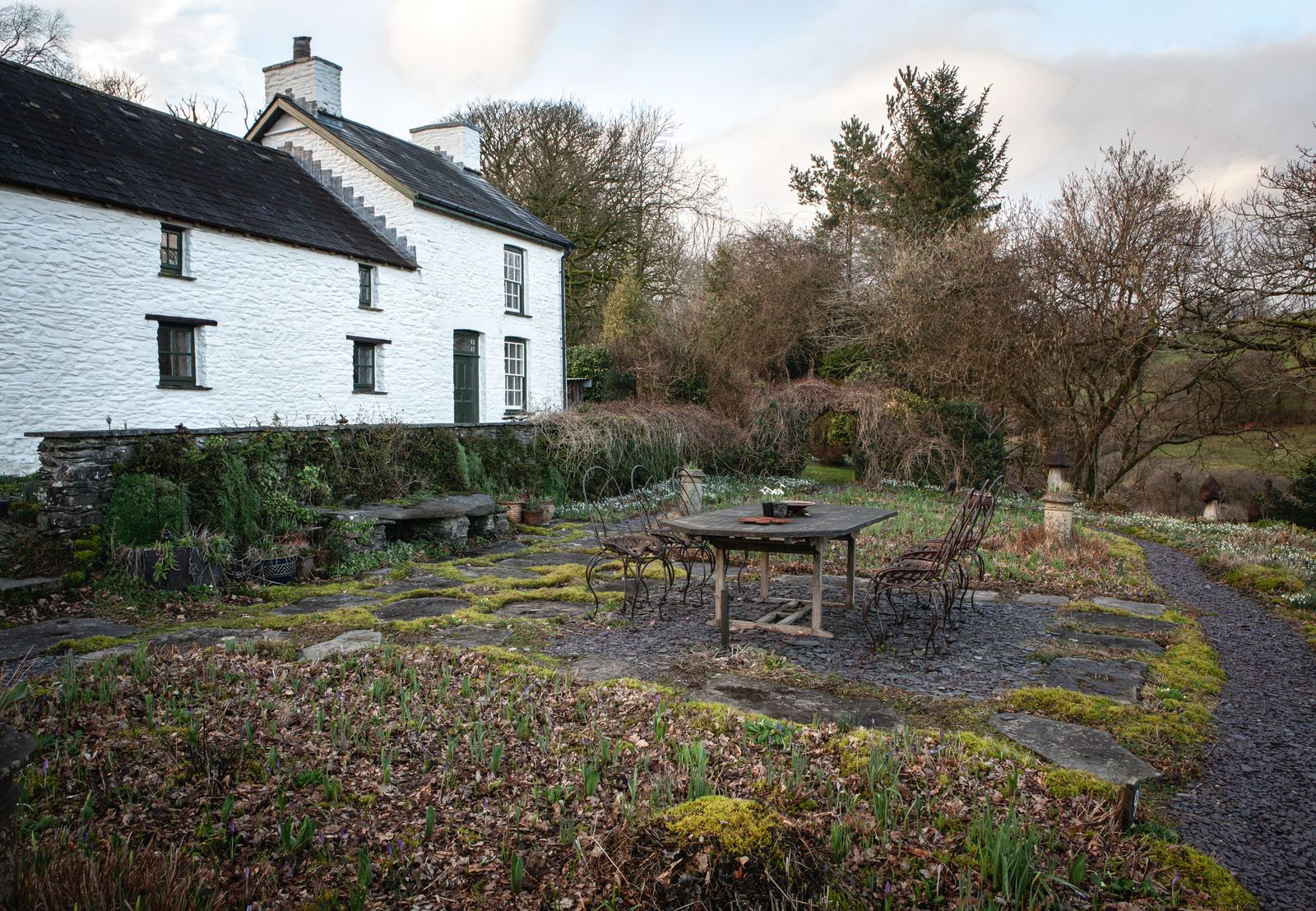
The terrace in front of the house is edged by a successional planting of bulbs and perennials.
Sabina Rüber
Some of the early-spring bulbs are crucial in providing nectar for pollinators when all else is dormant. The snowdrops are the first to emerge, pushing their way valiantly through the ground to greet the new year. Fiona and Julian have amassed a collection of over 150 varieties, including covetable, named ones like ‘Maximus’ and ‘Primrose Warburg’, as well as many unnamed local snowdrops from historic gardens in the area. ‘I started my Welsh snowdrop project to find varieties that would be adapted to the local climate and conditions,’ explains Julian. ‘It’s fascinating – each one comes with its own story and provenance.’ Many, especially the Welsh ones, will spread by seeding around, increasing the colonies rapidly. Others are increased by division. Julian has found an ingenious way to do this quickly, using a Finnish Pottiputki tool, designed for planting tree seedlings: ‘You can plant 500 snowdrops or crocus in an hour.’ He has also found a way to speed up the naturalisation of Crocus tommasinianus by harvesting the seeds in April. ‘People don’t realise the seedpods are there in the grass because they emerge from the ground and not the spent flower,’ he observes. ‘It’s a great way to introduce them to other parts of the garden.’
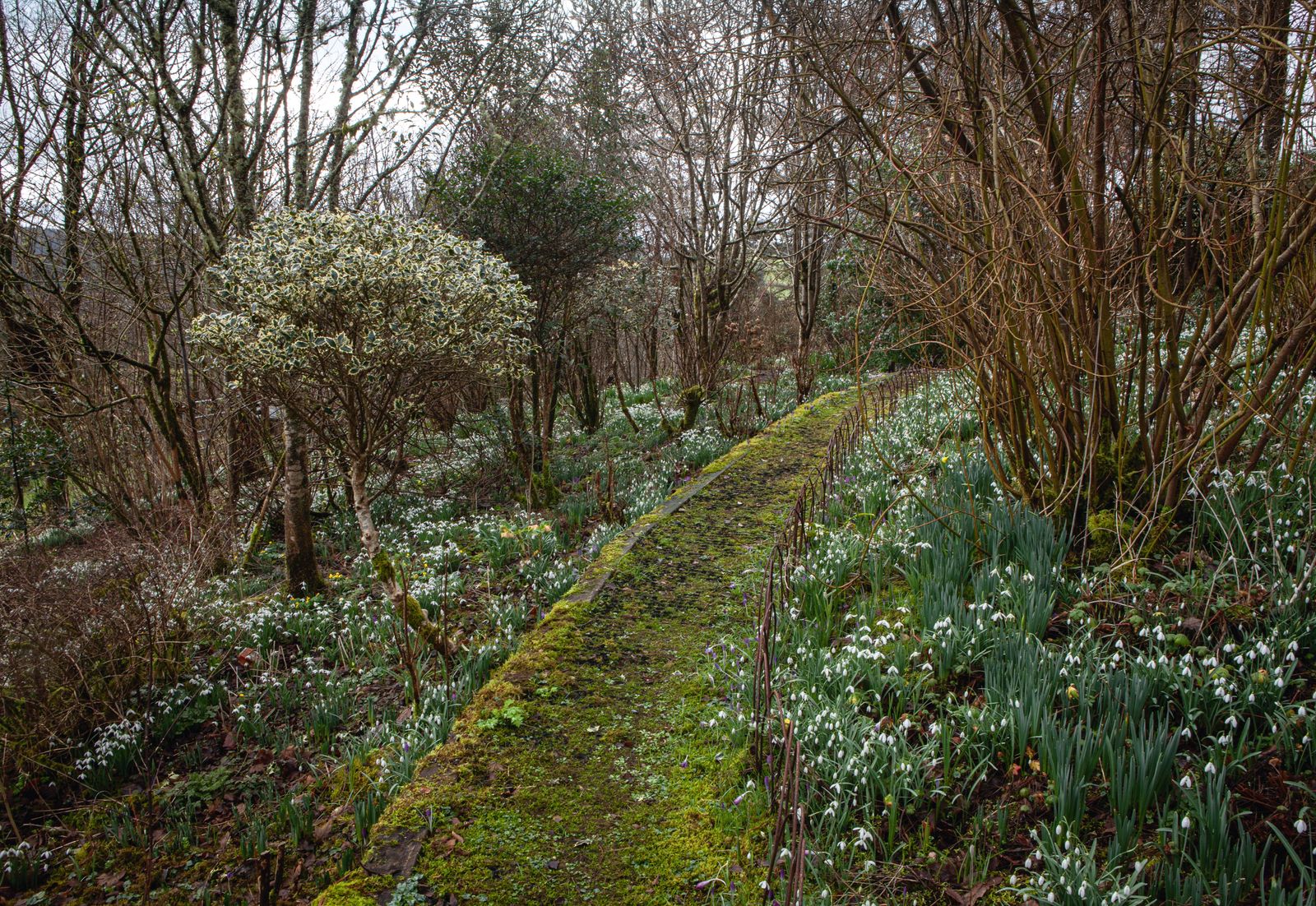
Multiple forms of Welsh G. nivalis snowdrops flank a woodland path.
Sabina Rüber
Comments are closed.