

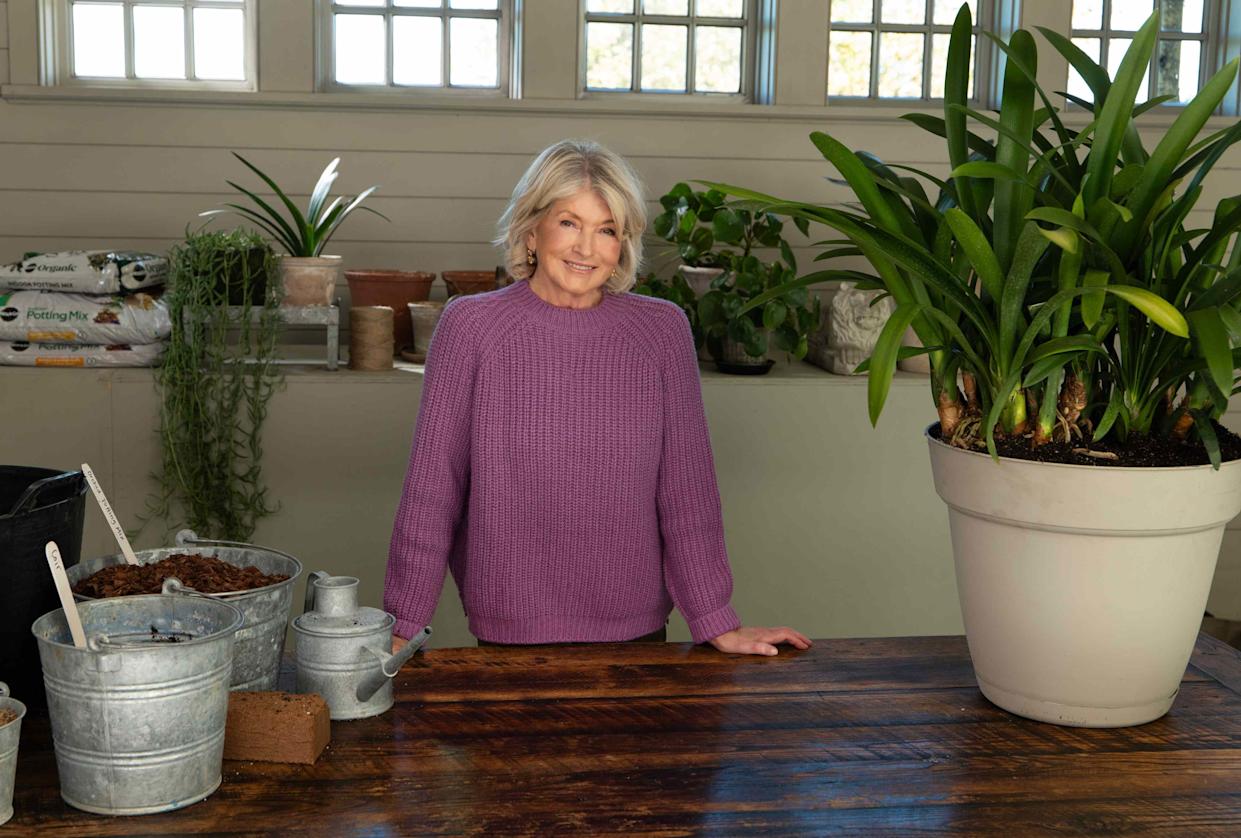
We’ve arrived at winter’s most intriguing stretch—the moment when home gardeners start to wonder, Is spring finally on its way, or is another cold snap around the corner? Whatever the forecast holds, Martha Stewart tells us there’s plenty you can do right now to prepare. We spoke with her about how gardeners can make the most of this in-between season.
1. Order Your Seeds Before It’s Too Late
If you have your heart set on adding new plants to your plot this spring, now is the time to source your seeds. Waiting too long may result in your dream seed varieties selling out.
“I make sure my seeds are ordered in a timely fashion, so I’m not disappointed given the vast interest in home gardening,” Stewart says. “Things are selling out, which is good for the seed companies, but not so good for the grower.”
If you have a trip coming up, Stewart also suggests adding seed shopping to your itinerary. “I buy seeds everywhere,” she says. “I just bought seeds in Paris…I buy seeds in Italy. When I go to Japan, I get all the Japanese varieties. Of course, you can get them in the catalogs, too, but it’s fun to visit and see what’s growing in different countries.”
2. Make Sure Your Plants Are Getting Enough to Eat
It’s important to make sure your plants are in tip-top shape before you move them outdoors this spring. While you may have your watering schedule down, when was the last time you fed your plants?
“I always say, ‘You eat every day, so your plants have to eat also,” Stewart says. “They need a lot more food than you think.”
Martha’s two favorite plant food picks for this transitional winter-to-spring period are both from Scotts Miracle-Gro: the Miracle-Gro Organic Indoor Plant Food, great for feeding your plants while they still live indoors, and the Miracle-Gro Organic Raised Bed & Garden Soil, which helps your plants prepare for the move to the great outdoors by keeping their nutrition on track. Stewart serves as the Chief Gardening Officer for Miracle-Gro.
3. Refresh Pots Before Patio Season
Before moving plants back outdoors, repotting may be necessary, especially if your plants grew a lot over the winter. When it comes to repotting, Stewart personally isn’t a fan of reusing potting soil, but she does give old soil a new life. “I add to the compost!” she says.
If there’s a little bit of old soil clinging to your plant’s roots, that is more than okay. “Usually, I don’t shake the soil off the roots of the plant—I don’t want to disturb the plant,” Stewart adds.
4. Save Rootbound Plants with a Hori Hori Knife
When repotting, you may encounter a rootbound plant. Good news: rootbound plants aren’t a lost cause. Stewart says to reach for your hori hori knife, if you have one.
“Hori hori means ‘dig dig’ in Japanese,” Stewart explains. “It has a rough edge, like a saw, and it also has a short edge. When you take a pot in something out of a pot and the roots are all white, rough them up a little bit with the rough edge of the knife. That’s called scarifying.”
Scarifying helps remove the parts of your roots that may be causing your plant to become rootbound. It can be applied to plants at nearly any stage, from seed to full growth, and helps address a variety of issues.
5. Keep an Eye on Your Fruit Trees
If you have any fruit trees, pay attention to them over the next couple of weeks. They could be the biggest key to knowing when spring is just around the corner, according to Stewart.
“I have an orchard of 220 young fruit trees—every kind of fruit—and overnight, all the branches have turned red,” she says. “That means they’re all budding!”
Read the original article on Better Homes & Gardens
Comments are closed.