
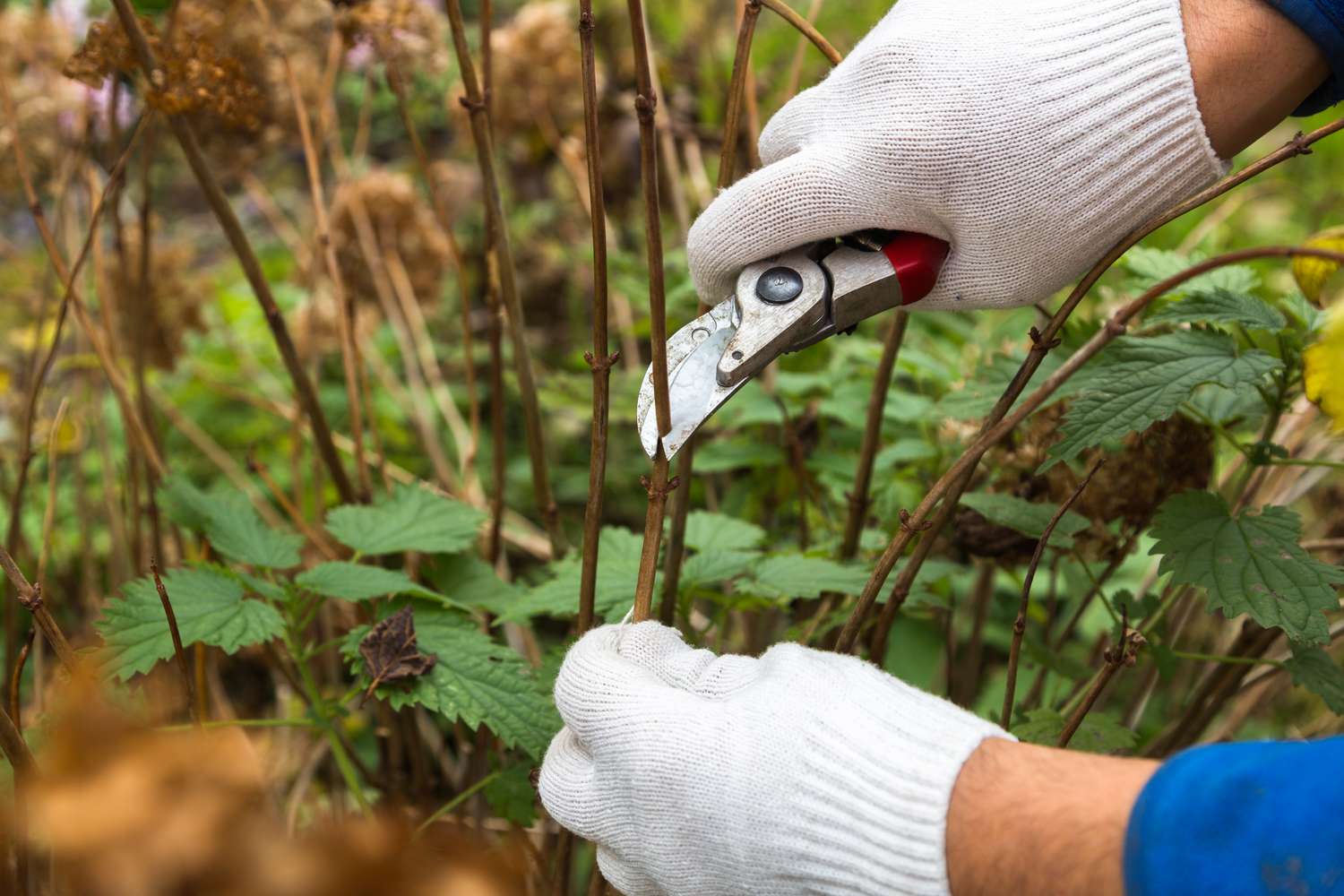
Gardens overflowing with a kaleidoscope of colorful hydrangea blooms means summer has arrived in the South. Whether decked out in clusters of large spherical blossoms or enchanting lacecap flowers, there’s a perfect hydrangea for nearly every yard—whether drenched in sun or cloaked in shade—and every gardener’s personality.
And while their blooms can be profuse and long-lasting, hydrangeas do require specific care in order to achieve peak beauty. It can be tricky to find the ideal variety for your property’s conditions and perfect your care regimen. Besides the right amount of sunlight, water, and fertilizer, pruning—and when you prune—plays a major role in the number and health of your plant’s blossoms next season. To ensure you get the most beautiful and profuse flowers possible, pruning should be done before new buds form. This means it’s important to refrain from cutting hydrangeas back too late in the season. When to prune and and how much also depends on the type of hydrangea you have. Ahead, when it is too late to cut back the hydrangeas in your garden and how to determine which type of hydrangea you have.
Credit:
Getty Images
Why You Should Cut Back Hydrangeas
But first, do you need to cut back hydrangeas? You don’t have to, but you it is best practice. Hydrangeas will die back on their own and develop new blooms in spring, but over time, failing to prune them can reduce new growth and blooms, causing the plant to look leggy. Pruning encourages new growth for the next season. In order to know when to cut back your hydrangeas, you’ll need to know which variety you have and whether it grows on new wood or old wood.
When To Cut Back Hydrangeas On Old Wood
Old wood hydrangeas produce buds on stems from the previous season. These buds overwinter on the branches, then bloom in the spring. This includes popular varieties like big leaf hydrangea (Hydrangea macrophylla), oakleaf hydrangea (H. quercifolia), climbing hydrangea (H. anomala), and mountain hydrangea (H. serrata). The best time to prune old wood hydrangeas is after they finish blooming in the summer, usually in early August. Don’t wait too late, because they begin bud production in the fall, and pruning at that time can remove next year’s blooms. Once the buds form, it’s too late to cut them back.
Old wood hydrangeas don’t require much pruning other than shaping, removing dead or damaged branches, and cutting branches that cross or rub against each other. Big-leaf hydrangeas can take more pruning because many varieties develop buds on old wood as well as on new branches that form around the base of the shrub. Removing the weakest branches, old or new, can promote more and larger blooms come spring. Just don’t cut these hydrangeas back to the ground, because severe pruning will remove new buds that have formed on the old wood.
When To Cut Back Hydrangeas On New Wood
Panicle hydrangeas (H. paniculata) and smooth hydrangeas (H. arborescens) grow on new growth, so they can be pruned a little later than those that grow on old wood. They develop buds on young new stems that grow in spring. You can cut these hydrangeas back about a foot from the ground in late winter or early spring before any new growth emerges, which means you can let the flower heads dry on their branches for added winter interest in the garden. Once new buds emerge, it’s too late to prune them.
To prune, remove weak, dead, or damaged branches and any that cross other branches. While pruning hydrangeas isn’t required, it can help manage their size and shape and result in large blooms and strong stems, which are helpful for supporting those showy flowers come summer.
Comments are closed.