
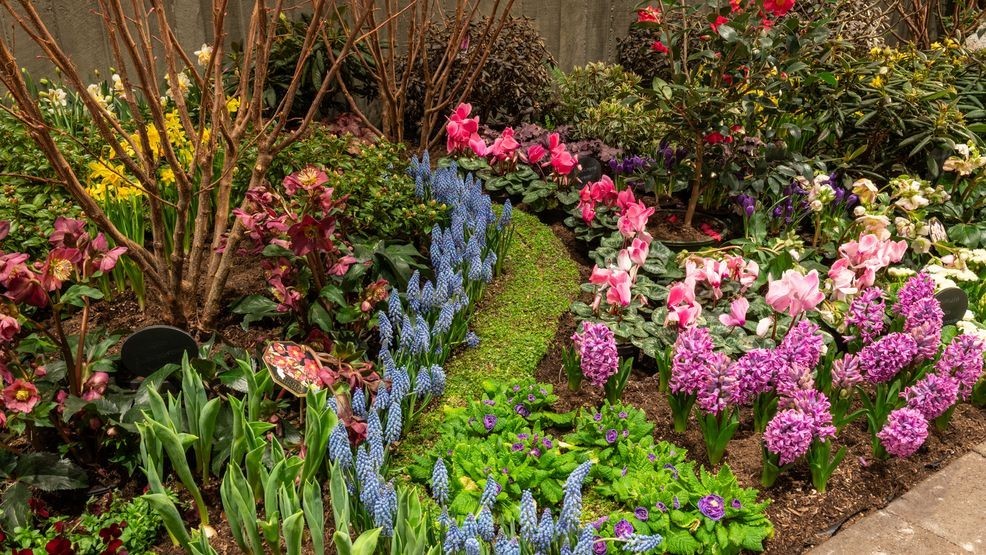
For the 37th time, The Northwest Flower & Garden Festival brings a bounty of beauty to Seattle.
This year’s event, held from February 18 through 22 at the Seattle Convention Center, has a theme of “Spring Parade” and is presented by the Puyallup Tribe of Indians. The stats dazzle: 30,000 forced bulbs and flowers, 700 yards of mulch and 200 tons of natural stone, pavers and block.
Both seasoned gardeners and curious newcomers are invited to experience the first glimpses of spring by exploring the fest’s 600+ booths, more than 35 display gardens, 115+ seminars and floral workshops, plus new features added just this year. More than 100 different nurseries, growers, material suppliers and vendors provide products for the event, and organizers expect attendees arriving from at least 38 states (and multiple countries, too).
Careful planning and timing go into a massive garden show before the natural season arrives. “Behind the scenes, our garden team is working hand-in-hand with partner nurseries and growers to ensure the healthiest plants and most vibrant forced blooms arrive right on time,” organizers explained.
Jeff Swenson, Regional Director for MarketPlace Events, has been involved with the show for 16 years. He highlights the meaning behind this year’s partnership with the Puyallup Tribe, which brings a powerful sense of community and cultural richness to the fest.
“We are honored to collaborate with them as they showcase their heritage through a beautiful garden display and help kick off opening day with a special blessing ceremony,” Swenson said.
Throughout the fest, the Tribe’s story will get shared through immersive experiences. For example, visitors will encounter the Living Village exhibit, which reflects how the Puyallup people live in harmony with nature, and how those practices continue today.
The Tribe has an exciting year ahead as sponsors of the upcoming FIFA World Cup matches in Seattle. Guests at the garden show will see fun and interactive exhibits woven throughout the festival.
Amy McFarland is the Tribe’s World Cup Project Director and explains how the garden show and FIFA sponsorship go hand in hand. The centerpiece garden will feature a canoe, an open fire and salmon prepared over that fire.
“These elements speak directly to Coast Salish life and hospitality,” McFarland says. “They represent movement, gathering and sustenance, and that means we will be welcoming World Cup visitors through symbols of care, nourishment and hospitality.”
“Within the exhibits, we will share our knowledge of plants and the teachings of Cedar,” McFarland adds. “As the Tribe prepares to welcome the world for the 2026 FIFA World Cup as an official Host City Supporter, we see a natural connection between that global gathering and this regional celebration of unity. Both offer opportunities to share a way of life that has shaped Coast Salish culture since time immemorial.”
The Tribe feels a responsibility to share a deeper sense of origin. McFarland says, “The immersive journey invites people into Indigenous knowledge and sustainable practices in a way that feels lived-in, not observed from a distance, but experienced.”
She says sharing these practices is an act of invitation, “It opens a window into Coast Salish culture, offering local and international visitors a chance to experience how we care for the land, water and community today,” she says.
It’s no small feat to join a destination garden show like this. McFarland says their preps began at least four months ago, and it’s been a very hands-on process. “There were long hours of brainstorming and figuring out how to work within the display constraints,” she says. And since they’re not professional builders, like many of the landscaping exhibitors, much of this process has proved a learning experience.
While they initially considered a lot of interesting concepts, ultimately the strongest direction was also the most familiar: building the exhibit around the canoe and the salmon. “It’s still complex to build,” she says, “but it comes from lived experience and muscle memory, which makes it authentic. Alongside that, hundreds of plants and flowers have been set aside since September, along with the cedar logs that will be brought in. And that’s just one exhibit, there’s a lot of care and effort behind what visitors will see.”
McFarland is excited to see all the exhibits come together, and to visit vendor booths for plants and seeds. She’s also thrilled Puyallup Chocolates will return to this year’s show.
And like always, Swenson looks forward to seeing the gardens come to life. “The hard work, dedication and awe-inspiring attention to detail that goes into each design is thrilling to witness,” he says. “We build 22 full-size display gardens in just 72 hours—an incredible feat that never fails to amaze me.”
Learn more about the Northwest Flower & Garden Festival here.
Corinne Whiting is a freelance writer for Seattle Refined. Follow more of her work here.
Comments are closed.