
Key Takeaways
Commercial potting mix fresh from the bag is safe to use without prior sterilization.
Used potting mix is potentially contaminated with weed seeds, pests, or pathogens, and needs to be sterilized.
To sterilize used potting mix, you can heat it to 212°F in your oven, but it might leave a permanent smell.
When potted plants like geranium or calibrachoa grow lush foliage and bloom profusely, this is in large part thanks to high-quality, pest- and disease-free potting soil, also referred to as potting mix. The best potting soil is full of valuable nutrients for plant growth, and it offers the essential structure that roots use for support. Potting soil that contains pests, weed seeds, or fungal diseases leads to all kinds of potential plant troubles.
Find out from experts when potting soil is safe to use as is, and when it is necessary to sterilize potting soil to create a healthy, long-lived container garden.
Meet Our Expert
Dr. Jim Sellmer is a professor of horticulture at Penn State University.
Phyllis Lamont is a consumer horticulture center library coordinator at Penn State University.
Packaged Potting Mixes Are Safe
First, the good news! If you are using bagged commercial potting mix, there’s no need to sterilize it. Made of a combination of peat moss, vermiculite, perlite, and other non-living components, packaged mixes are pre-sterilized. Dr. James Sellmer and Phyllis Lamont, horticulture experts at Penn State University, say packaged, sterilized mixes are the most common potting soil used by home gardeners. The ease of use surely contributes to the popularity of bagged potting mixes.
Homemade Mixes Need to Be Sterilized
If you are mixing your own potting soil using garden soil or recycled potting soil that has been used before, sterilization is essential, says Dr. Sellmer. Garden soil and recycled potting soil are alive with organisms that can have a positive or negative impact on plants.
Many of the negative impacts originate with fungi. A fungus disease found in garden soil, caused by pathogens such as Pythium, Rhizoctonia, and Fusarium, causes damping-off, a dreaded plant disease of gardeners everywhere. Seeds started in pest-ridden potting soil are especially vulnerable to damping-off disease. Dr. Sellmer says a damping-off “infection spreads rapidly, killing most of the seedlings in a tray or flat.”
Damping-off is not limited to tiny seedlings; tender annuals in a confined container growing environment are susceptible as well. And, recycled potting soil, even though it might not contain garden soil, can harbor pests and pathogens, too. Soil sterilization will kill pathogens that cause damping-off disease, as well as weed seeds and soil-borne insects.
How to Sterilize Potting Soil
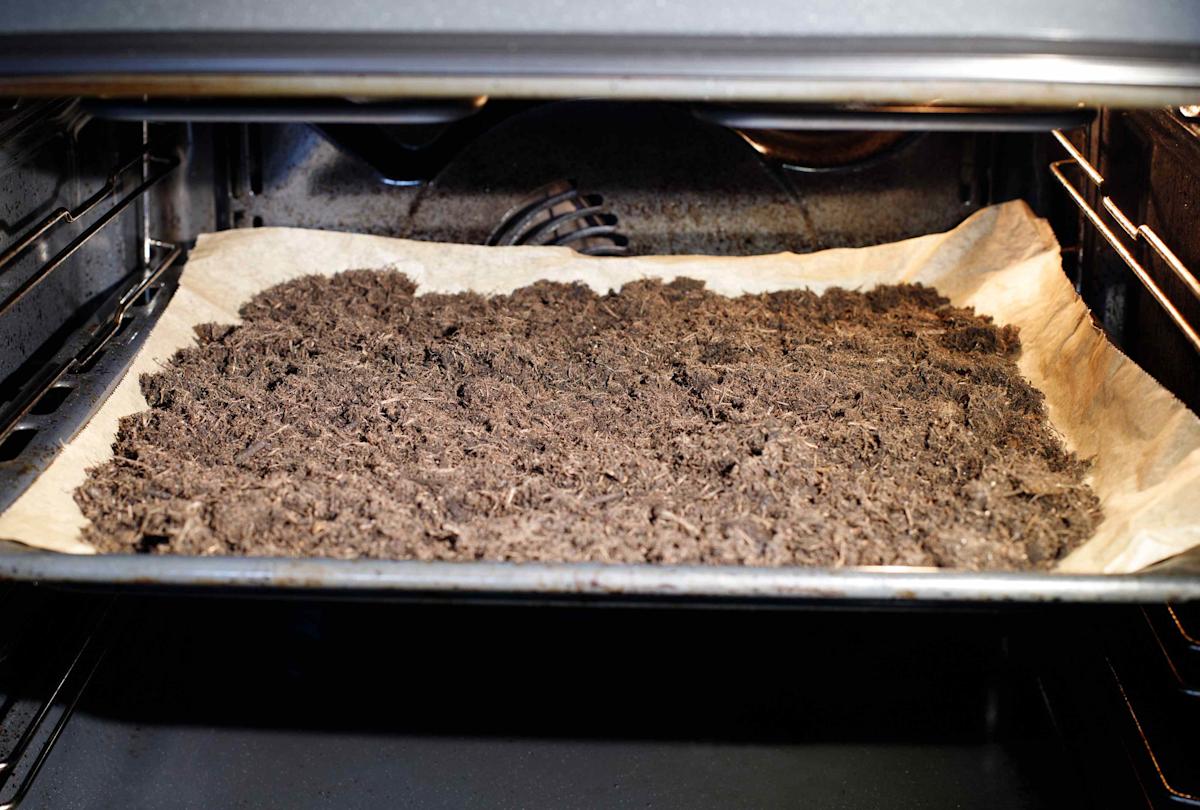
It is possible to sterilize soil in a home oven, though the process is time-consuming and usually not practical for large quantities of soil. Dr. Sellmer suggests the following method for sterilizing soil in an oven. Note: After sterilizing soil, a long-lasting earthy smell may develop in the oven, so you might be better off purchasing fresh potting mix.
Preheat the oven to 225°F.
Fill a pan with a 4-inch layer of moist soil. Cover the pan with aluminum foil. Insert an oven-safe thermometer into the soil and place the pan in the oven.
When the thermometer in the soil registers 212°F, leave the soil in the oven for 30 minutes longer, then remove it from the oven. At that temperature, the soil is considered sterile.
Allow the soil to cool. It is ready to use in outdoor containers or for seed starting as soon as it has cooled.
Sanitize Gardening Tools and Pots, Too
Garden tools and containers can harbor harmful pests, too. After ensuring your potting soil is pest-free, take steps to avoid cross-contamination by cleaning your pots and tools, which takes minimal effort.
Experts at Iowa State University recommend this simple cleaning process for garden tools and pots. First, use a brush or rag to remove all loose soil particles from tools and pots. Then wash the items with soapy water. Regular dishwashing soap works well. Finally, soak the items in a solution of 1 part bleach to 10 parts water for 10 minutes or more. After soaking, rinse the items thoroughly with clean water.
Clean tools and pots at the beginning of every gardening season to help prevent disease and promote a healthy, productive garden.
Read the original article on Better Homes & Gardens
Comments are closed.