
CLAIRE LIDELL HANNA IS KNOWN for creatively using salvaged materials to add depth, personality and a sense of place to the gardens she designs.
Using salvaged lumber, paving, brick and the occasional piece of industrial scrap keeps discarded materials out of the waste stream, lightening a landscape’s environmental load. Where others might see rubble, Hanna, who is founder and lead designer at Relish Gardens, sees an opportunity for playful reinvention in the making of dynamic personal landscapes.
Reused materials in the landscape can look modern and refined, but Hanna believes most people are drawn to the aged patina that comes with salvaged goods. “It’s a way to create something that has a sense of history,” she says.
To avoid clutter and confusion, Hanna advises gardeners who want to begin using these materials to begin by defining a narrative for the garden. “When everything is a possibility, nothing fits. Getting clear on your story helps avoid a muddled message,” the designer says.
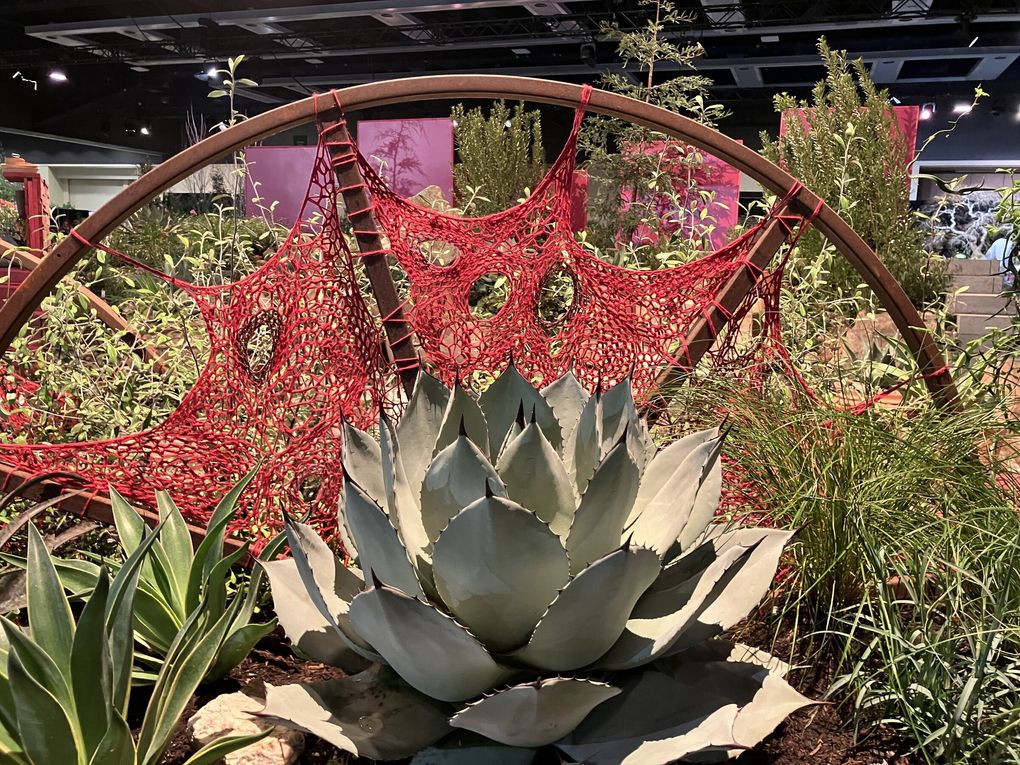
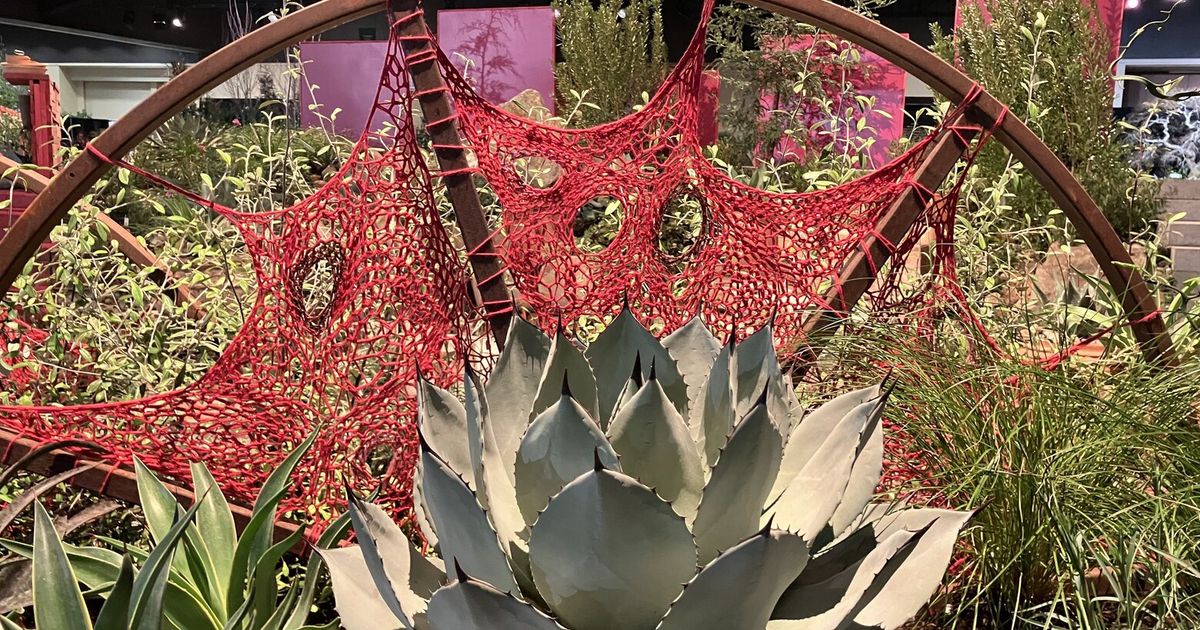
A salvaged metal wheel finished with a fiery crocheted textile piece furnished an artful screen in the Zone 9 display designed by Relish Gardens for the 2025 Northwest Flower and Garden Festival. (Courtesy Relish Gardens)
Less
A salvaged metal wheel finished with a fiery crocheted textile piece furnished an artful… (Courtesy Relish Gardens)
More
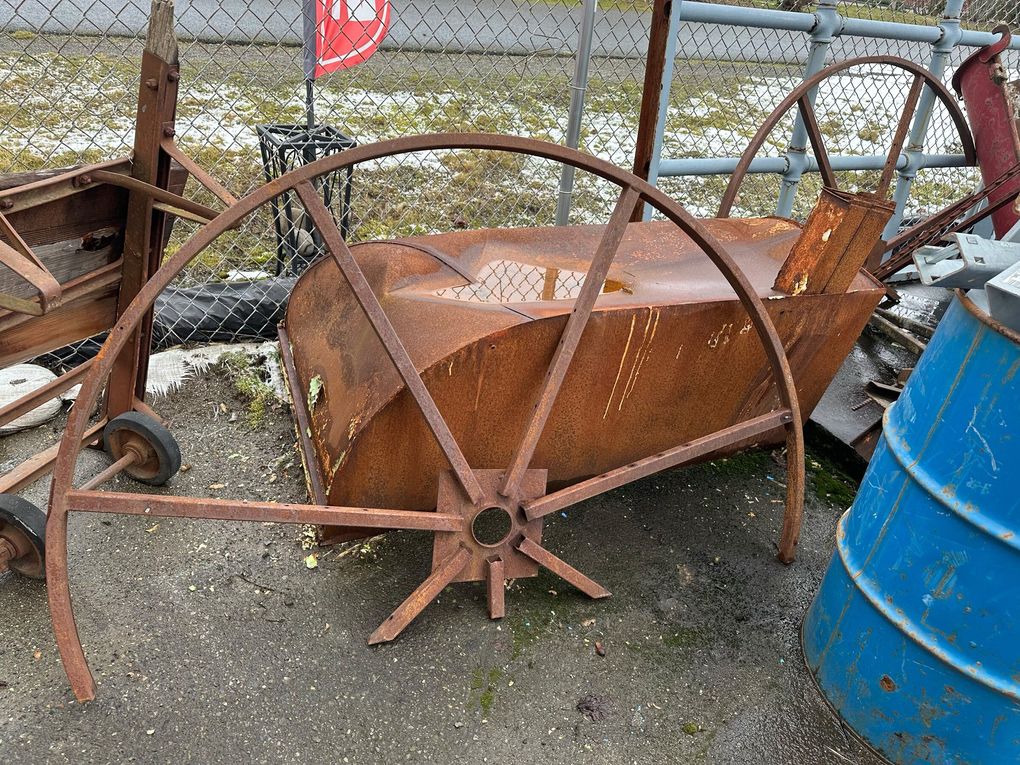
A fragment of a metal wheel with a rusty patina became a scaffold for a one-of-a-kind screen in Relish Gardens’ zone 9 display. (Courtesy Relish Gardens)
Less
A fragment of a metal wheel with a rusty patina became a scaffold for a one-of-a-kind… (Courtesy Relish Gardens)
More
Speaking (ahem) as someone who discovered a giant slab of cut concrete and a burly maritime chain that would be “perfect” for my garden, I can attest to the fact that gathering used materials willy-nilly is a slippery slope. Fortunately for me, a crew using heavy equipment at the house next door was available to help me place the ridiculously heavy slab into the landscape. I could have saved myself the kerfuffle by thinking things through before I impulsively purchased a material I had no way of installing. The chain turned out to be the first of many, becoming a quirky collection that’s now a part of my garden’s story.
Just like plant choices depend on suitable garden conditions — we’d best not plant a sun-loving perennial in woodland shade — design parameters establish color choices, a palette of materials, and even art and accessories for the garden. They also help reduce decision fatigue by eliminating options that aren’t a good fit. Hanna says, “It’s not that (an item) is bad or good, it’s just that it’s not for a particular space.” She’s a big fan of what she calls a “no list” which she says is shorthand for what doesn’t belong in the garden.
Aimlessly browsing a salvage yard can be inspiring but it can also be overwhelming to sort through mountains of plumbing parts, windows and scrap metal. “Curation is a lens that keeps intentionality in check,” Hanna says.
Before you head out to gather used components, the designer recommends looking around your interior space for objects and materials that delight you. “People are usually more comfortable at home, these are things you’ve chosen so obviously you have an affinity for them,” she says.
At last year’s Northwest Flower and Garden Festival, Relish Gardens’ “Zone 9” display garden was a crowd favorite, winning the Ethel Moss People’s Choice award. Plants, color and creative reinvention came together to tell a story about Hanna’s upbringing in Northern California — with a nod to Seattle’s recent bump from 8 to 9 on the USDA zone map. The garden had a sun-drenched palette of yellow, pink and orange, grounded by rusty hues that referenced familiar iron-rich soils.
Early in the design process for that display, the designer concluded that anything black, a weighty color lacking warmth, would not be a part of the story of the Zone 9 garden. That simple parameter eliminated an easy default (many garden goods and accessories are black) and challenged Hanna’s team to come up with inventive alternatives.
This year’s Relish Gardens display called “The Jewel Box: A Moment Preserved,” is designed to show big ideas in a small footprint. The garden features a decommissioned bus stop that’s been re-envisioned as a larder stocked with preserves from the previous growing season, a throwback to a time when garden crops were routinely put up for winter meals.
Salvaged copper threads throughout the garden’s design. “Copper is revered in preserving and jam making for its ability to conduct heat, so it felt like the perfect building material,” Hanna enthuses. The bluish-green hue of patinated copper, like a classic Tiffany blue jewelry box, ties the whole concept together. When it comes to finding items that are ripe for reinvention, Hanna turns to Facebook Marketplace, garage sales and local buy-nothing groups. She’s also a regular at Earthwise and Second Use (seconduse.com), Seattle based retailers that do the heavy lifting of sourcing and sorting salvaged materials.
Lorene Edwards Forkner is the author of the newly published “Grow Great Vegetables Washington.” Find her at ahandmadegarden.com and at Cultivating Color on Substack.
Comments are closed.